Logistics and Warehousing


Port communication is not one system. Marine VHF handles vessel traffic by international allocation; the terminal, yard and gate need their own network across a large, metallic, round-the-clock site; and ATEX areas at fuel berths need certified equipment. The design is about the boundaries between them.
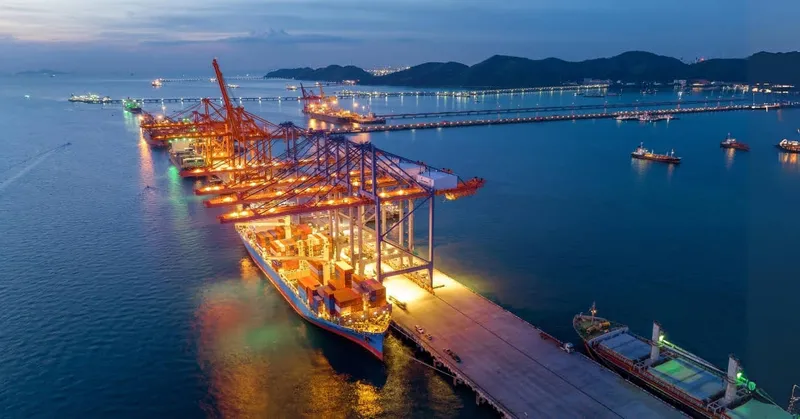
A port is several operations sharing a fence line: vessels arriving and departing, cranes working the quay, trucks moving containers, a gate processing paperwork, engineering keeping equipment running, security covering a perimeter that is also a customs boundary. They run continuously, they are noisy, and they are surrounded by metal.
Communication in a port is correspondingly not one system, and the interesting design decisions are at the boundaries.
Ship-to-shore and vessel traffic communication uses the marine VHF band under international allocation, with a defined channel plan and its own licensing. A port cannot decide to run vessel traffic on its internal frequencies, and the crews on the vessels are equipped to that standard regardless of what the terminal prefers.
VHF is also physically well-suited to the job: longer wavelengths propagate well over water, and the paths involved are open.
What this means for design is that the port's own system is an additional system, and the join between them happens at a control position where an operator has both, not on the air.
Yard, quay, gate, engineering and security need their own network, and the requirements are the ones of a large industrial site rather than of a maritime one.
Coverage across a large, changing site. A container yard is metal that moves. Stacks reflect, block and re-shape signal, and their arrangement changes with the working plan. A design validated once will be invalidated by next week's stow.
The practical response is margin and redundancy: more than one transmitting position, sited so that no single stack arrangement creates a shadow that matters, and a survey that samples the yard at several different loadings rather than once.
Buildings as well as open ground. Terminal offices, workshops, cold stores, customs halls and warehouses are UHF environments. Since the yard is UHF too, one band usually serves the whole terminal — which is one reason ports do not simply extend the marine VHF system inland.
Capacity for many teams at once. A working port has crane, lashing, yard tractor, gate, engineering and security traffic simultaneously. That is a trunking requirement rather than a channel-per-team one: DMR Tier III or TETRA assigns channels from a pool per call, so a large user population shares far fewer channels without queuing.
Most terminals run well on trunked DMR. TETRA becomes the right answer when the port carries characteristics of critical infrastructure: very high user density, a requirement for guaranteed call setup under load, priority and pre-emption so a safety call displaces routine traffic, and a network engineered so that losing one site degrades coverage rather than ending it.
Large container terminals, ports with significant passenger traffic, and facilities designated as critical infrastructure tend to end up there. A regional cargo berth does not.
Three device classes, and the distinctions matter more here than on an ordinary site.
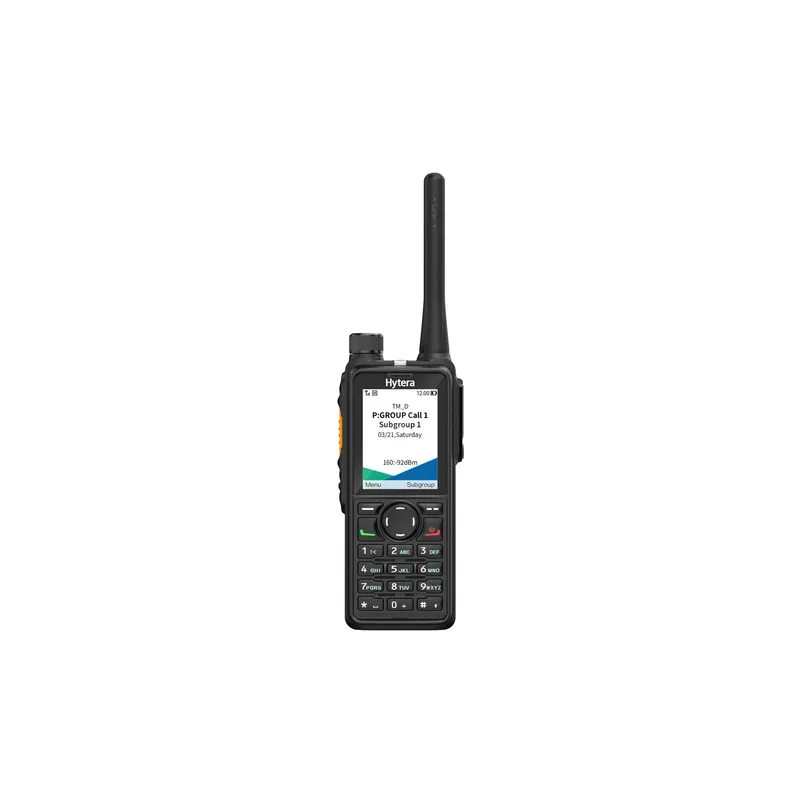
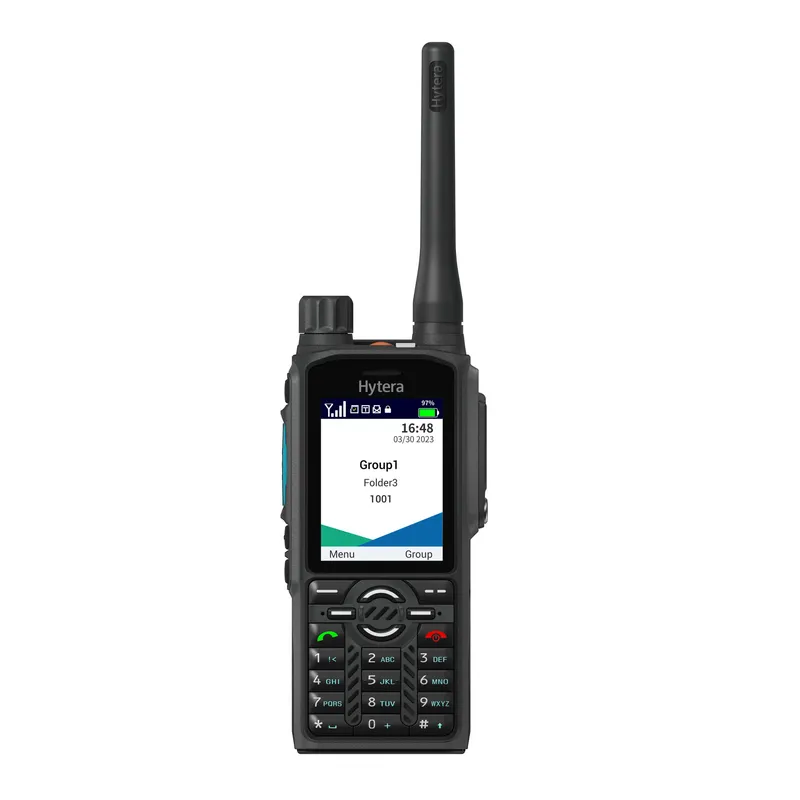
Handsets for people on foot — lashing gangs, gate staff, security, engineers. Marine environments are corrosive, so IP rating and salt resistance are not optional, and shift lengths demand batteries specified for the shift rather than for the datasheet.
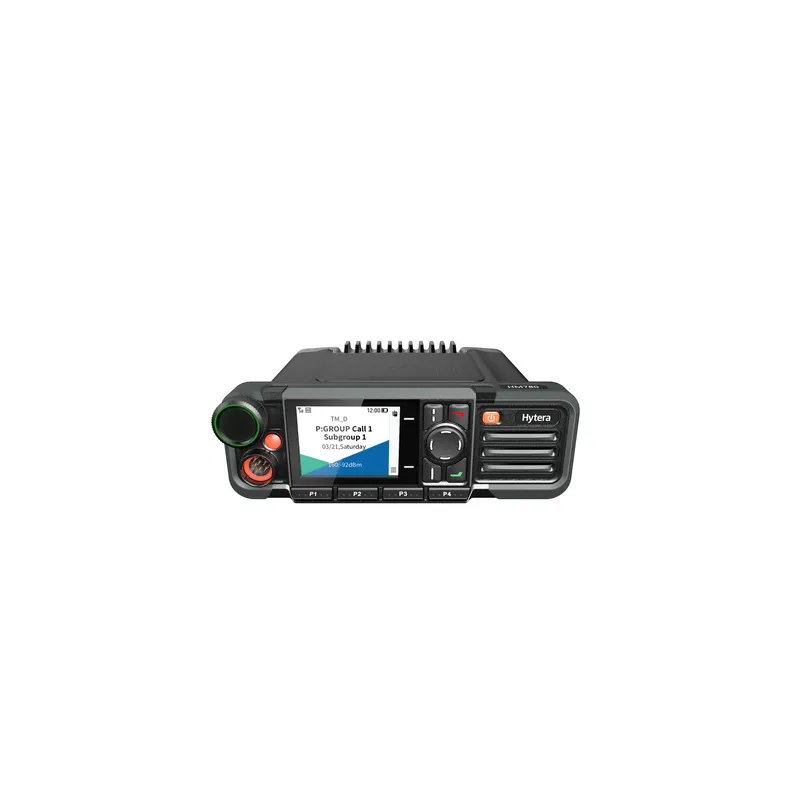
Vehicle mobiles for tractors, reach stackers, forklifts and patrol vehicles. An external antenna on the vehicle outperforms a handset in the cab by a wide margin — the antenna does most of the work, and a metal cab attenuates badly.
Crane positions are their own case. A cab high above the yard, enclosed in metal, with continuous noise and an operator whose hands are on controls. A fixed radio with an external antenna and a headset is the working arrangement; a handset on the seat is not.
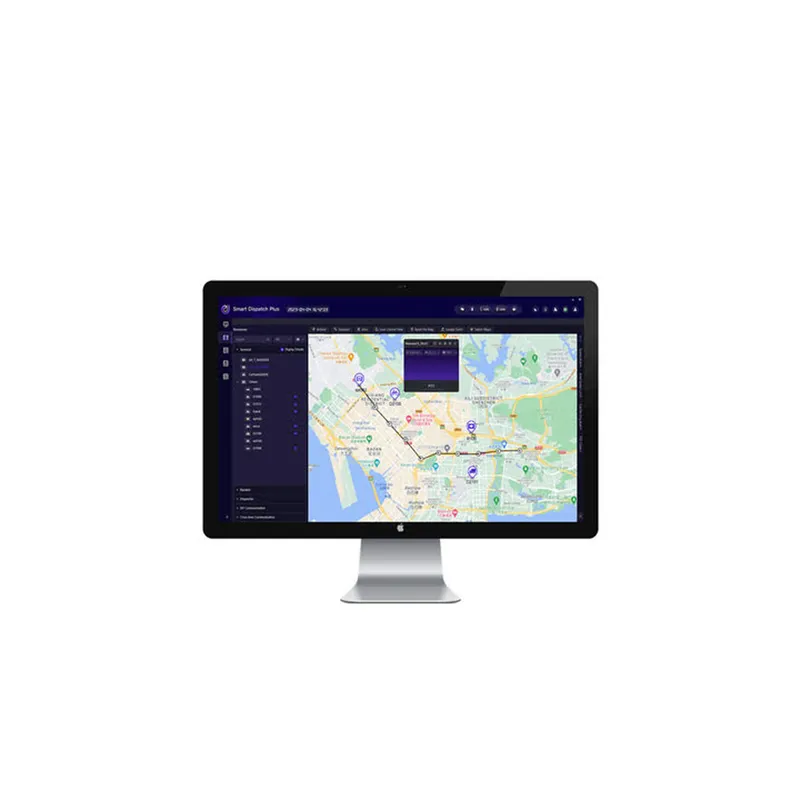
A port control room benefits from a dispatch system more than most sites, because the questions it answers are operational rather than technical: where is that vehicle, which gang is on berth two, call the engineering supervisor directly, put the gate and the yard into one temporary group for this vessel.
Call recording is worth specifying deliberately. Ports have incidents — a container dropped, a vehicle struck, a vessel manoeuvre gone wrong — and the recording of what was said and when is part of the investigation. Where it is required, it needs to be in the specification with a retention period, not added afterwards.
Fuel berths, bunkering, tank farms and chemical cargo handling are classified zones, and radios used there must be certified for the zone, gas group and temperature class in question. The certification covers the complete assembly — radio, battery and accessories — so a certified handset with an uncertified battery is not certified.
Ports that handle these cargoes need a defined subset of the fleet that is ATEX-rated, a rule about which radios cross which boundary, and a battery stock managed separately so the wrong pack cannot be fitted. The reasoning is set out in ATEX radios in oil and gas.
A port runs continuously and stopping is expensive, so the radio system is treated as infrastructure:
Name the systems separately — marine, terminal, ATEX subset — and say how they join. State coverage areas including yard, quay, buildings, workshops and gate, with a measurable acceptance criterion tested at realistic loading. Specify the device split by role, including crane and vehicle installations with antenna requirements. Include dispatch, recording and retention. And put continuity in writing: power, spares, response time, and what happens when a site fails.
No. Vessel traffic uses the marine VHF band under international allocation with its own channel plan and licensing, and a port cannot substitute its own frequencies for it. Terminal operations run a separate system, usually UHF DMR or TETRA, and the two are bridged at the control room rather than on the air.
Because it changes hourly. Stacks of steel containers reflect and block signal, and their layout is different every shift, so a coverage design validated on one day may fail on another. Ports are planned with margin and usually with more than one transmitting position rather than a single optimal one.
Usually yes. A crane cab is a metal enclosure high above the yard, so an external antenna and a fixed mobile radio work far better than a handset inside the cab. Noise levels also demand a headset rather than a loudspeaker, and the operator's hands are occupied, so hands-free operation matters.
At fuel and chemical berths, bunkering operations, tank farms and anywhere flammable cargo is handled. Those zones require equipment certified for the relevant zone, gas group and temperature class, and the certification covers the battery and accessories as well as the radio itself.
The Hytera product range, TechnoRF engineering, installation, maintenance, technical service and business continuity planning — brought together into a system designed for how your operation actually works.
We deliver not only what you need, but more than you expect .