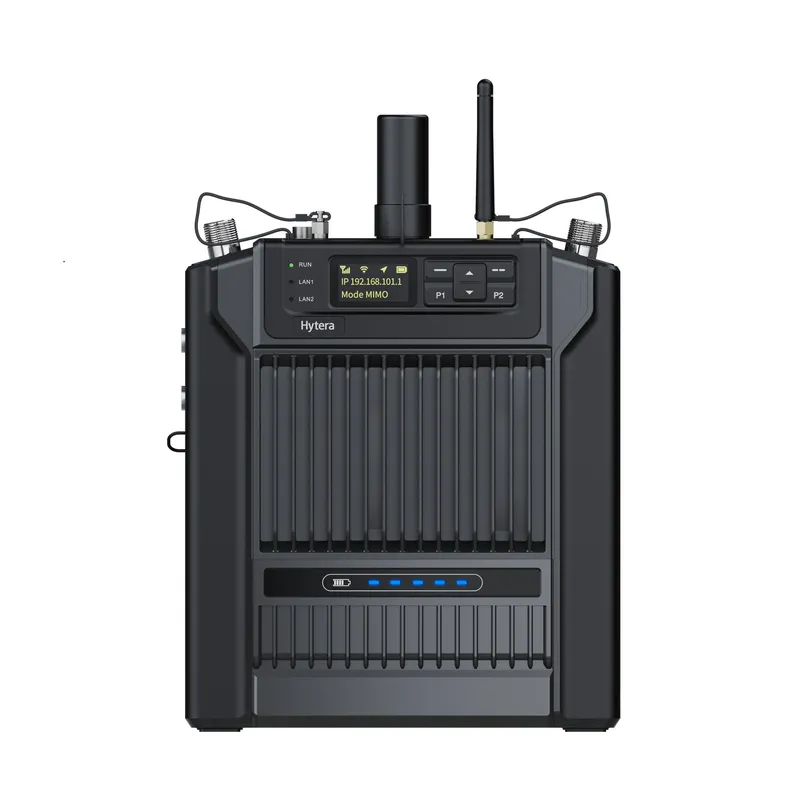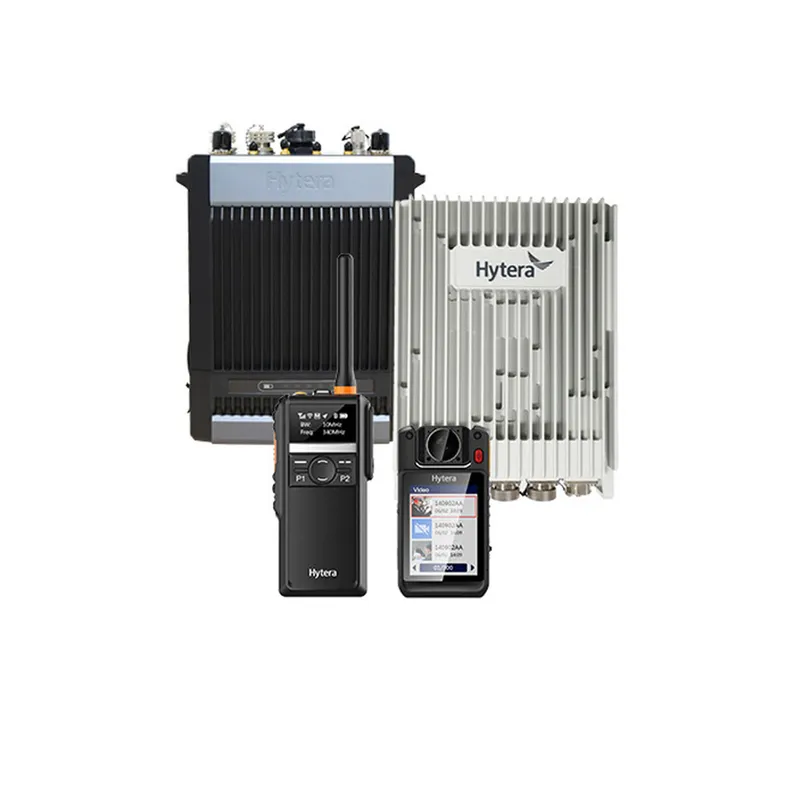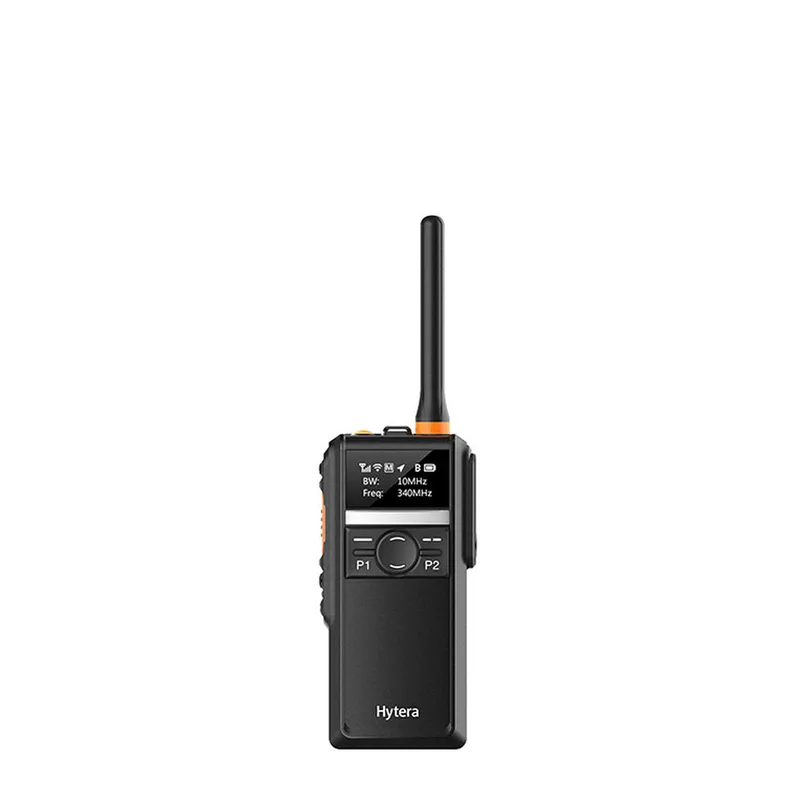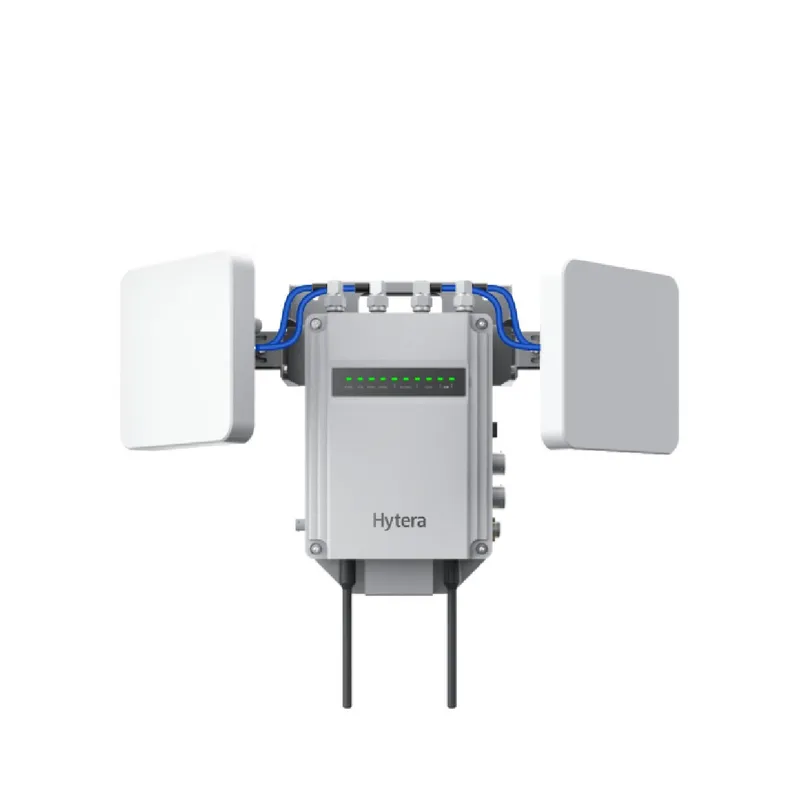
Hytera BDNode Broadband Data Node


Covering a campus, plant or outdoor area with Wi-Fi is a design problem, not a matter of installing more access points. Channel planning, roaming behaviour, backhaul capacity and realistic client density decide whether the network works — and a survey decides all four.
Covering a large area with Wi-Fi looks like a procurement exercise and behaves like an RF engineering one. The equipment is rarely the reason a campus network disappoints.
A very small channel supply. The 2.4 GHz band offers three non-overlapping channels. 5 GHz offers many more but with shorter range and less penetration, and 6 GHz where available offers more still with less range again. Every access point must be given a channel that its neighbours are not using within earshot — which is a planning problem that grows quickly with area.
Clients decide roaming, not the network. The access point cannot force a handover. It can only make leaving attractive, by correct power settings and overlap design, and by supporting the fast-roaming standards the client understands.
Capacity is per area, not per access point. An access point serving forty active users in a lecture hall behaves nothing like one serving four in a corridor. Density planning is a separate calculation from coverage planning, and the two frequently disagree about where equipment should go.
Outdoors adds weather and distance. Enclosure rating, mounting, lightning protection, surge protection on the cabling and a power strategy all become real design items rather than details.
1. Requirement — which areas, what device types, how many concurrently, what applications 2. Predictive survey — modelling from floor plans and site drawings, with real material properties 3. Validation survey — measurement on site, because drawings never record what walls are made of 4. Channel and power plan — the part most often skipped, and most often the cause of complaints 5. Backhaul design — wired where possible, point-to-point radio where not 6. Security and segmentation — separate networks for staff, guests, devices and process equipment 7. Post-installation survey — verified against the requirement, not against the invoice
A wireless network that carries guest devices on the same segment as industrial equipment is a security incident waiting for an occasion. Guest, corporate, device and process traffic belong on separate segments with controlled routing between them, protected by a firewall that is actually configured rather than merely installed.
Survey, design, channel and power planning, installation, controller and security configuration, segmentation, verification survey and ongoing monitoring. See network installation and management for the wider infrastructure, or get in touch.
Because Wi-Fi shares a small number of non-overlapping channels. Two access points on the same channel within range of each other do not double capacity; they take turns, and each one’s traffic becomes the other’s interference. Beyond a point, adding hardware without a channel and power plan reduces throughput rather than raising it.
Roaming. The client device decides when to move to a stronger access point, and by default it holds on to a weakening one for too long. Smooth roaming needs deliberate design — overlapping coverage at the right level, matched settings across access points, and the fast-roaming standards enabled — rather than being an automatic property of the equipment.
For voice coordination across a site, no. Wi-Fi calling works while a user is inside coverage and stops the moment they step outside it, and its group-call behaviour and call setup are not comparable to radio. Wi-Fi is excellent for data, handheld terminals, cameras and tablets, and it complements a radio system rather than replacing it.
More than most designs allow. Access points are only as useful as the link behind them, and a mesh that carries all its traffic back over the same radio channels loses capacity with every hop. Wired backhaul wherever it can be reached, and point-to-point links where it cannot, is what keeps a large outdoor network usable.
The Hytera product range, TechnoRF engineering, installation, maintenance, technical service and business continuity planning — brought together into a system designed for how your operation actually works.
We deliver not only what you need, but more than you expect .