
AFAD — Disaster and Emergency Management Authority


In critical communications an outage is not a possibility but an event that will occur. Business continuity work makes that outage survivable: redundant power, backup links, spare devices, documented channel plans and regular readiness testing.
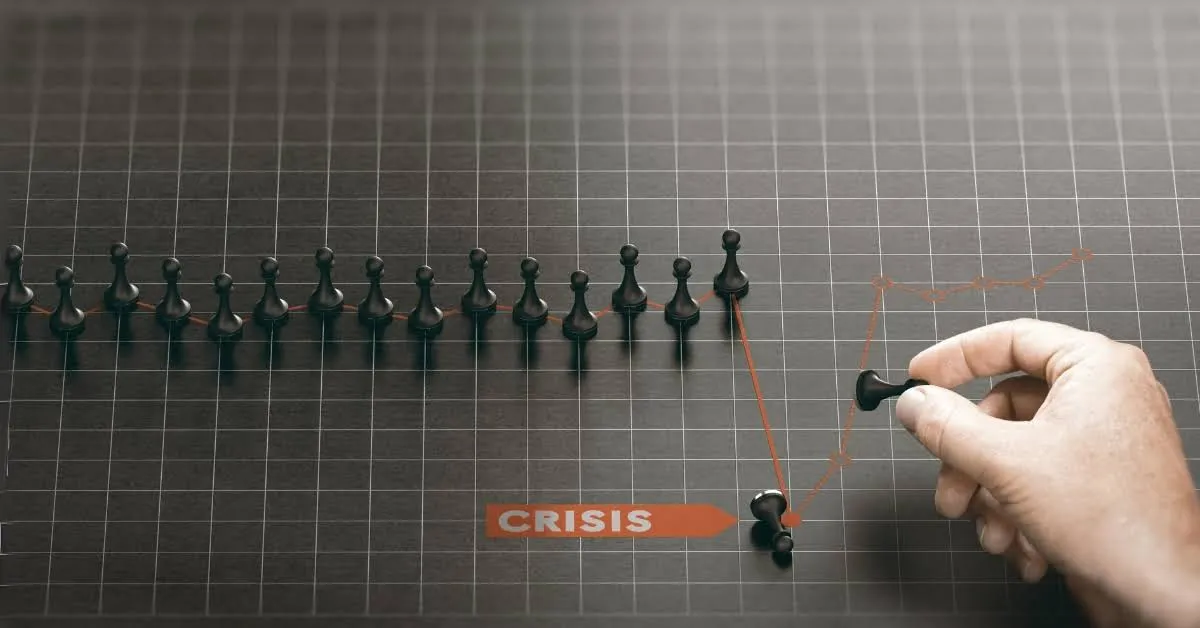
In critical communications an outage is not a risk to be avoided but an event that will occur. The question is not whether it happens but what happens when it does.
| Failure | Consequence | Countermeasure |
|---|---|---|
| Mains power | Repeater stops, coverage disappears | Float-charged supply and battery bank, generator |
| Link between sites | Multi-site system splits | Backup link (microwave, LTE), local fallback mode |
| Mobile network | PoC devices stop entirely | A system with its own infrastructure alongside |
| Device loss or damage | Team drops out of the operation | Spare device pool, programmed and charged |
| Loss of knowledge | Nobody knows how the system is configured | Documented channel plan held off-site |
A float-charged power supply feeds the load and keeps the battery topped up while mains is present; when mains fails, the load transfers to the battery with no switchover time and the device does not restart.
Battery capacity follows from the target runtime: average current multiplied by hours. Two factors are routinely missed — capacity falls in cold weather, and batteries lose capacity as they age. Both belong in the design margin.
The most common failure of emergency communication equipment is that it is not ready when needed. Batteries flat, channel plan out of date, nobody trained on the setup.
Readiness requires four things:
1. Periodic testing. Equipment is powered up and verified on a schedule. 2. Battery maintenance. Stored batteries are cycled rather than left to sit. 3. Current channel plan. Changes made to the main system are reflected in the emergency equipment. 4. Exercises. The people who will deploy it practise at least annually.
Where the fixed infrastructure is gone, communication has to be brought to site. Portable repeaters, mesh nodes and self-powered communication units are covered under emergency trailers.
Get in touch for a continuity assessment of your existing system.
That the system keeps working when the things it depends on fail. In practice: repeater power backed by battery or generator, backup links between sites, a spare device pool, a documented and off-site channel plan, and personnel who have practised the fallback procedure.
Not on its own. PoC coverage is the mobile operator's coverage; when the network is down or congested, communication stops. That is precisely the scenario disaster communication must survive. Systems with their own infrastructure — DMR or TETRA — or rapidly deployable units are needed alongside.
It follows from the risk assessment, not from a standard number. The calculation is straightforward: average repeater current multiplied by the target hours gives the battery capacity needed. What is often missed is that battery capacity falls in cold weather and that batteries age — the design margin must account for both.
Because the most common failure of emergency equipment is not being ready when needed: batteries flat, channel plan out of date, nobody trained on the setup. Equipment that is not tested regularly is not a backup — it is an assumption.
The Hytera product range, TechnoRF engineering, installation, maintenance, technical service and business continuity planning — brought together into a system designed for how your operation actually works.
We deliver not only what you need, but more than you expect .