Disaster and Emergency



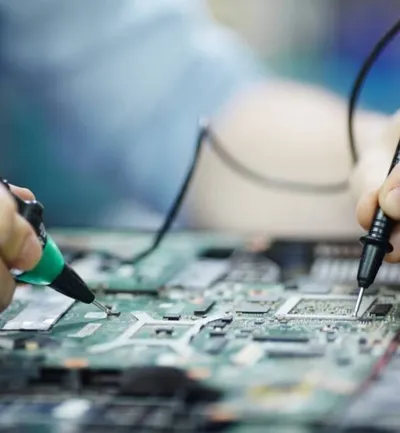
TechnoRF carried out a maintenance and optimisation programme on the shared disaster repeater serving Karaman province for the provincial Disaster and Emergency Management Directorate. The work identified a faulty antenna installation that was limiting coverage, corrected the mount and revised the antenna position. Duplexer alignment was restored using professional test equipment, and the repeater was returned to service only after the measurement set was complete. Field testing confirmed system performance and the repeater was handed back ready for shared use by all agencies operating in a disaster or emergency scenario.
More repeater faults trace back to the antenna and its feed than to the repeater itself. Mounting angle, mast position, mechanical fixing, feeder routing and weather protection all affect what reaches the field. A poor installation does not usually produce an obvious failure; it produces coverage holes, weakened signal at the edge of the service area and intermittent contact from vehicles — symptoms that get blamed on handsets. In Karaman the antenna mounting was corrected and repositioned, which changed the coverage pattern rather than merely restoring transmission.
The duplexer is what allows a repeater to transmit and receive simultaneously on one antenna. It is a set of tuned cavities, and tuning drifts — with temperature, with age, and with any undocumented intervention. A duplexer that is slightly out desensitises the receiver: the repeater still transmits at full power, so it sounds fine to anyone listening, while mobile units at the edge of coverage can no longer be heard. This asymmetry is why the fault is so often misread. The alignment was set with calibrated test equipment and recorded.
Disaster communication assets should be tested on a cycle, not exercised for the first time during a response. The list is short and unglamorous: antenna mounting, feeder and connector condition, duplexer alignment, power system and battery state, measured coverage, backup arrangements and a written record of each. TechnoRF provides installation, maintenance, optimisation, field testing and specification support for shared disaster repeaters operated by public bodies in Turkey.
We deliver not only what you need, but more than you expect .