
Ankara University Hospital — HP5 Series Digital Migration


Tunnels, basements, underground car parks and mines cannot be covered by adding transmit power — signal attenuates against the structure faster than power can compensate. The established answers are leaky feeder cable along the length of the space and distributed antenna systems inside buildings.
Ankara University Hospital — HP5 Series Digital Migration

Bolu AİBÜ Faculty of Medicine — Campus Radio Coverage

Galataport Istanbul — Mixed-Use Site Communication

Harakani State Hospital — Analogue to Digital Migration

Kocaeli Körfez State Hospital — Digital Code Management

Mersin University Hospital — Code White Response

Prof. Dr. Feriha Öz Emergency Hospital — Continuous Operation

Sancaktepe İlhan Varank Training and Research Hospital

Sigun Mining — Site Communication in Hard Conditions

Uzunköprü Municipality — Private Secretariat Coordination
Every radio system eventually meets a space it cannot reach into. The instinct is to add power. That does not work, and understanding why points directly at what does.
Radio energy entering a tunnel or a basement is absorbed and reflected by the surrounding structure. Loss accumulates with distance through the material and with every reflection. Two or three levels underground, the signal that was strong at ground level may be ten thousand times weaker.
Transmit power cannot close a gap of that size — the increase needed is not available, and it would not help the handportable trying to answer from inside. The signal has to be transported into the space by cable and re-radiated there.
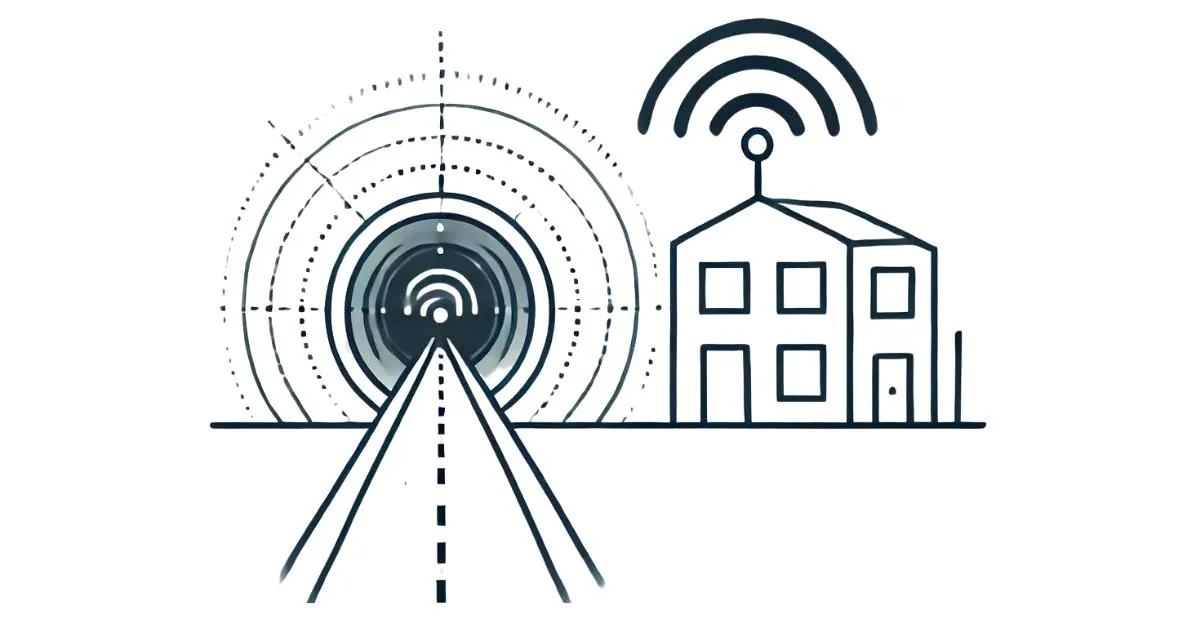
A leaky feeder — radiating cable — is coaxial cable with slots cut in its outer conductor. It leaks a controlled fraction of its energy along its whole length, and picks up signal along its whole length. Installed along a tunnel it forms a continuous antenna following the shape of the space.
Design considerations:
Buildings are not long tubes, so the cable-shaped solution does not suit them. A DAS uses a head end feeding a network of small antennas placed according to the floor plan — one per zone, sized so that overlapping cells produce even coverage without excessive interference.
Where a building has both — an office tower over an underground car park — the two techniques are combined on one head end.
For tunnels in particular the requirement is often regulatory rather than operational: emergency services must be able to communicate inside, and that is a condition of the tunnel operating at all.
Prediction models are far less reliable inside structures than outdoors, because the material composition matters and drawings rarely record it. Serious indoor design therefore starts with measurement: a test transmitter moved through the space while received level is recorded, producing a real attenuation picture instead of an assumed one.
From that come the cable route or antenna positions, the amplifier plan, the equipment room location, the power and its backup, and finally the verification measurement that proves the delivered system meets the requirement. That measured report is the handover document. Get in touch.
Because reinforced concrete, earth and metal all attenuate radio energy heavily, and the loss compounds with each floor and each wall. A signal that is comfortably strong in the car park can be forty or more decibels weaker two levels down — a factor of ten thousand in power. No practical increase in transmit power closes that gap; the signal has to be carried inside instead.
A coaxial cable with slots cut along its outer conductor so that it deliberately radiates a small amount of signal along its entire length, and receives along it too. Run through a tunnel it behaves like an antenna hundreds of metres long, giving even coverage where a single antenna at the entrance would illuminate only the first stretch. Amplifiers at intervals compensate for cable loss.
Geometry decides. Long narrow volumes — road and rail tunnels, mine galleries, service corridors — suit leaky feeder, because the cable follows the shape of the space. Buildings with rooms and floors suit a distributed antenna system, where a head end feeds antennas placed by floor plan. Large complexes routinely use both.
Often yes. A properly designed distributed antenna system can carry radio, mobile operator bands and public-safety frequencies over shared infrastructure, which avoids installing three cable systems in the same ceiling. It requires agreement with the mobile operators and careful specification of combiners and amplifiers, and it is far cheaper to plan at design stage than to retrofit.
The Hytera product range, TechnoRF engineering, installation, maintenance, technical service and business continuity planning — brought together into a system designed for how your operation actually works.
We deliver not only what you need, but more than you expect .