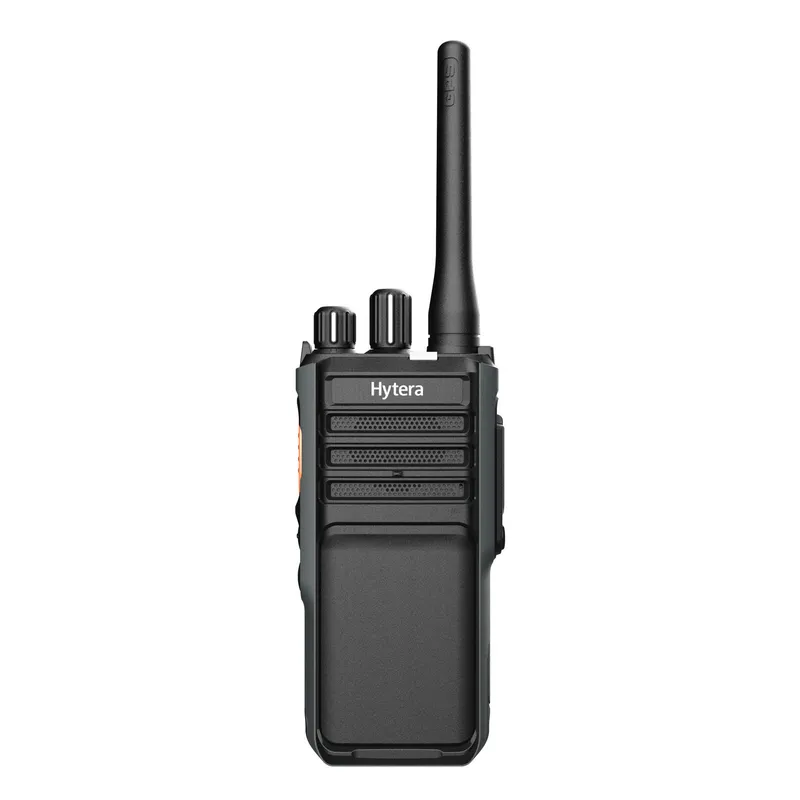
Hytera HP509 Professional DMR Handportable Radio



Ankara University Hospital renewed its communication infrastructure with Hytera HP5 series digital handsets supplied by TechnoRF, driven by a large ward network, heavy patient circulation and clinically critical operations. The objective was faster and more controlled communication between the security and clinical engineering teams. Wi-Fi fallback, Bluetooth headset support and a large colour display made real-time information sharing practical for staff who spend the working day moving through the building. A joint risk analysis led to leaky-feeder cabling for coverage continuity in the basement levels and low-profile antenna placement in the surgical towers. Digital voice encryption and remote kill-code protect operational traffic and, with it, information that touches patient confidentiality. Over the first 90 days of use the hospital reported a marked improvement in code-white response time.
A hospital combines almost every condition that degrades radio coverage in one building. Structural concrete is dense and heavily reinforced. Imaging rooms are deliberately shielded. Lift cores, plant rooms and basement levels sit below grade with no useful path to anything outside. Surgical blocks are electromagnetically sensitive, which constrains where transmitting equipment may be placed at all. On top of that, the people who most need to be reachable are the ones who move continuously between all of these. Coverage in a hospital is therefore designed against the building, not against a floor area figure.
Selection was made on operational fit rather than specification headline. Wi-Fi fallback strengthens continuity in areas where suitable infrastructure exists. Bluetooth headset support matters more than it sounds: staff carrying equipment or wearing protective clothing need to answer without unclipping a radio. A large colour display makes channel, status and task information readable at a glance in corridors, which is where most of this traffic is handled. These are ergonomic properties, and in a hospital ergonomics decide whether a radio is carried or left in a charger.
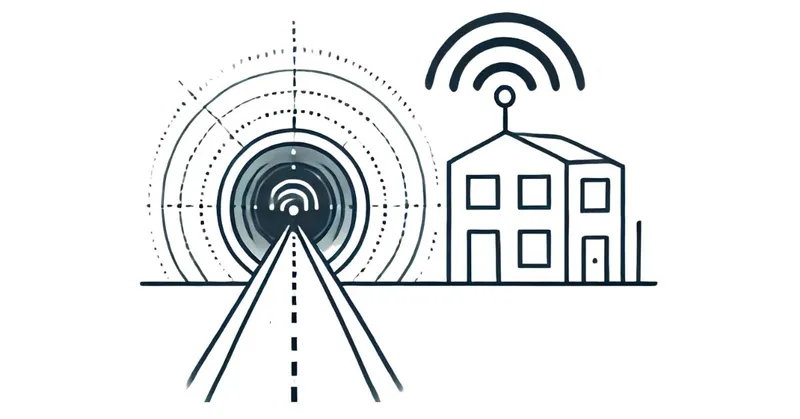
The two coverage problems in this building called for different answers. Basements are long, narrow and structurally sealed; a radiating cable run along the corridor produces even coverage where a point-source antenna produces a bright spot and two dead ends. Surgical towers are the opposite problem: coverage is needed, but the installation must be visually and physically unobtrusive and must not intrude on the clinical environment. Low-profile antennas placed against the building's own layout solved that without adding equipment where it would not be tolerated.
Hospital radio traffic routinely carries patient location, condition and movement. Analogue traffic on a known frequency is readable by anyone with a scanner, which is not an acceptable position for a health institution. Digital voice encryption closes that. Remote kill-code addresses the other exposure: a handset that leaves the building — lost, stolen or simply not returned — can be disabled centrally rather than remaining a live listening device on the hospital's own network.
Model number and unit price are the least useful lines in a hospital radio specification. What decides the outcome is measured in-building coverage including basements and lift cores, an antenna plan tied to the actual building, defined behaviour for emergency codes, voice encryption, management of unauthorised devices, battery endurance across a full shift, accessory compatibility, programming support and a maintenance response time appropriate to a facility that cannot stop. TechnoRF plans, installs and supports these systems for health institutions in Turkey end to end.
We deliver not only what you need, but more than you expect .