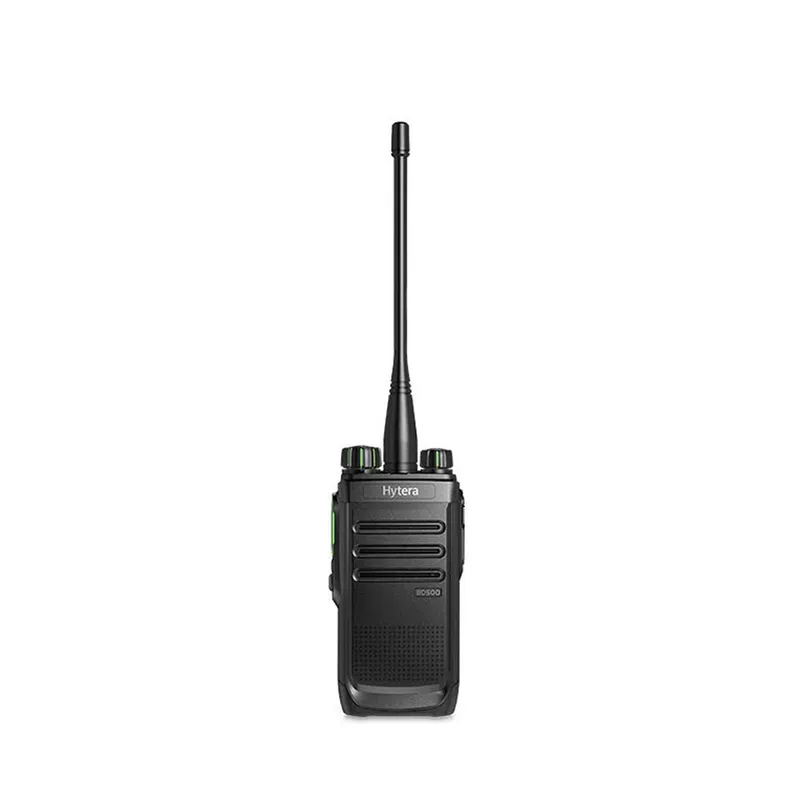
Hytera BD505 Professional DMR Handportable Radio



TechnoRF deployed lightweight Hytera BD505 digital handsets for the security unit at Mersin University Hospital, to support rapid response and strengthen team coordination during code white incidents. Devices were tested at strategic access points across the campus following a site survey, with the objective of leaving no blind spots. Noise suppression, vibrate alerting and fast group call were configured so that security staff can organise themselves within seconds of a code white being raised. A battery management programme reduced the risk of handsets running flat during heavy shifts, and encrypted voice keeps patient data and operational conversation confidential in line with an ISO 27001 approach to information security.
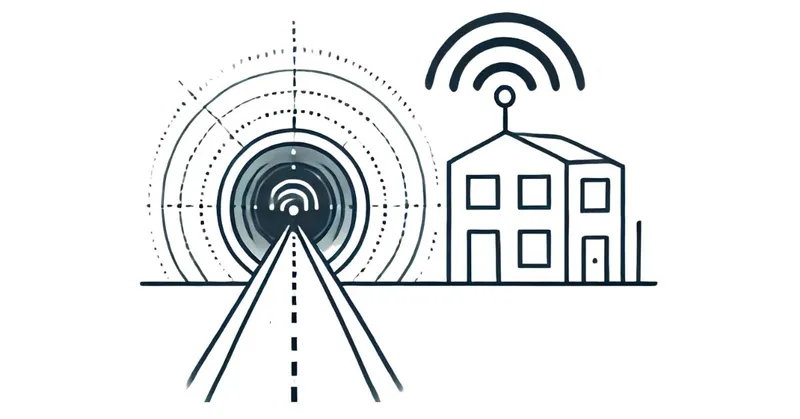
A university hospital campus is not one coverage problem but a set of them: separate blocks, connecting corridors, basements, car parks and outdoor areas between buildings, each behaving differently. A survey establishes where signal actually degrades before any decision about equipment is made — because if the coverage answer requires infrastructure, no handset specification will substitute for it. Testing at strategic access points, rather than sampling open floors, is what finds the gaps that matter to a security team.
Clinical staff work largely within known areas. Security staff go wherever an incident is, which in practice means the parts of the building nobody else routinely uses: service corridors, plant areas, stairwells, loading bays and the outdoor perimeter at night. These are precisely the locations where coverage is weakest and where a lone member of staff most needs to be able to call for support. Coverage design for a hospital security fleet is therefore driven by the exceptions, not by the general case.
Each of these three features maps to a specific failure. Noise suppression addresses the fact that a code white incident is loud, and a call that cannot be understood is a call that did not happen. Vibrate alerting means staff working in quiet clinical areas can be reached without an audible alert in a ward. Fast group call removes the seconds spent selecting a destination — under stress, any step that can be skipped will be. Together they change response time rather than call quality.
The most common cause of a hospital radio being unavailable is not a fault; it is a flat battery at hour ten of a twelve-hour shift. A management programme covers the unglamorous part: how many batteries are in circulation, where charging points sit relative to where staff actually pass, when packs are capacity-tested and when they are retired. It is the difference between a fleet that is nominally deployed and a fleet that is actually available.
Security traffic in a hospital names patients, locations and circumstances, and the same call that coordinates a response also broadcasts sensitive information to anyone listening on an open channel. Encrypted voice closes that exposure and brings radio traffic into line with the rest of the institution's information security posture, rather than leaving it as the one channel where the policy does not apply.
We deliver not only what you need, but more than you expect .