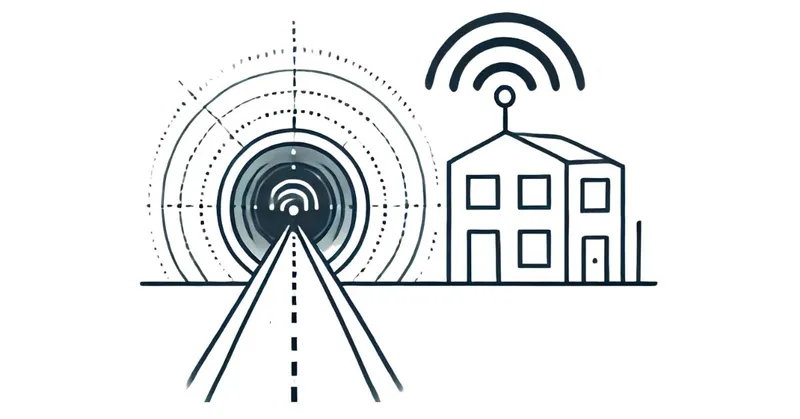
Tunnel and Indoor Coverage


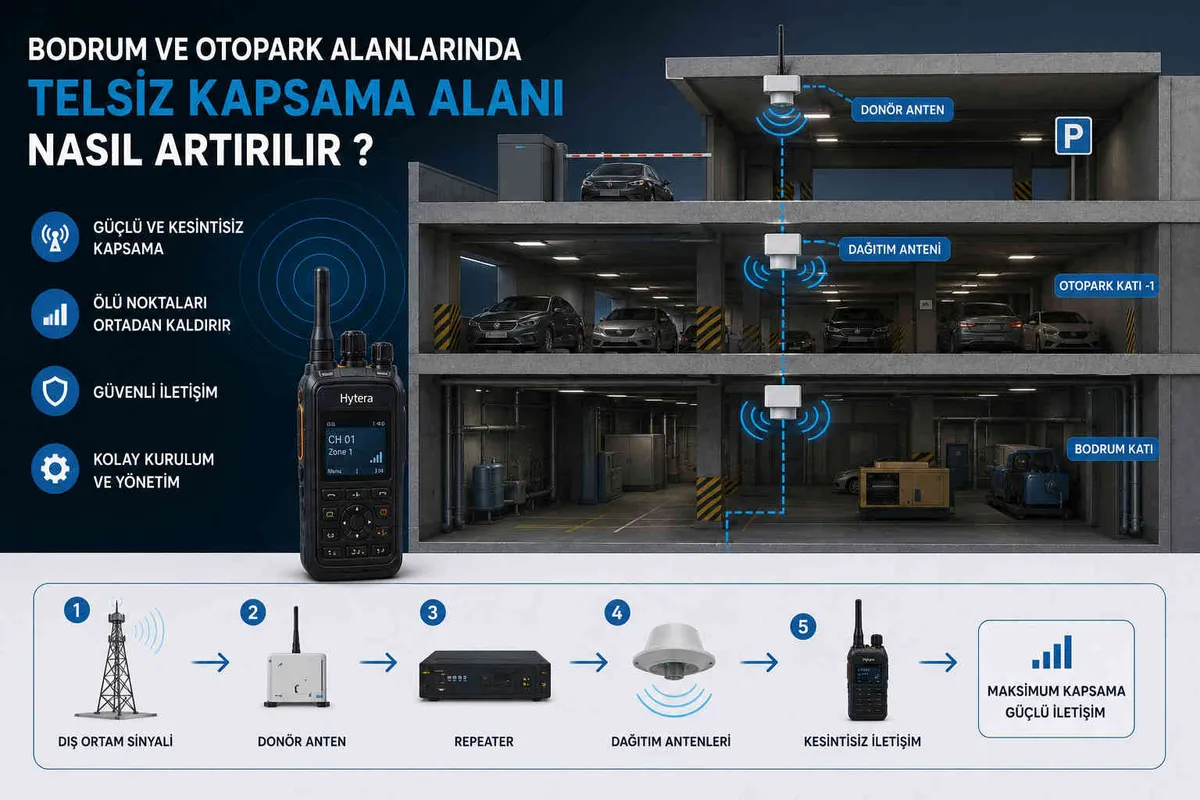
Reinforced concrete, earth and steel attenuate radio signals by tens of decibels, so no handset reaches a basement from outside. Coverage underground is created by putting a transmitting point down there — a repeater, a distributed antenna system or leaky feeder — never by buying a stronger radio.
Every facilities team eventually reports the same thing: the radios work everywhere except downstairs. Then someone proposes buying better radios, and the problem persists at greater cost.
The reason is not the equipment.
A radio signal reaching a basement has to pass through reinforced concrete, often several metres of earth, and a steel reinforcement mesh that behaves like a partial shield. The combined attenuation is measured in tens of decibels.
Put that against what is available. The difference between a 4 W and a 5 W handset is under 1 dB. Doubling power is 3 dB. Even a large power increase is a rounding error against a 40 dB structural loss.
Band helps a little: UHF's shorter wavelength diffracts through ramps, stairwells and door openings where VHF simply does not. That is why underground systems are UHF. But UHF alone does not solve a basement either — it just makes the openings usable once there is a signal to push through them.
The only thing that works is putting a transmitting point on the inside.
Before deciding anything, measure. An underground survey should record signal level and voice quality at named points, and should cover the places people actually go: each level, each ramp, the lift lobbies and lift cars, plant rooms, pump rooms, generator rooms, storage bays and the furthest parking corner.
Two conditions matter and are usually missed. Measure with vehicles present, because a full car park attenuates and reflects differently from an empty one. And measure inside lift cars, because a lift is a metal box on a cable and is one of the most complained-about locations in any building.
The output is a map of what is covered, what is not, and how far short each failing area falls. That number drives the choice of solution.
A repeater on the level. A repeater with its antenna underground, linked back to the main system by IP or cable. This is the right answer for a single basement level or a compact car park with reasonable internal line of sight. It is the least expensive of the three and the most often sufficient.
A distributed antenna system. One signal source feeding many small antennas placed through the space via splitters and cable. This suits multi-level car parks and deep basements where no single antenna position sees the whole area. It costs more, needs a cable design, and works well when it is designed rather than improvised.
Leaky feeder. A slotted radiating cable running the length of the space, turning the corridor itself into the antenna.
This is what tunnels, long ramps, deep multi-level parking and mines use, because the geometry is linear and no point antenna covers a curve.
Cable, treated as an afterthought. Loss rises with frequency and length. A long run of thin coax to an underground antenna can consume most of the power intended for it. Cable type belongs in the design and in the specification, with the loss figure at the operating frequency stated.
One antenna asked to do too much. A high-gain omnidirectional antenna in the middle of a car park produces a flat pattern that dies at ramps and pillars. Several modest antennas placed by survey outperform one large one placed by convenience.
Isolation ignored. A repeater whose transmit and receive antennas are too close to each other, or a badly tuned duplexer, will desensitise itself. The symptom is coverage that seems adequate near the equipment and disappears further away — easily misdiagnosed as insufficient power, which leads to the wrong fix.
No margin for change. A car park designed against an empty measurement will disappoint when it is full. A basement that later gains partition walls and stores will lose signal. Design with fade margin, typically 10 to 20 dB.
Underground coverage is disproportionately about emergencies — a casualty, a fire, a vehicle incident, a person trapped in a lift. Which means the coverage must survive the conditions in which it is needed.
Specify what happens on mains failure. A repeater on the same circuit as the lighting stops when the lighting stops, exactly when a security team needs to coordinate in the dark. Battery backup or a UPS with a defined runtime turns the system from a convenience into part of the building's emergency provision.
Underground coverage is the classic case of a promise that cannot be tested afterwards unless it was written before:
The reason to insist on all of it is simple. Underground coverage is expensive to add and far more expensive to add twice, and the second attempt always happens after an incident rather than before one.
No, and this is the most expensive misconception in the field. Reinforced concrete plus earth attenuates a signal by tens of decibels; a power increase available on handsets is a few. Doubling transmit power is 3 dB against a loss of 40 or more. The path has to be changed, not the transmitter.
A coaxial cable with slots along its length that deliberately radiates a small amount of signal as it runs. Instead of one antenna trying to fill a space, the cable becomes a long thin antenna following the corridor, tunnel or ramp. It is the standard answer for tunnels, deep car parks and mines.
A car park is long, low and open, so a signal will travel along it once introduced, but ramps and pillars break the path and parked vehicles change it daily. A plant room is small, enclosed and full of metal, so it needs a local antenna. They are usually two different parts of the same design.
They can. Where emergency services need to communicate on their own frequencies inside a structure, some buildings require dedicated in-building coverage for those services, with its own resilience and power requirements. That is a separate system from the operator's own radio and should be identified early rather than discovered at handover.
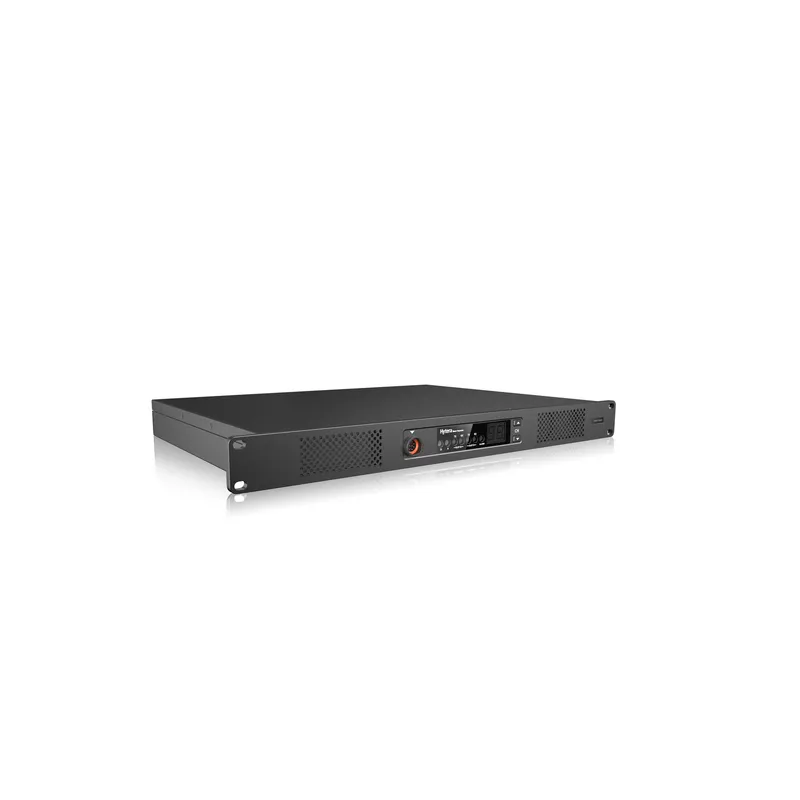
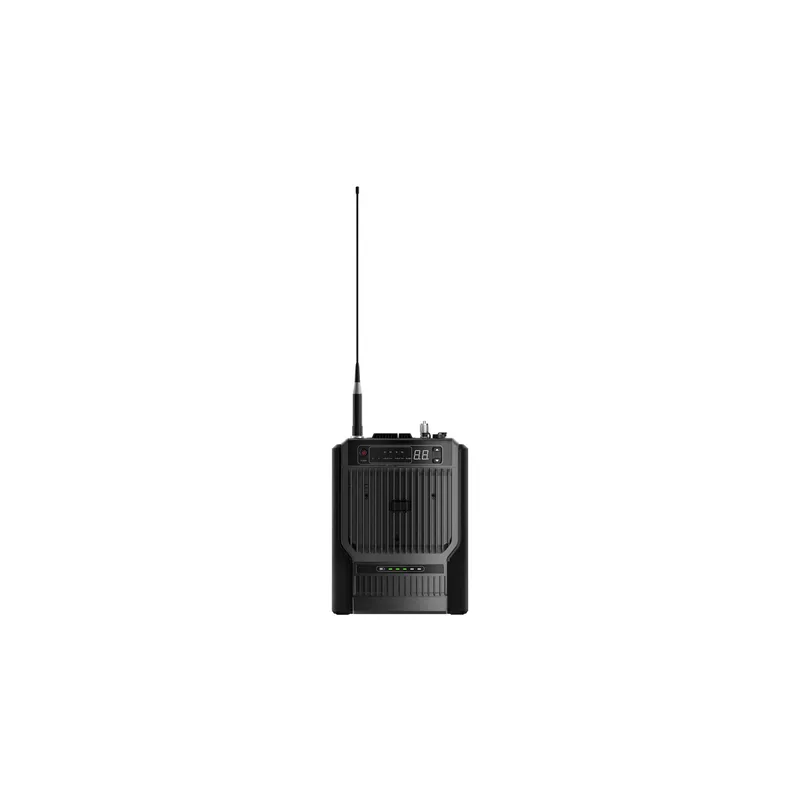
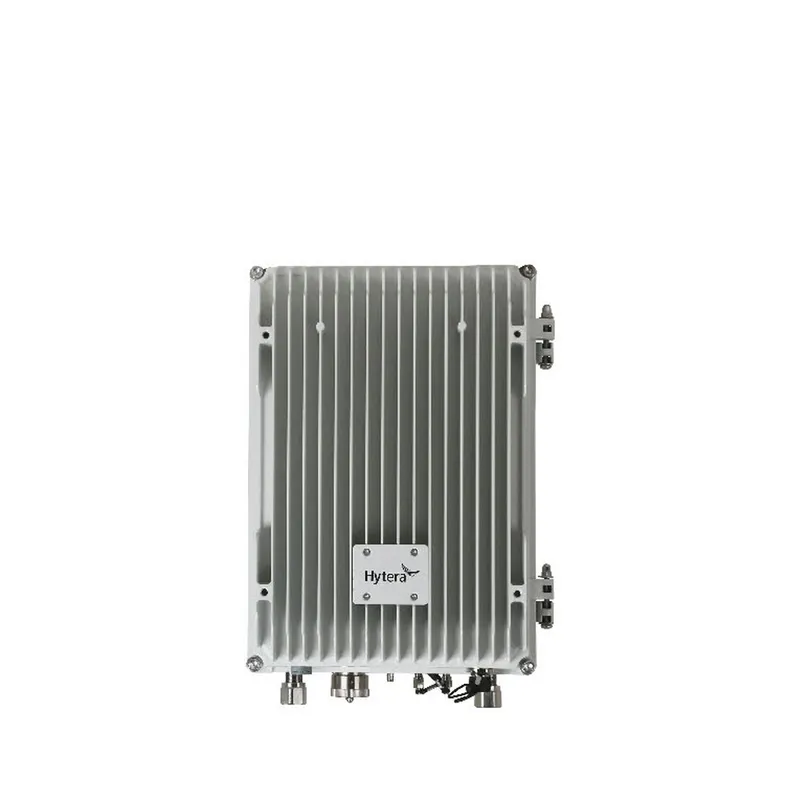
The Hytera product range, TechnoRF engineering, installation, maintenance, technical service and business continuity planning — brought together into a system designed for how your operation actually works.
We deliver not only what you need, but more than you expect .