Construction Sites


A concrete plant runs on timed sequences between the batching cabin, the aggregate yard, mixer drivers and the pump crew at the pour. Radio is the coordination layer, and the design is driven by dust, noise, vehicles that leave the site, and the need to reach a pour several kilometres away.
A concrete plant is a sequence of timed handovers. Aggregate is loaded, a batch is mixed, a truck is filled and weighed, it travels to a site, and a pump crew places the load within a window that the material itself imposes. Every step depends on the one before it being announced at the right moment.
That coordination is what the radio system is for, and it is why plants that run on mobile phones lose time they cannot name.
The batching cabin is the hub. The operator sequences loads, tells the loader what is needed, tells the weighbridge what is coming, and tells drivers when to pull forward.
Loader and aggregate yard. Operators in cabs, in dust, with a machine running — hands occupied, ambient noise high.
Weighbridge, gate and security. Vehicle movements on and off site, delivery documentation, and access control.
Mixer drivers. On site while loading, and away from it for most of their day.
The pump crew at the pour. Often kilometres from the plant, coordinating placement between an operator who cannot see the outlet and a crew who cannot see the controls.
Maintenance. Intermittent, and dependent on being reachable when a silo, a conveyor or a mixer stops.
Six populations with different needs is a channel plan question before it is a device question.
Dust. Cement and aggregate dust is fine, abrasive and everywhere. It attacks connectors and speaker grilles first. IP67 rather than IP54 is the working requirement, and accessory connectors need covers that are actually used.
Noise. Mixers, conveyors, compressors, loaders and reversing alarms. A radio's own loudspeaker at the hip loses this contest routinely, and the missed message gets reported as a coverage fault.
Vibration and impact. Cab-mounted equipment and radios carried by people working around plant.
Distance. The site itself is moderate, but the operation extends to wherever the concrete is going.
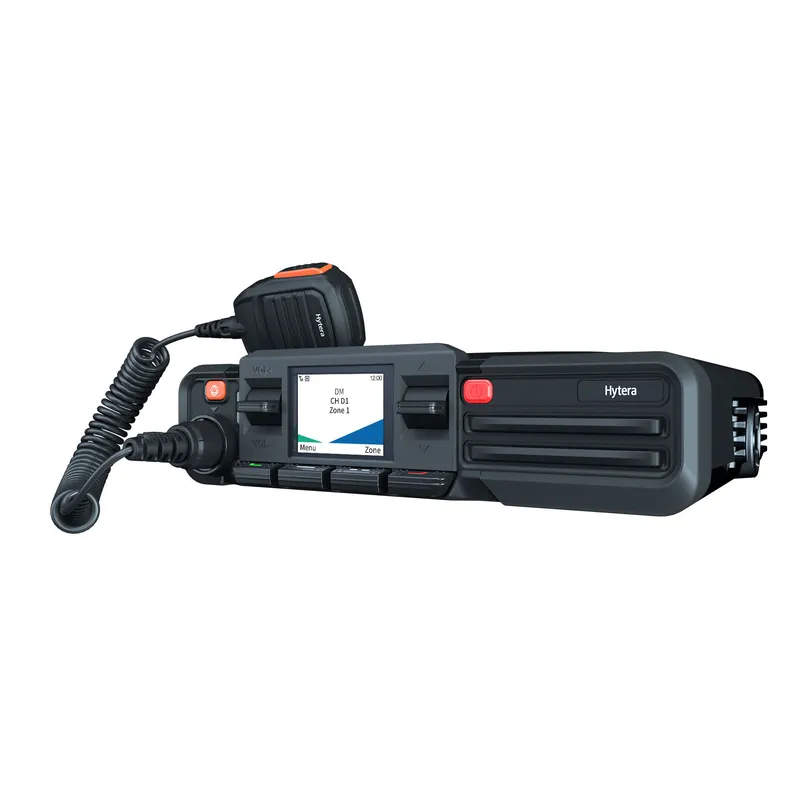
Cab-mounted mobiles for loaders, mixers and site vehicles. An external antenna clear of the cab does most of the work, and the operator gets a fixed microphone within reach. A handset thrown on a seat is neither heard nor reachable.
Handsets for the weighbridge, the gate, maintenance, supervisors and the pump crew on foot — with an accessory matched to the noise: a shoulder speaker microphone for general work, a headset where noise or hands-free operation demands it.
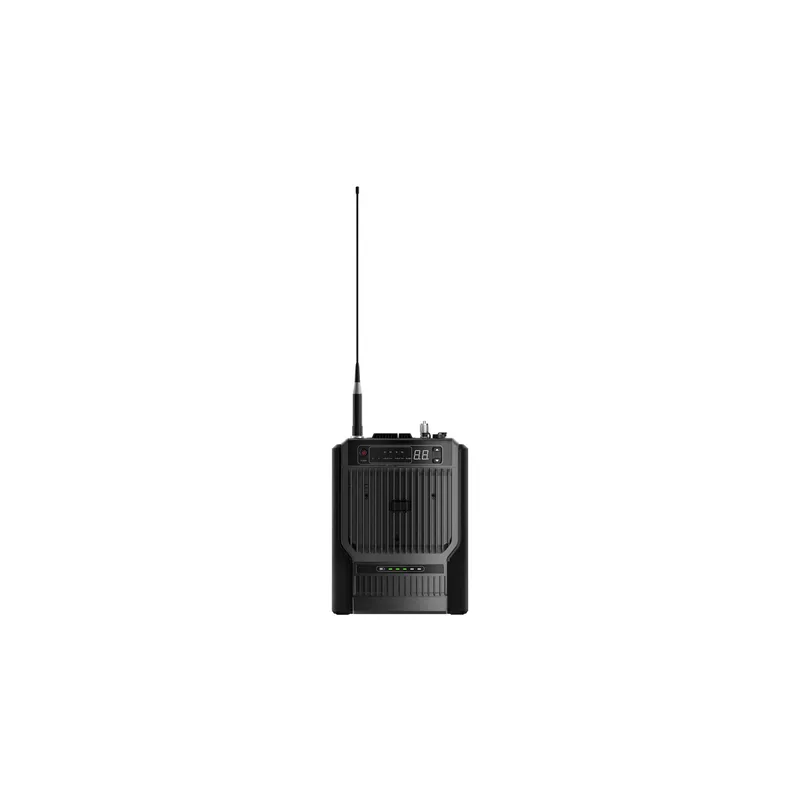
A fixed position in the batching cabin, which is usually a mobile radio on a power supply with a desk microphone and an external antenna. It is the cheapest way to give the hub a proper radio position rather than a handset propped against a screen.
This is the design decision that distinguishes a concrete plant from a warehouse. Mixers and pump crews are frequently several kilometres away, across a city or into terrain, and the plant still needs them.
Three approaches, and most plants use two of them:
Wide-area radio coverage. A repeater sited so the delivery radius is covered, which works well where deliveries are concentrated and terrain is cooperative. Coverage is yours and does not depend on a mobile operator.
PoC over cellular. National reach on day one, position reporting on the dispatch map, and no infrastructure. It stops where the network stops, which in a city is rarely and in a valley is often.
A gateway joining the two. Licensed radio on site where reliability matters, PoC for the vehicles that travel, with a talkgroup that spans both so the batching operator does not have to know which system a driver is on. This hybrid arrangement is covered in PoC, DMR, LTE and hybrid architectures.
A workable split for a plant:
DMR's two timeslots mean this does not require seven frequencies. Where several pours run simultaneously, dynamic grouping from a dispatch console is more practical than a fixed channel per pour.
A batching plant has silos, conveyors, moving vehicles, elevated walkways and confined spaces. The functions worth enabling fleet-wide:
Where combustible dust is present, the zone classification governs equipment selection exactly as it does for gas — certified device, certified battery, certified accessories. The reading of those markings is set out in ATEX radios in oil and gas.
Because the coordination is one to many and time-bound. A batching operator telling the loader, the weighbridge and the next driver the same thing needs them to hear it once, together, immediately. A phone call reaches one person after a delay, with a hand occupied — which is not available to a loader operator.
Either with wide-area radio coverage from a repeater sited for the delivery radius, or with PoC over the cellular network, or both joined by a gateway. Most plants end up hybrid: licensed radio on site where reliability matters, PoC for vehicles that travel across a city.
It requires a proper IP rating — IP67 rather than IP54 — and attention to connectors, which is where cement dust does its damage. Where combustible dust is present in silos or handling areas, the zone classification applies and certified equipment is required, exactly as it is for gas.
Hands-free operation and reliable audio at a distance from the plant. A pump operator watching a pour cannot hold a radio, and the placement crew is often out of sight of the operator. A headset or a boom microphone and a dedicated talkgroup for the pour are what make that coordination work.
The Hytera product range, TechnoRF engineering, installation, maintenance, technical service and business continuity planning — brought together into a system designed for how your operation actually works.
We deliver not only what you need, but more than you expect .