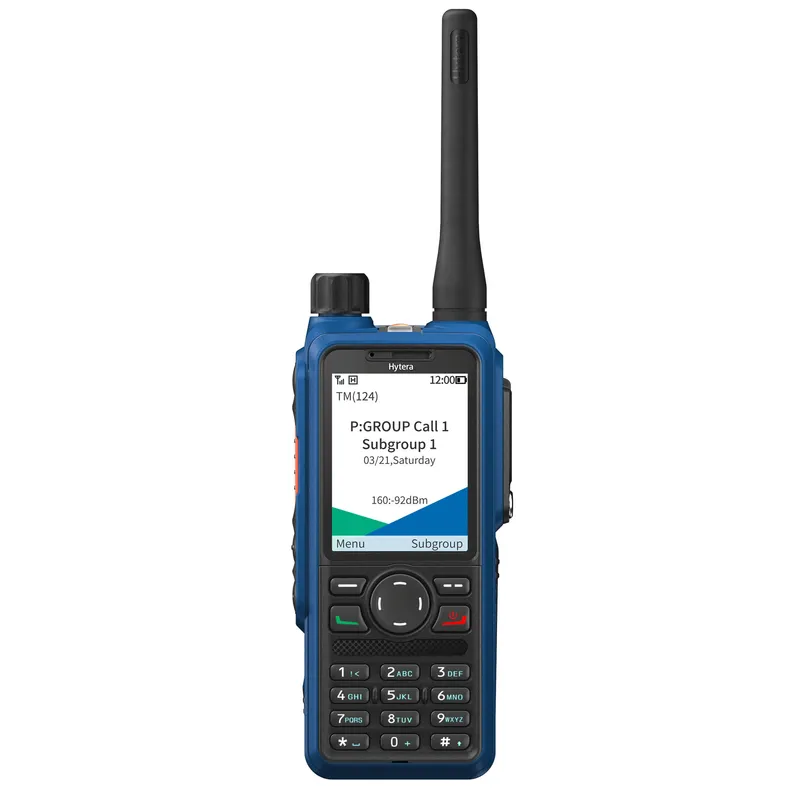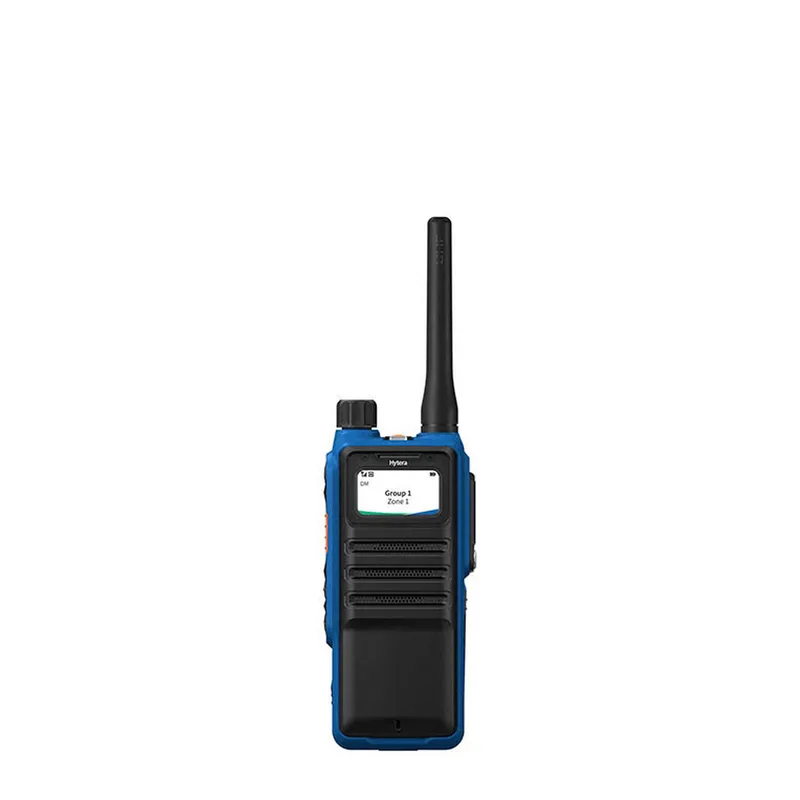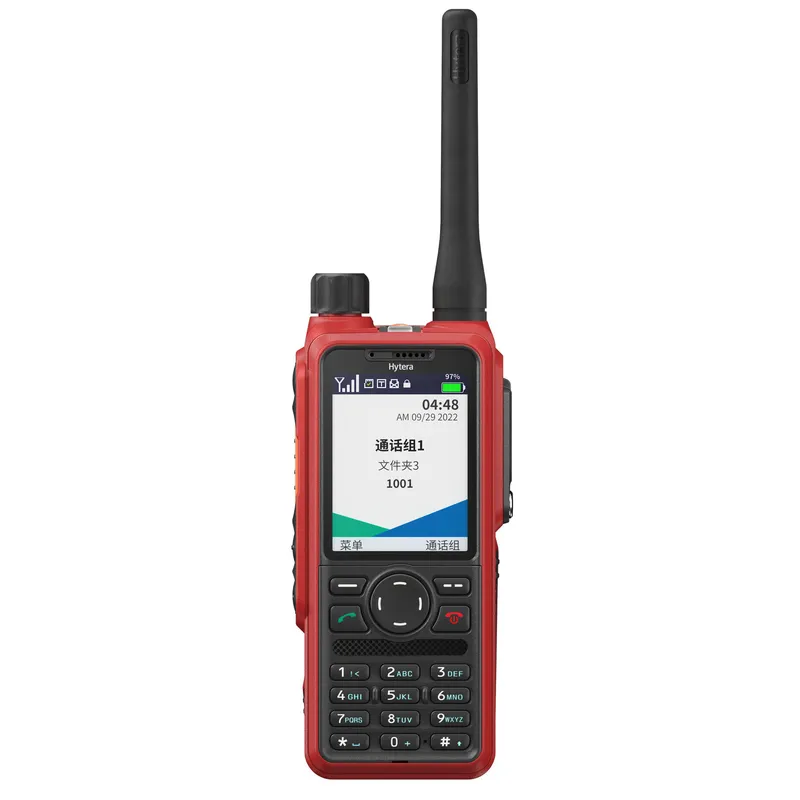
ATEX Radio Systems


An ATEX radio is certified as a complete assembly for a specific zone, gas group and temperature class. Reading the marking correctly is what separates a compliant fleet from a non-compliant one, and the most common failure is fitting an uncertified battery.
In a refinery, a tank farm, a bunkering berth or a gas processing plant, a radio is a potential ignition source carried by hand into an atmosphere that may be flammable. Certification is the answer, and the marking on the case is the whole of the information — provided anyone reads it.
Most compliance failures on real sites are not about buying uncertified equipment. They are about buying the right radio and then getting the assembly wrong.
Classification follows how frequently and for how long an explosive atmosphere is present.
| Zone | Medium | Presence | Category required |
|---|---|---|---|
| Zone 0 | Gas / vapour | Continuous or long periods | 1G |
| Zone 1 | Gas / vapour | Likely in normal operation | 2G |
| Zone 2 | Gas / vapour | Not normally, briefly if at all | 3G |
| Zone 20 | Dust | Continuous or long periods | 1D |
| Zone 21 | Dust | Likely in normal operation | 2D |
| Zone 22 | Dust | Not normally, briefly if at all | 3D |
Handsets are certified in practice for Zone 1 and Zone 2, and for Zone 21 and Zone 22 in dust. Zone 0 — the inside of a tank — is not a space people occupy continuously, so a handheld requirement there is rare.
The rule that governs everything: higher category equipment may be used in a lower zone; the reverse is never permitted. Zone 1 equipment works in Zone 2. Zone 2 equipment must not enter Zone 1.
The zone alone is insufficient, because what is in the atmosphere matters as much as how often.
Gas groups, by how easily the substance ignites:
IIC-certified equipment is usable in IIB and IIA. IIA equipment is not usable where hydrogen is present. For dust the equivalents are IIIA (combustible flyings), IIIB (non-conductive dust) and IIIC (conductive dust); a plant with metal dust needs IIIC.
Temperature class caps the maximum surface temperature the equipment may reach, which must stay below the ignition temperature of the substance present:
| Class | Maximum surface temperature |
|---|---|
| T1 | 450 °C |
| T2 | 300 °C |
| T3 | 200 °C |
| T4 | 135 °C |
| T5 | 100 °C |
| T6 | 85 °C |
Higher numbers mean tighter limits and greater protection. T4 is the common class for handsets.
Several protection principles exist; for handhelds the relevant one is intrinsic safety (Ex i). The idea is not to contain a spark but to limit the energy in the circuit so that a spark capable of ignition cannot occur in the first place.
Ex d, flameproof enclosure, works on a different principle: an internal explosion is permitted but prevented from propagating outside. Common on fixed equipment, rare on handsets.
Alongside ATEX there is the North American scheme, UL 913, the US standard for intrinsic safety. Hytera's hazardous-area range includes both ATEX/IECEx and UL913 certified models. In Türkiye the applicable framework is ATEX, with IECEx as the international mutual-recognition scheme; which certificate a site accepts belongs in the specification.
A typical marking looks like this:
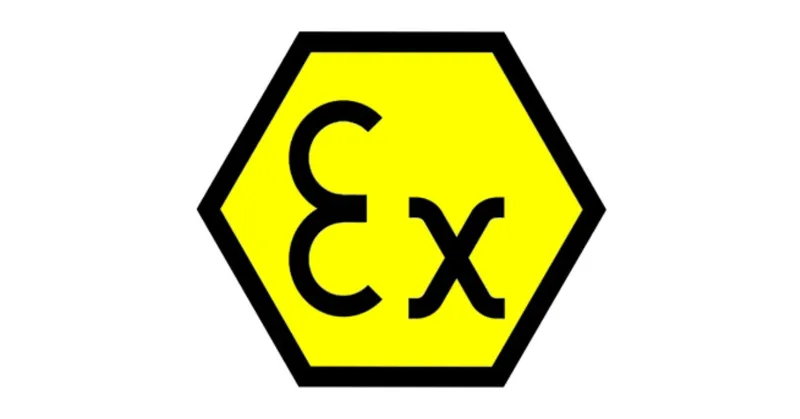
`⟨Ex⟩ II 2G Ex ib IIC T4 Gb`
| Part | Meaning |
|---|---|
| ⟨Ex⟩ | Equipment for explosive atmospheres |
| II | Equipment group II — surface industry, not mining |
| 2G | Category 2, gas — suitable for Zone 1 |
| Ex ib | Intrinsic safety, safe with one fault |
| IIC | Gas group IIC — hydrogen and acetylene |
| T4 | Maximum surface temperature 135 °C |
| Gb | Equipment protection level, gas, high |
Compare that string against the site's own classification drawing, part by part. If any element is weaker than the area requires, the radio does not belong there — regardless of how it is described in a catalogue.
Certification applies to the assembly, not to the radio body.
A certified handset with a standard battery is not certified. The battery is part of the intrinsic safety design — its energy content, its internal protection, its terminal arrangement are all in the certificate. The same applies to speaker microphones, headsets, antennas and carry cases.
The practical consequences on a site with mixed areas:
A fleet fails an audit on the battery far more often than on the radio.
In oil, gas and petrochemical facilities: pump and compressor houses, loading gantries, tank farm bunds, separator and process areas, sampling points, jetties and bunkering berths, and drainage systems. Control rooms, administration buildings and workshops are normally unclassified — which is why most sites need a certified subset of the fleet rather than a fully certified fleet.
Dust zones follow the same logic in a different industry: silos, mills, grain handling, flour and sugar processing, wood dust, metal grinding.
Vague ATEX wording produces non-compliant deliveries and is the single most common defect in hazardous-area radio tenders. Instead of "ATEX certified radios", state:
The last point deserves emphasis. An ATEX radio repaired by an unauthorised workshop is no longer a certified device, whatever it says on the case. Hazardous-area fleets need a service route that preserves the certificate, and that is a contract term rather than an assumption.
No. Protection goes one way only: equipment certified for a more demanding zone may be used in a less demanding one, never the reverse. A Zone 1 certified handset is fine in Zone 2; a Zone 2 handset in Zone 1 is a compliance breach and a real ignition risk.
The gas group it is certified for. IIA covers propane and fuel vapours, IIB covers ethylene and town gas, IIC covers hydrogen and acetylene — the substances with the lowest ignition energy. IIC equipment can be used in IIB and IIA atmospheres; IIA equipment cannot be used where hydrogen is present.
Yes, and this is where fleets most often fall out of compliance. Certification applies to the complete assembly. A certified handset fitted with a standard battery is no longer certified, and the same applies to speaker microphones, headsets and antennas. Hazardous-area stock has to be managed separately.
ATEX is the applicable framework in Türkiye, with IECEx as the international mutual-recognition scheme. UL913 is the North American intrinsic safety standard and appears on equipment built for that market. Which certificate a site accepts should be stated in the specification rather than assumed.
The Hytera product range, TechnoRF engineering, installation, maintenance, technical service and business continuity planning — brought together into a system designed for how your operation actually works.
We deliver not only what you need, but more than you expect .