DMR Radio Systems


A mobile radio in a vehicle transmits more power through a far better antenna at greater height, so it outranges a handset by a wide margin. Most field operations need both: mobiles as the backbone between sites and vehicles, handsets for the last few hundred metres on foot.
Buyers frequently ask which is better. The question has no answer, because they are not competing products — they are two positions in one architecture, and most field operations that work well are running both.
A mobile radio outperforms a handset for three reasons, listed in order of how much they matter.
The antenna. A vehicle antenna is a full-size quarter- or half-wave element, mounted on a large conductive ground plane — the roof — around two metres above the ground. A handset antenna is short, electrically compromised to fit, and its ground plane is a human body, which is a lossy, signal-absorbing object standing right next to it. This is the dominant term by a distance.
The height. Two metres of extra antenna height matters more than it sounds. The radio horizon scales with the square root of height at both ends, and more importantly the extra elevation clears kerb-level obstructions that a belt-worn antenna sits inside.
The power. A mobile transmits 25 to 50 watts, a handset 4 to 5. That is roughly 7 to 10 dB — real, but smaller than the antenna advantage, and it only helps in the transmit direction. Receiving, the antenna is doing all the work.
The practical lesson: a fleet with poorly mounted antennas has bought mobiles and thrown away most of what mobiles are for.
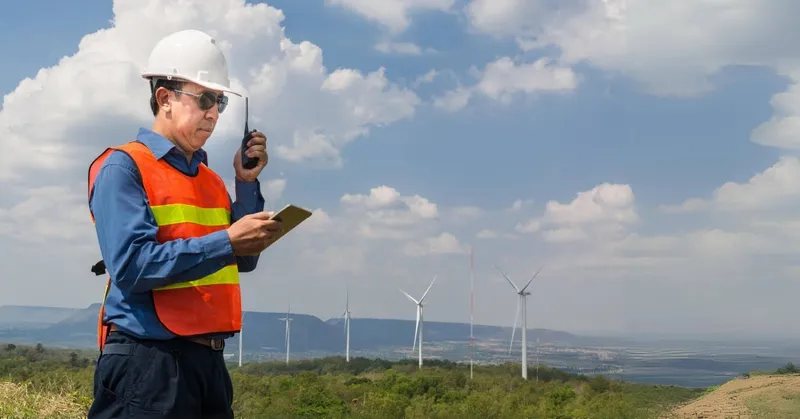
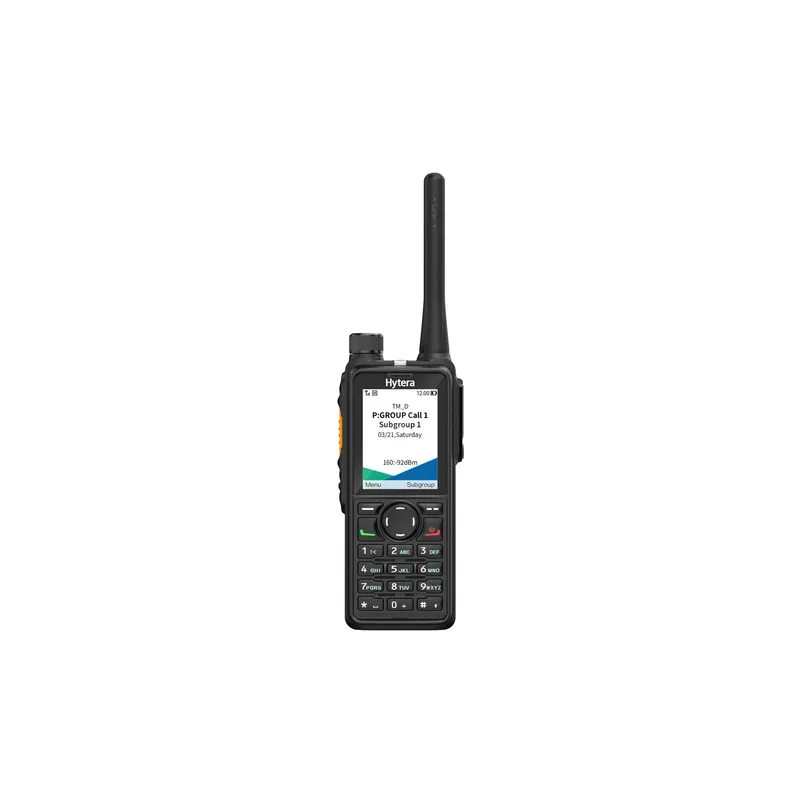
Handsets suit people who move on foot, change floors, work in and out of buildings, and need the radio on their body rather than in a vehicle. Security patrols, maintenance technicians, warehouse pickers, event staff, site supervisors. They are limited by battery life, by antenna efficiency and by the fact that they spend their lives being dropped.
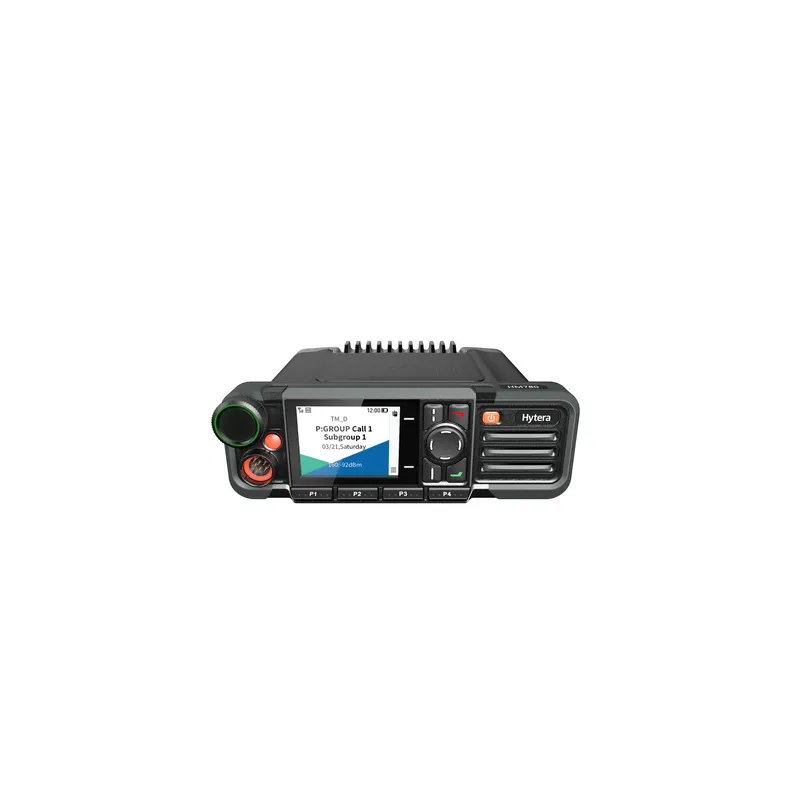
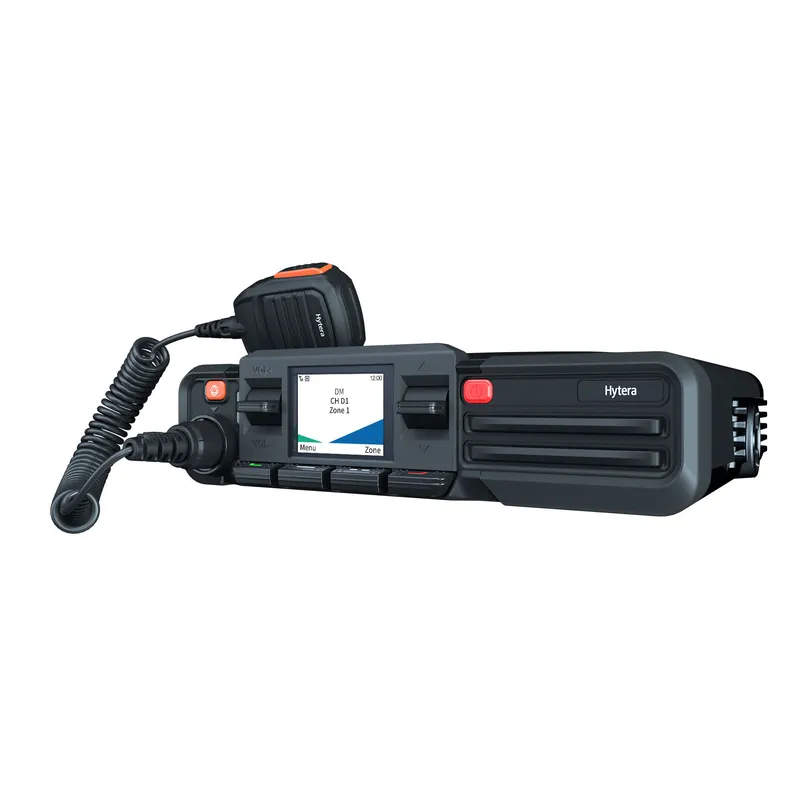
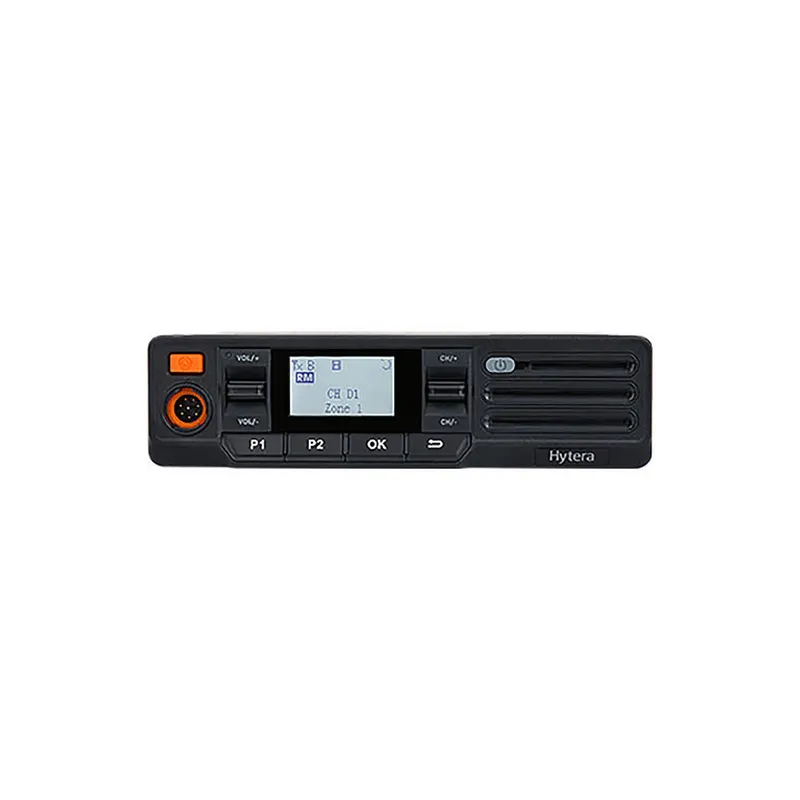
Mobiles suit vehicle-based work: distribution, ambulance and patient transport, utility line crews, quarry and mine haulage, municipal services, taxi and shuttle fleets. Permanent power means no battery anxiety and no charging logistics. A larger display and control head makes fleet functions — status, individual call, position reporting — practical to use while driving.
A mobile also does something a handset cannot: with an external power supply and an antenna, it becomes a fixed base station in an office or control room, which is often the cheapest way to give a dispatcher a radio position.
The failure mode of a mobile-only fleet is specific and common. A crew drives to a site, parks, and walks two hundred metres to the work. The radio is now in the vehicle and the crew is not. The moment of highest risk — working, away from the vehicle, possibly alone — is the moment with no communication.
The failure mode of a handset-only fleet is the mirror image: crews are in contact locally and out of contact between sites, so a control room cannot reach anyone in transit.
The architecture that works is unremarkable and reliable. A mobile in each vehicle for the long link and the dispatcher. A handset for each person for the local work. Both programmed on the same talkgroups so the transition is invisible, and both able to reach the repeater independently rather than the handset depending on the vehicle.
A mobile radio is only as good as its fitting, and fittings are routinely poor.
An identical radio in two vehicles, one fitted properly and one not, will differ in usable range by a factor that surprises people who assume the radio is the variable.
With DMR, both device classes carry the same feature set: individual and group calls, text, GPS reporting to a dispatch system, emergency alarm with automatic identification, and remote disable. The mobile's larger display makes those features easier to use; the handset's portability makes them available where the work is.
The relevant design point is that a mixed fleet must be programmed as one system. Talkgroups, contact lists, scan lists, emergency behaviour and channel names should be identical on both, so a user moving from cab to foot does not have to think. Two device types programmed by two different people at two different times is one of the most common sources of "the radios don't work properly" complaints, and it has nothing to do with the radios.
Count the roles, not the people. How many vehicles, how many people leave those vehicles, how many work on foot throughout, how many need a fixed position in a control room. That yields the quantities directly.
Then state the parts that are usually left out and that decide whether the system performs: antenna type and mount position per vehicle class, VSWR acceptance measurement, power connection method, a common programming template across both device types, and who reprograms the fleet when the talkgroup structure changes.
Typically two to four times a handset, and the transmit power is the smaller part of it. A mobile runs 25 to 50 watts against a handset's 4 to 5, which is worth a few decibels; the antenna is a full-size, efficient element on a metal roof two metres up, which is worth considerably more.
It works badly. A vehicle body is a metal box that attenuates signal substantially, so a handset used inside a cab loses much of the coverage it would have outside. The correct arrangement is either an installed mobile or a handset connected to an external antenna through a vehicle adapter.
Centre of the roof, on the metal, if the vehicle allows it. The roof acts as the ground plane the antenna needs, and the centre gives the most even pattern in all directions. Boot lids, wings and glass mounts all work less well, and a magnetic mount on a plastic panel barely works at all.
Usually yes. The mobile covers the vehicle; the driver leaving the vehicle is the moment coverage is most needed and least available. Fleets that issue only mobiles find their crews out of contact exactly when they are on foot dealing with the reason they drove there.
The Hytera product range, TechnoRF engineering, installation, maintenance, technical service and business continuity planning — brought together into a system designed for how your operation actually works.
We deliver not only what you need, but more than you expect .