Analogue Radio Systems


VHF around 136-174 MHz carries further than UHF over open terrain and across water, and it passes through foliage more readily. The price is antenna length, poor building penetration and a crowded band. It suits agriculture, forestry, marine work and utility line crews.
VHF is often treated as the older, lesser option — the band you get when nobody thought about it. That is backwards. VHF is a specialist band, and in its specialism nothing else comes close.
A 150 MHz wave is about two metres long. Longer waves lose less energy travelling through open air and through vegetation, and they follow the curvature of terrain slightly better. Over ground with nothing in the way, that adds up to meaningfully greater range for the same transmit power and the same antenna height.
Foliage is the clearest case. A stand of trees in leaf attenuates UHF considerably; VHF passes through with far less loss. Anyone who has worked a forestry or orchard site with both bands has seen the difference without needing a meter.
Water is the other. VHF propagates well over a sea or lake surface, which is one reason marine radio was allocated there and stayed.
Farms have a communication profile almost no other operation shares: long distances, no infrastructure, unreliable mobile coverage, and machinery that makes working alone genuinely dangerous. VHF answers the first three directly.
The radio horizon in kilometres is roughly 4.12 × √h, with h the antenna height in metres, applied at both ends of the link. A repeater antenna on a 20-metre mast on a rise sees about 18 kilometres of flat ground — usually more than the holding needs. Handset to handset without a repeater, open terrain gives several kilometres, which covers a great many working days.
Where a farm also has sheds, feed plants and packing halls, those buildings are where VHF gives up. Mixed sites end up either accepting weaker indoor coverage or running a second UHF system for the buildings.
Power line maintenance is a linear operation across terrain that is deliberately kept clear — a near-ideal VHF environment. Crews work kilometres apart along a corridor with no infrastructure, often in valleys where mobile coverage is absent.
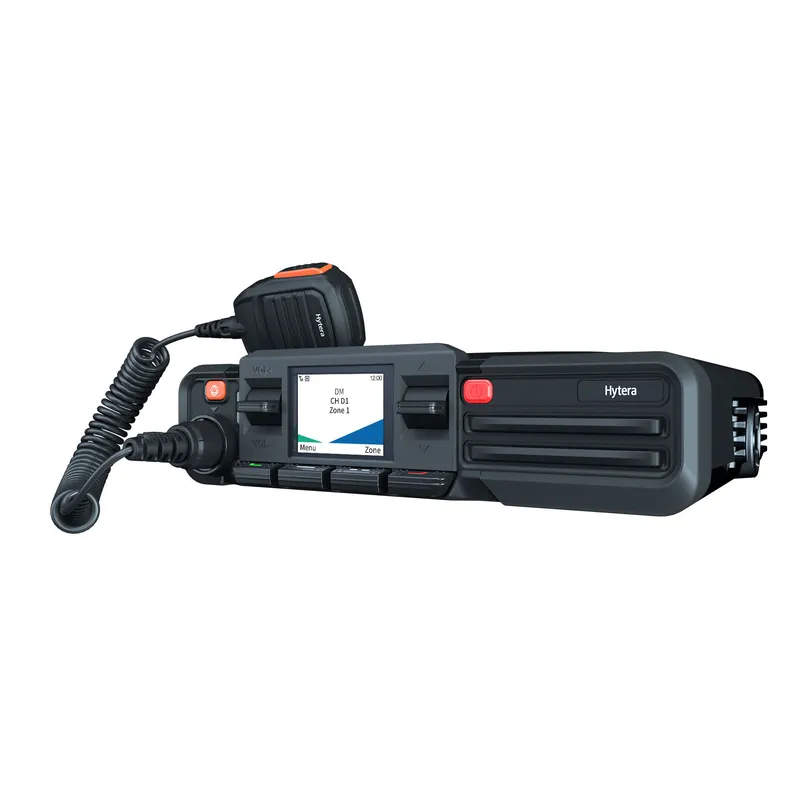
Two design points matter here. Vehicle-mounted mobiles with a proper roof antenna substantially outperform handsets, and the practical architecture is usually a mobile in each vehicle acting as the link, with handsets working locally around it. And line-of-sight along a valley is not the same as line-of-sight across one: a repeater sited by convenience rather than by survey will cover the road it stands on and nothing else.
Large open sites — a construction project before the structures rise, a container yard, an outdoor storage area, a perimeter patrol route — are VHF-friendly for as long as they stay open.
The catch is that construction sites do not stay open. A system designed at foundation stage against clear-terrain propagation will be inadequate by the time the frame is up. Sites that will become buildings should be planned for what they will be, which frequently means UHF from the start or an accepted mid-project change.
Ports are a genuine mixed case: marine VHF for vessel traffic by regulation, and commonly a separate system for terminal, yard and gate operations, since those are building-dense.
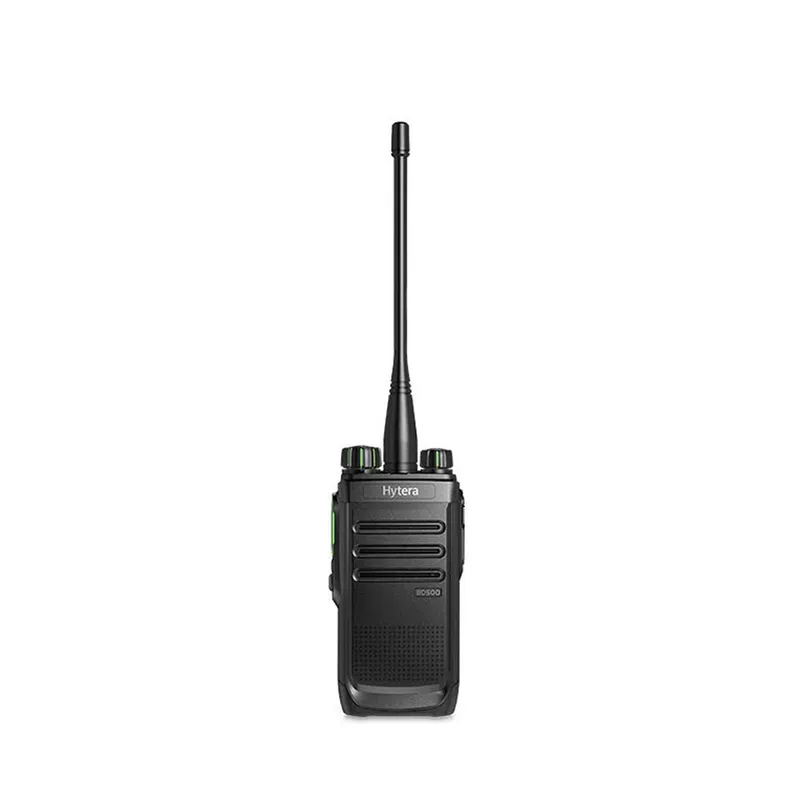
VHF's cost is physical. A quarter-wave antenna at 150 MHz is roughly 50 centimetres. That is fine on a vehicle roof and awkward on a handset worn on a belt.
Manufacturers sell short VHF antennas, and they work — inefficiently. A heavily shortened antenna radiates less of the power the transmitter produces, so the band's range advantage is partly given away at the point where it was supposed to be collected. If an operation is buying VHF for range and then fitting stubby antennas, it has bought the disadvantages of the band without the benefit.
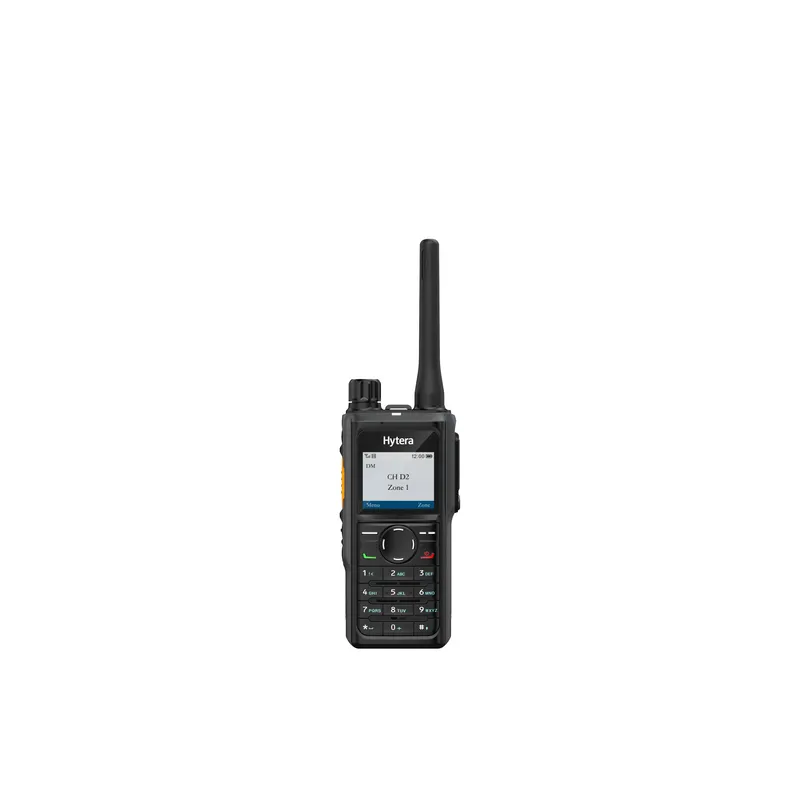
The design implication: VHF favours vehicle-mounted mobiles with full-size antennas, and handsets that accept a proper whip.
Say it plainly, because the wrong band is a costly mistake in either direction:
Those cases are covered in when to choose UHF.
Over genuinely open, flat terrain, roughly a third to a half further than UHF at the same power and antenna height — enough to matter across a farm or a transmission corridor. The advantage disappears as soon as buildings or dense structure enter the path, which is why the honest answer depends entirely on the site.
Because antenna length is tied to wavelength. A quarter-wave antenna at 150 MHz is about 50 cm; at 450 MHz it is about 17 cm. A short stubby VHF antenna is electrically compromised and gives away much of the band's advantage, which is why vehicle-mounted VHF is common and pocket-sized VHF is a poor trade.
Not useless, but weak. VHF will cover a single-storey shed or a barn adequately. It struggles badly between floors and inside dense structure, because a two-metre wave does not diffract through door-sized openings. Operations with both open land and buildings often run both bands with a gateway between them.
Marine communication is VHF by international allocation, and that is not a preference a port can override — ship-to-shore traffic uses the marine band with its own channel plan and licensing. Port internal operations frequently run a separate UHF system for terminal buildings and yard teams, linked where it is useful.
The Hytera product range, TechnoRF engineering, installation, maintenance, technical service and business continuity planning — brought together into a system designed for how your operation actually works.
We deliver not only what you need, but more than you expect .