Private LTE and Hybrid Networks


Most organisations large enough to have both a site and a fleet end up running two technologies. The design question is not which one wins but where the boundary sits and how it is bridged, so that a talkgroup spans both without users having to know which system they are on.
Ask which technology will win and the honest answer is that the question has stopped being useful. Organisations large enough to have both a fixed operation and a mobile one are ending up with two systems, and the interesting work is at the join.
Each technology has a property the others cannot supply.
Licensed radio — DMR or TETRA — owns its infrastructure. Its coverage does not depend on a commercial operator's decisions, congestion or outages, and it degrades gracefully rather than stopping. That property is the entire reason critical operations buy it, and no amount of broadband capability substitutes for it.
PoC borrows national coverage. A team in five cities is reachable on day one with no infrastructure. Add video, mapping, messaging and central device management and it does things conventional radio does not attempt.
Private LTE owns broadband. For a mine, a port, an airport or a large industrial campus, it gives owned wide-band coverage with controlled capacity, priority and the data throughput that voice-oriented radio cannot carry.
An organisation with a plant and a national service fleet needs the first and the second. Telling it to choose is telling it to give up one requirement.
The general rule is about consequence rather than technology.
Infrastructure-based radio where an outage is an incident. Inside the plant, the hospital, the refinery, the tunnel, the port. Underground, where cellular does not reach. Anywhere a safety function depends on the call.
Cellular-based PoC where reach matters more than resilience. Vehicles between sites, service technicians across a country, distributed branches, long-distance transfers.
Private LTE where the site is large, data-heavy and cannot depend on an operator.
Draw the boundary on a map of the operation, not on a technology comparison table.
A hybrid without a bridge is two systems and a policy. The bridge is what makes it one.
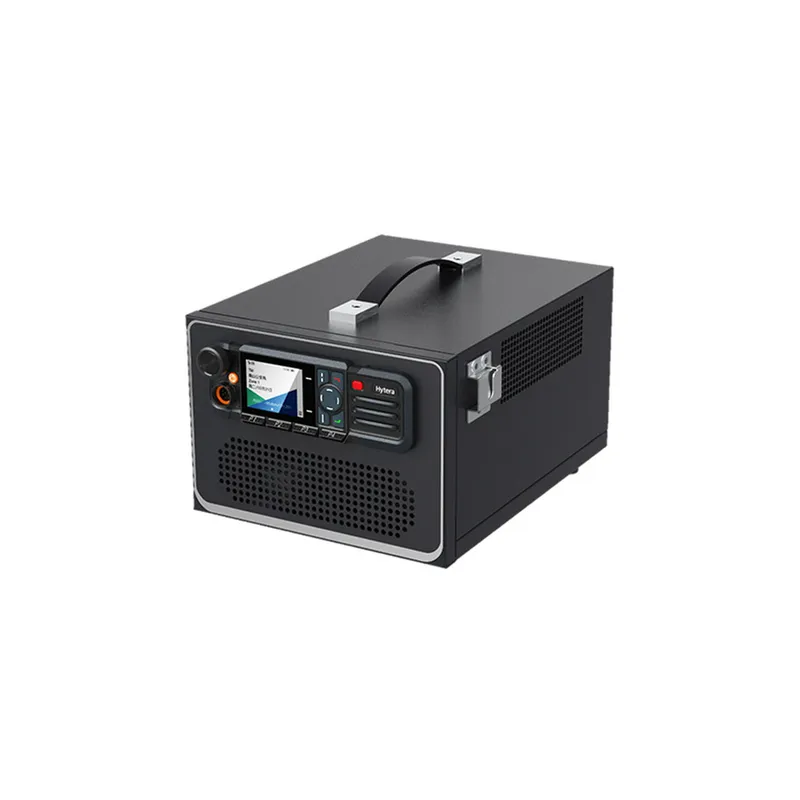
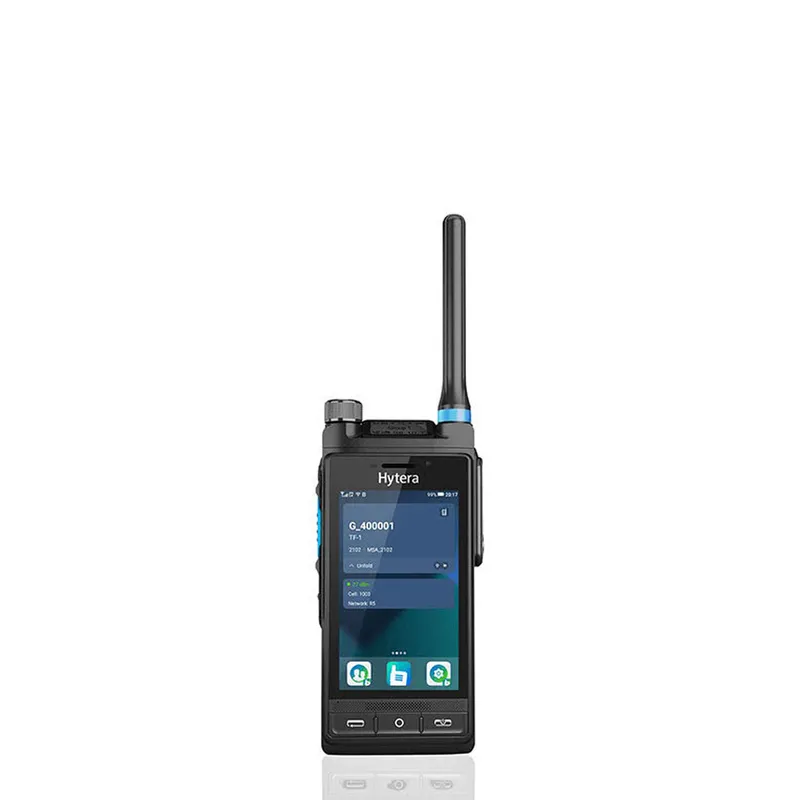
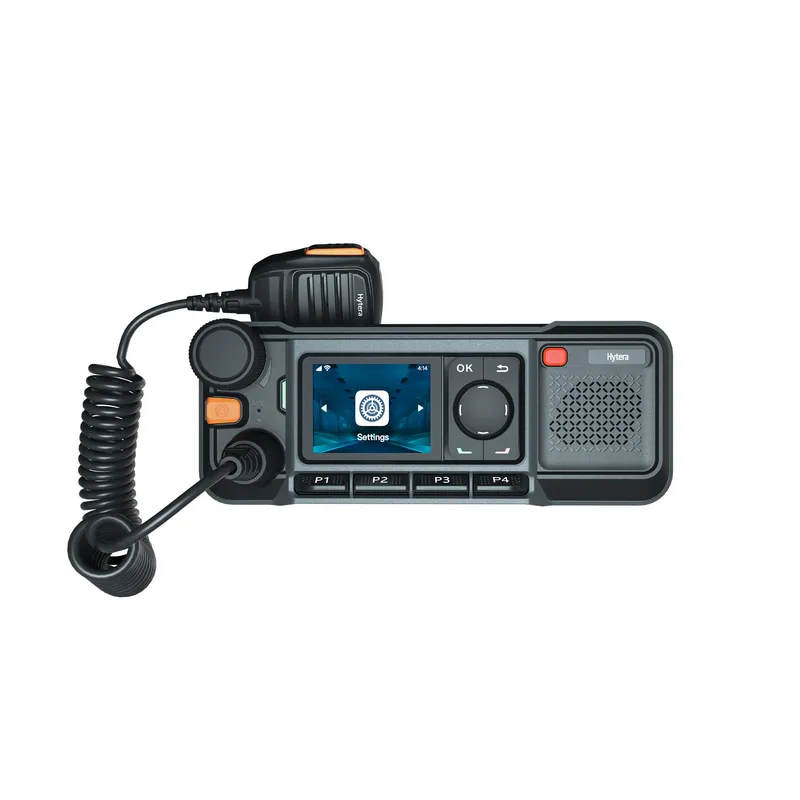
A PMR-to-broadband gateway — Hytera's is one example of the category — joins a DMR or TETRA talkgroup to a PoC group. A call from a handset in the plant is heard by drivers across the country; a driver's call reaches the plant. Neither user selects a system.
That last point is the design requirement, not a nicety. Any boundary that users must remember to cross is a boundary that will not be crossed during an incident, which is the only time it matters.
What a gateway design has to settle:
The standards work that produced MCPTT and the wider MCX family is what makes broadband a candidate for genuinely critical use: guaranteed setup times, priority and pre-emption, group management, and off-network operation — the properties TETRA had and early PoC did not.
Where these platforms run on a private LTE network the organisation controls, the resilience argument narrows considerably. It has not disappeared: the network still has to be engineered, powered and maintained to the standard TETRA infrastructure is, and that is a substantial undertaking rather than a subscription.
The pragmatic position for most organisations today: treat mission-critical broadband as a real option for large, well-resourced deployments, and as an addition rather than a replacement everywhere else.
Worth stating, because hybrid proposals rarely include them:
Two platforms to configure. Talkgroup structures aligned across both, IDs that do not collide, emergency behaviour equivalent on each side.
Two support relationships, unless one supplier covers both — which is a reason to prefer one that does.
Two device populations, with different batteries, accessories and replacement cycles. PoC devices follow the cellular cycle of three to five years; DMR handsets run ten.
Training that spans both. Users who carry one device need to know nothing; users who carry two need to know when each applies, and that is a training problem before it is a technology one.
A gateway that is now a single point of failure unless it is designed otherwise.
The place a hybrid becomes coherent is the control room. One console showing radio users and PoC users on one map, calling either without knowing which, forming temporary groups that span both, recording everything to one retention policy.
Without that, a hybrid is two systems whose operators must remember which screen to look at — which in practice means one of them is neglected.
Hybrids fail on coherence rather than on engineering. The technology works; the configuration, the training and the boundary are where the effort belongs.
No, and the reason is structural rather than sentimental. Licensed radio owns its own infrastructure and works when networks do not, which is exactly the property critical operations buy. Broadband adds reach and data that radio cannot match. They answer different requirements, which is why hybrids rather than replacements are the outcome.
It bridges a talkgroup between two systems, so a call from a DMR handset on site is heard by PoC users across the country and the reverse. Done properly, users on either side do not need to know the other system exists — which is the whole point, because a boundary users must remember is a boundary that fails.
When the site is large, data-heavy and cannot depend on an operator: mines, ports, large industrial campuses, airports. Private LTE gives owned broadband coverage with controlled capacity and priority. It is a substantial investment and it makes sense where the alternative is depending on coverage you do not control.
Not the technology — the configuration and the training. Talkgroup structures must align across two platforms, IDs must not collide, emergency behaviour must be equivalent on both sides, and users must never have to decide which system to use. Hybrids fail on coherence far more often than on engineering.
The Hytera product range, TechnoRF engineering, installation, maintenance, technical service and business continuity planning — brought together into a system designed for how your operation actually works.
We deliver not only what you need, but more than you expect .