DMR Radio Systems


Device price is a poor proxy for what a radio system costs. Over ten years the larger items are coverage infrastructure, batteries replaced two or three times, programming, service and the operational cost of downtime — and subscription models overtake capital ones somewhere around year three.
Two offers arrive. One is 30 percent cheaper per handset. The finance case looks settled, and it usually is not, because the handset is not what the organisation is buying.
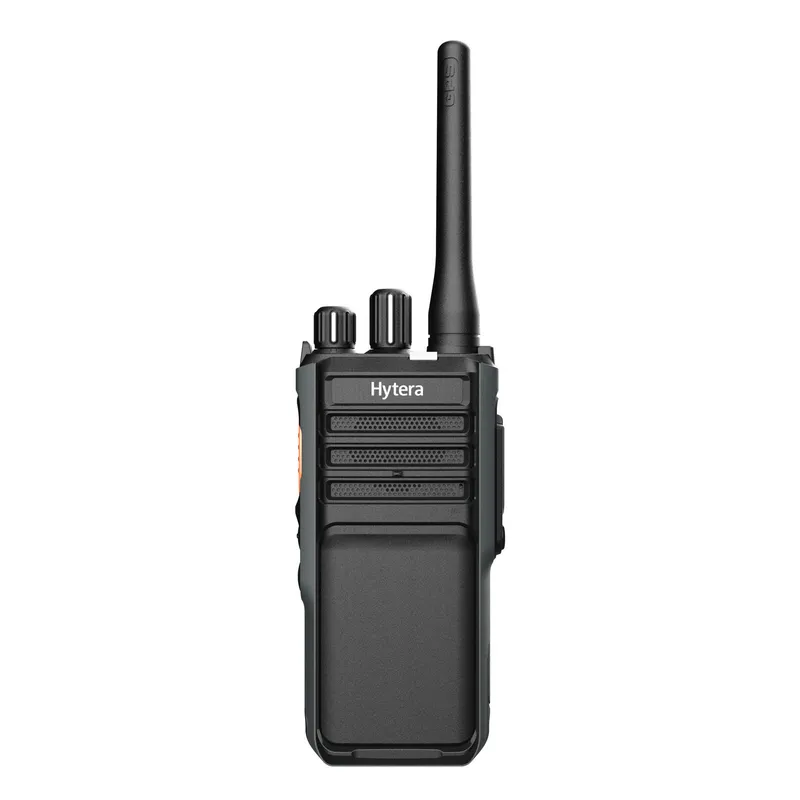
Devices. Handsets, vehicle mobiles, base positions. The visible number, and the smallest of the large ones.
Infrastructure. Repeaters, antennas, feeder cable, mounting, lightning protection, power and backup, site preparation, and the linking between sites if there is more than one. On any system that covers more than a single building, this is frequently larger than the device line.
Licensing. Assignment fees and their recurrence, plus the internal cost of the process.
Installation and commissioning. Antenna work, cable runs, vehicle installations, coverage measurement, acceptance testing.
Programming. The channel plan, the initial configuration, and the reprogramming rounds that follow every organisational change.
Batteries. The recurring item people forget. Lithium-ion capacity declines with cycles; a fleet in daily use needs replacement every two to three years, so a ten-year horizon includes two or three complete battery replacements.
Accessories. Speaker microphones, headsets, cases, antennas — consumables in practice, with failure rates driven by the environment.
Service and maintenance. Repairs, preventive checks, spare device holding, and the response time that determines how long a fault costs anything.
Training. Initial, and again for new starters, which is continuous in operations with turnover.
Downtime. The operational cost of communication being unavailable. Hardest to quantify and often the largest.
Replacement. What happens at end of life, and whether the architecture survives it.
The pattern is consistent enough to predict.
Undersized infrastructure. A quotation that assumes one repeater where the site needs two is cheaper and does not cover the site. The second repeater is bought later at full price, with a second installation, a second licence and a fleet reprogramming.
Weak batteries. A pack that manages eight hours on a twelve-hour shift means a second pack per radio, or a radio that dies mid-shift. Either is a cost; the second is also an incident.
No local service. A repair route through an unauthorised workshop or a long international turnaround means a device out of service for weeks. Multiply by the fleet's failure rate and the difference dwarfs the purchase saving.
Devices below the environment. An IP54 radio in a wet or dusty plant fails at a rate an IP67 radio does not. The failure rate is the cost, and it recurs.
No programming discipline. Configuration drift produces intermittent faults that consume engineering time, generate mistrust, and occasionally get "solved" by replacing working hardware.
The comparison that most often decides a technology choice.
DMR or TETRA — a large up-front cost, then maintenance, batteries and occasional expansion. The curve is steep and then flat.
PoC — a small up-front cost, then a per-device monthly fee indefinitely. The curve is shallow and never levels.
They cross. For a forty-user fleet the crossover is usually somewhere in year three or four; below about ten users it may never arrive within any horizon that matters. The variable that moves the answer is the number of users, not the technology's merits.
Two things belong in the comparison and are usually left out. PoC devices follow the cellular replacement cycle — three to five years — while DMR handsets routinely run ten. And PoC needs no infrastructure at all, which for an organisation with sites in five cities is a genuine and large saving that the monthly fee is buying.
Take fifty users on one site over ten years. The device line might be a quarter of the total. Infrastructure and installation another quarter. Batteries, replaced twice, a further meaningful share. Programming, training, service and spares make up most of the rest.
The exact proportions vary with the site. The conclusion does not: a 30 percent saving on devices is under 10 percent of the total, and it is routinely more than consumed by one of the failure modes above.
Comparing offers on total cost requires asking for the components, which most specifications do not:
Then compare like with like. An offer that omits programming and training is not cheaper than one that includes them; it is a different scope, and comparing them on price is comparing two different purchases.
Downtime is the largest hidden cost and the one no bid quantifies.
If communication is unavailable for a day, what stops? A dispatch queue backs up, a crew stands idle, an incident response is slower, a shipment misses a slot. Whatever that figure is, it belongs against the service response time in the contract — because that clause is what converts an outage from a week into an afternoon.
Organisations that estimate it, even roughly, stop treating service terms as boilerplate. That single change usually improves the decision more than any other analysis in the procurement.
On a typical mid-sized system, well under half. Batteries alone are replaced two or three times over that period, infrastructure and installation are a large single item, and service, programming and training recur. Systems chosen on device price routinely cost more overall than the offer they beat.
For a fleet of around forty users, typically in year three or four. The subscription is small monthly and relentless; the DMR system is a large one-off and then maintenance. Below roughly ten users the crossover may never arrive, which is why the user count decides the model more than the technology does.
By what the operation loses while communication is unavailable — delayed dispatch, an idle crew, a slower incident response, a shipment that misses a slot. It is uncomfortable to estimate and it is usually the largest hidden item, which is why service response time belongs in the contract with a number.
Yes. Lithium-ion packs lose capacity with cycles and age, and a fleet cycled daily needs replacement roughly every two to three years. For a hundred-radio fleet that is a recurring line item of real size, and one that surprises organisations that budgeted only for the purchase.
The Hytera product range, TechnoRF engineering, installation, maintenance, technical service and business continuity planning — brought together into a system designed for how your operation actually works.
We deliver not only what you need, but more than you expect .