DMR Radio Systems


Fleet management is the discipline that keeps a growing radio system coherent: an accurate inventory, an ID scheme that encodes role and site, one master codeplug rather than many, batteries tracked by age, and a defined process for reprogramming the whole fleet at once.
A radio fleet is manageable at twenty devices by memory and goodwill. At two hundred it is not, and the symptoms of that transition are consistent: nobody knows how many radios exist, several are missing without anyone being sure when, half the fleet has last year's talkgroups, and the person who knew the programming has left.
None of that is a hardware problem, and none of it is fixed by buying better radios.
The foundation is a record of what exists. For each device: serial number, model, radio ID, assigned department or individual, issue date, battery serial and date, accessories issued, firmware version, codeplug version, and service history.
Most organisations discover on first count that the number differs from the purchase records — devices in drawers, devices with people who left, devices broken and never reported. That first reconciliation is the point of the exercise, and it usually pays for the effort on its own.
The record has to be maintained at the moments things change: issue, return, repair, replacement. A record updated annually is a record that is wrong for eleven months.
In DMR every radio has a numeric ID transmitted with every call. That ID appears on dispatch screens, in emergency alarms and in call logs, so it is worth structuring.
A scheme that works: allocate blocks by site, ranges within a block by department, and leave gaps for growth. A control room seeing an alarm from ID 2145 should be able to read "site 2, security, unit 45" without consulting anything.
Two rules save trouble later. Never reuse an ID from a decommissioned radio, because old logs become ambiguous. And write the plan down as a document, not only into the programming software, so it survives staff changes.
The codeplug is the configuration file: channels, talkgroups, IDs, scan lists, emergency behaviour, button assignments, permissions.
The failure mode is drift. A radio is reprogrammed for a specific need, another is rebuilt from whichever working device was nearest, a batch of new arrivals gets a slightly different template. Six months later the fleet holds four variants, and the resulting faults are intermittent, user-specific and impossible to reproduce — which is exactly the profile that gets misdiagnosed as hardware.
The discipline is unglamorous and effective:
Related practice, including firmware, is covered in firmware and codeplug updates.
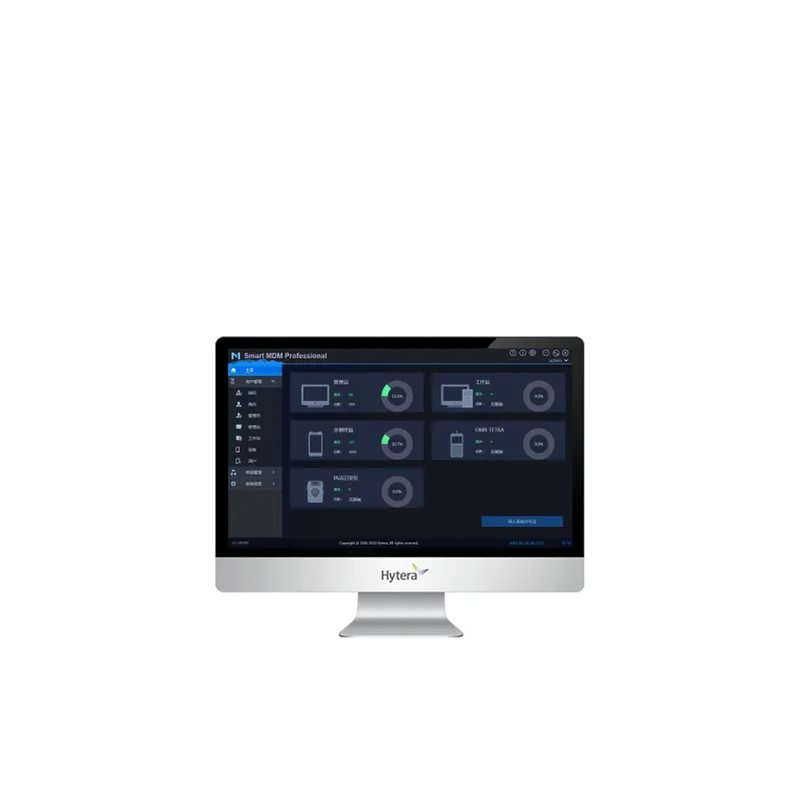
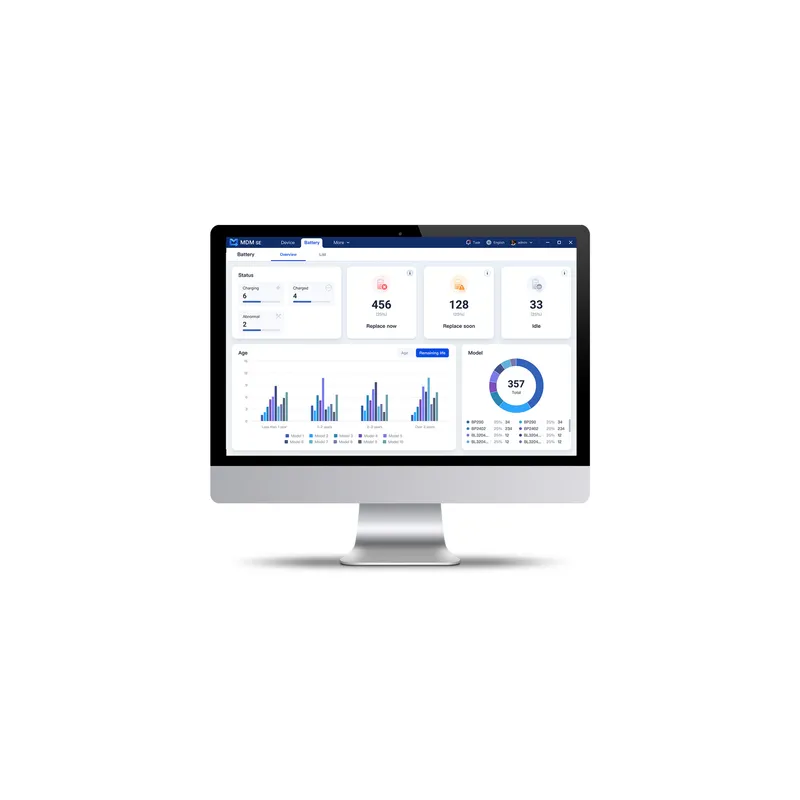
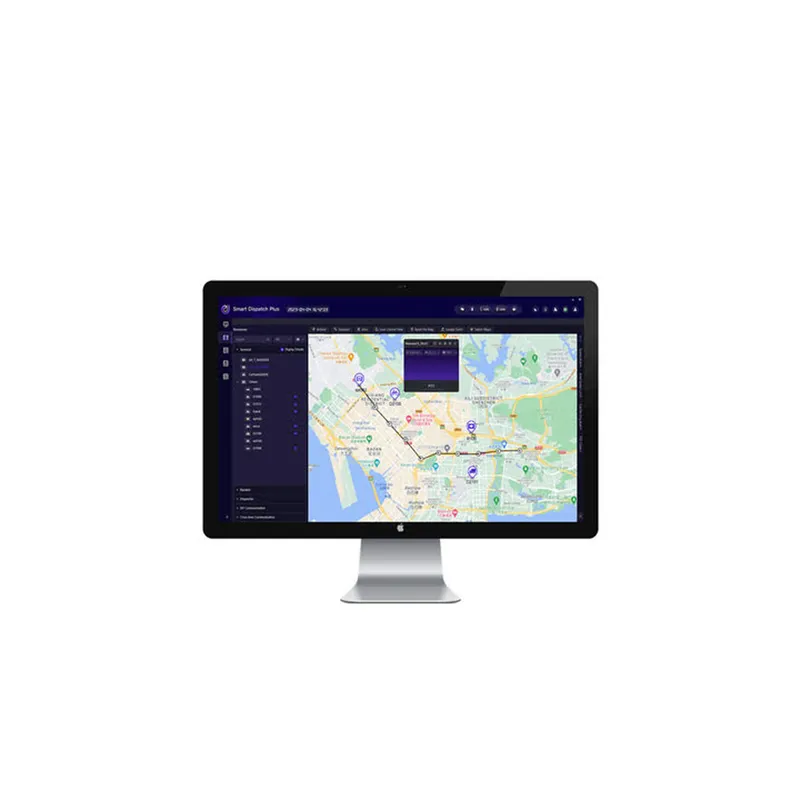
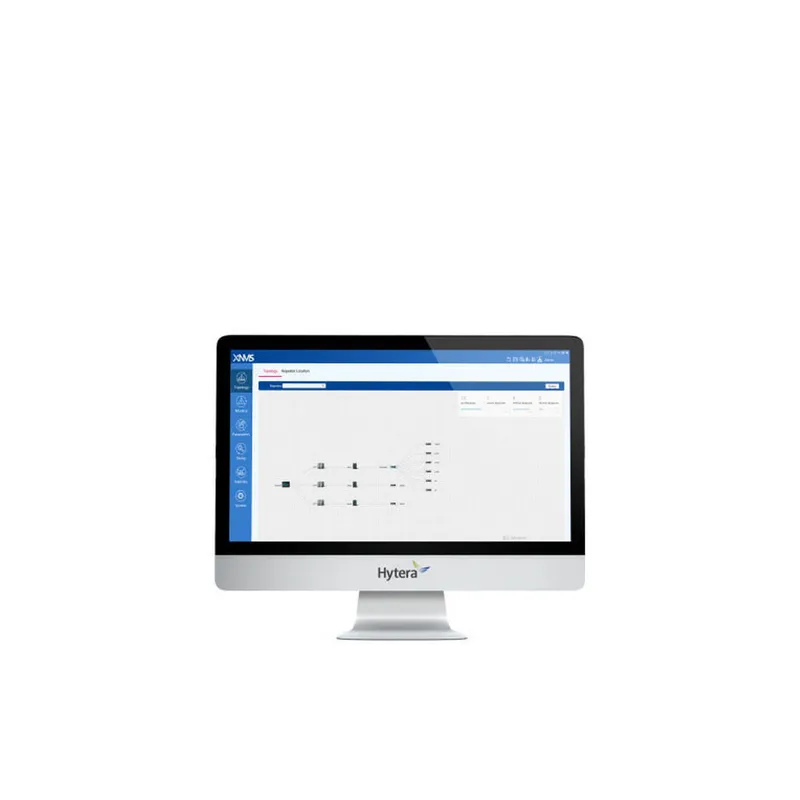
Above roughly thirty devices, doing this by hand stops scaling. Hytera's MDM SE and MDM Pro exist for this: bulk programming, firmware distribution, inventory, and device status in one place, rather than a cable, a laptop and a queue of users.
For PoC fleets the equivalent is built into the platform. Devices are provisioned, grouped, updated and disabled from the dispatch console over the network, which removes the physical handling entirely — one of the genuine operational advantages of PoC over conventional radio, and one that rarely appears in the comparison.
Batteries are the most common cause of "the radio doesn't work" and the least managed component.
Lithium-ion capacity declines with cycles and age. A pack that comfortably covered a twelve-hour shift when new will, after two years of daily cycling, cover eight — and the user experiences that as a radio that dies unexpectedly rather than as a battery that needs replacing.
The practices that prevent it: date-mark every pack on issue, record its serial against the device, replace on a schedule based on cycles rather than on complaints, hold a spare pool sized to the fleet, and check chargers periodically because a failing charger damages good batteries.
For continuous operations, issue two packs per radio and rotate. It costs less than the incidents caused by a radio going dead mid-shift.
Emergency button behaviour, man-down and lone-worker settings are fleet configuration, not per-user preference. Decide which roles have them enabled, what the timeouts are, who receives the alarm, and how it is acknowledged — then apply that uniformly.
A fleet where lone-worker is enabled on some radios and not others has an alarm system that works for some people, which is worse than one that works for nobody, because it is trusted.
Track accessories against devices. Speaker microphones, headsets, carry cases and antennas wear out on their own schedule, and a radio with a broken speaker microphone is functionally out of service in a noisy environment.
Hold a spare pool of complete, programmed devices — commonly 5 to 10 percent of the fleet. The value is response time: a broken radio is swapped in minutes rather than leaving a user without communication for the days a repair takes.
Fleet management is a service, and service scope is where it either exists or does not:
Ask for those explicitly. A quotation for two hundred radios that omits all of them is not cheaper; it is the same system with the maintenance moved onto your staff and discovered later.
Because an ID appears on every transmission, every emergency alarm and every dispatch record. If IDs encode site and role — a block per location, a range per department — then a control room reading an alarm knows immediately who and where. Random IDs turn every alarm into a lookup.
The state a fleet reaches when radios have been reprogrammed individually over time. Some have the current talkgroups, some do not, and the differences are invisible until two users cannot hear each other. It is the most common cause of intermittent faults that get blamed on hardware.
By age and cycle count, not by complaint. Lithium-ion packs lose capacity gradually, so a battery that lasted a shift last year quietly stops doing so. Date-mark packs on issue, replace on a schedule, and hold spares — the alternative is a radio that dies mid-shift and a user who stops trusting the system.
Below about thirty devices a maintained spreadsheet and a master codeplug are enough. Above that, device management software pays for itself: bulk programming, firmware rollout, inventory and status in one place. The threshold is where manual reprogramming of the whole fleet stops being a morning's work.
The Hytera product range, TechnoRF engineering, installation, maintenance, technical service and business continuity planning — brought together into a system designed for how your operation actually works.
We deliver not only what you need, but more than you expect .