DMR Radio Systems


Analogue, DMR, TETRA and PoC are not four grades of the same product. They differ in where coverage comes from, what happens when the network fails, and whether you buy capital equipment or a subscription. The right choice follows from the operation, not the budget.
Four technologies are sold under the same word. A buyer asking for "radios" may be shown a 3,000-lira analogue handset and a TETRA infrastructure costing more than the building it goes in, and the sales conversation rarely explains why. They are not four price points on one ladder. They answer different questions.
Strip away the marketing and four properties do the deciding.
Where coverage comes from. Analogue and DMR coverage is yours: your antenna, your repeater, your site. TETRA coverage is yours too, but built as a network of sites that overlap deliberately. PoC coverage is a mobile operator's, rented.
What happens when something fails. An analogue or DMR repeater failure drops you to handset-to-handset — reduced range, but the radios still work. A TETRA network is engineered so that one site failing leaves a hole rather than a blackout, and handsets fall back to direct mode. A PoC device with no cellular signal is an expensive brick.
How many people it carries. One analogue channel carries one conversation. DMR carries two on the same 12.5 kHz through time-division. TETRA carries four on 25 kHz and can pool channels across a whole site so a hundred users share far fewer than a hundred channels. PoC has no channel limit at all — it has a bandwidth bill.
What you buy. Analogue, DMR and TETRA are capital: you own the equipment and pay maintenance. PoC is operational: you pay per device per month, indefinitely.
Analogue radio is not obsolete; it is specialised. It remains the correct answer when the requirement is genuinely small and genuinely static — a hotel maintenance team of eight, a car park, a small workshop, a temporary site for a season.
Its virtues are real: the lowest device cost, no licensing complexity if the operation runs on a shared frequency, and behaviour every user already understands. Its ceiling arrives quickly. One conversation at a time. No way to address one team without the rest hearing. No text, no location, no identification of who is transmitting. No privacy — anyone with a scanner on the right frequency hears everything.
The failure mode is predictable: an operation buys analogue for eight users, grows to forty, and discovers that the channel is now unusable because everyone talks over everyone. The replacement costs more than the correct system would have.
DMR is where most commercial and industrial operations land, and for a defensible reason. Two-slot TDMA puts two independent conversations in the 12.5 kHz that analogue spends on one, which halves the licensing requirement for a given capacity. Digital voice stays intelligible at signal levels where analogue has already degraded into noise, so usable coverage extends further from the same site.
Beyond voice, DMR carries data as a matter of course: individual and group calls, text, GPS position, emergency alerts with automatic identification, remote disable of a lost handset. DMR Tier III trunking adds dynamic channel assignment so a shared pool serves far more users than dedicated channels would.
What DMR does not offer is the guaranteed behaviour of TETRA under load and the hardened network design that mission-critical services require. For most operations that gap is theoretical. For some it is the whole point.
TETRA exists because certain operations cannot accept "probably". Call setup under 300 milliseconds, priority and pre-emption so a critical call displaces a routine one, encryption on the air interface rather than bolted on, and network architecture designed around site loss.
Four timeslots on 25 kHz and full trunking give high user density, which is why TETRA carries metros, airports, ports, refineries and emergency services. The cost follows: infrastructure, redundancy, network management and a longer commissioning programme. Buying TETRA for a warehouse is not a mistake of degree, it is a mistake of category.
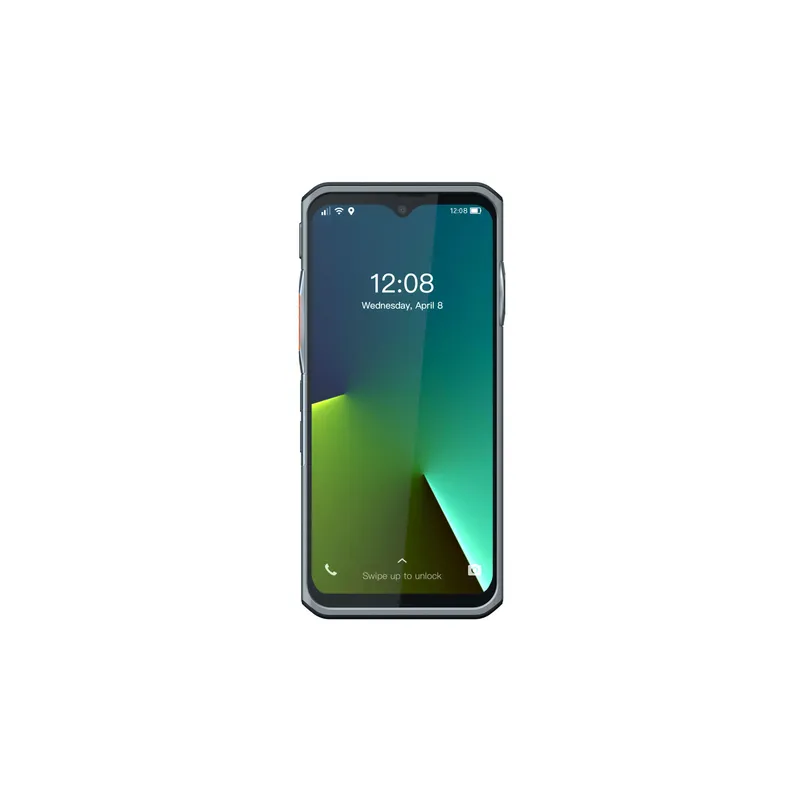
PoC puts push-to-talk on top of 4G and 5G. Coverage becomes national on day one with no infrastructure of your own, groups can be rearranged from a dispatch console in seconds, and the same device carries voice, video, location and messaging.
The dependency is total and it is worth stating plainly. Where the operator's network is congested, damaged or absent, PoC stops. Latency is higher than DMR or TETRA and varies with network conditions. And the monthly fee never ends: over ten years the subscription usually exceeds what the equivalent DMR infrastructure would have cost outright.
That trade is right for operations that are geographically dispersed and cannot justify infrastructure — logistics fleets, service technicians across a country, distributed retail. It is wrong where an outage is an incident.
The differences are structural, not incremental:
The comparison that misleads is device against device. The comparison that decides is ten years of ownership.
Analogue and DMR are front-loaded: handsets, repeater, antenna system, installation, licence fees, then maintenance and eventual battery replacement. TETRA is front-loaded and larger, with network management as a running cost. PoC is nearly free to start and never stops charging.
A forty-user DMR system typically overtakes the equivalent PoC subscription somewhere in year three or four. A five-user PoC deployment may never reach that crossover. The number of users, not the technology, is what moves the answer — which is why total cost of ownership belongs in the specification rather than in a footnote.
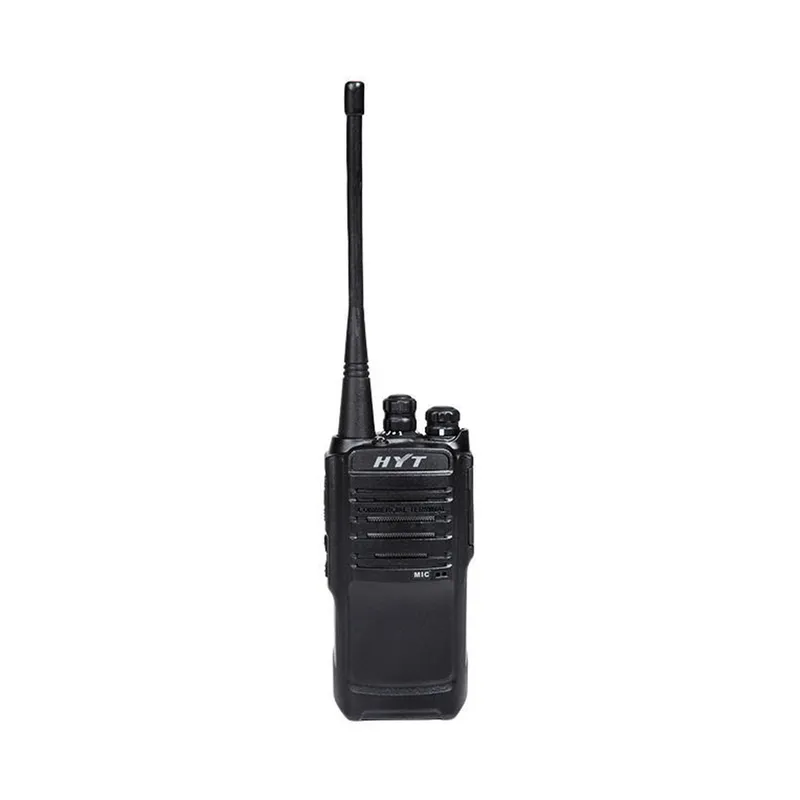
The technologies are not exclusive. A gateway joins a DMR site network to a PoC group so that people inside the plant and people travelling between plants share talkgroups. A TETRA network can carry a broadband overlay for video. Hytera's PMR-to-broadband gateway products exist precisely because operations that started with one technology grew into needing both.
The rule that keeps hybrids sane: infrastructure-based radio where failure is unacceptable, network-based PoC where reach matters more than resilience, and a defined gateway between them rather than two systems users must remember to switch between.
The mistake worth avoiding is choosing on device price. The device is a fraction of a working system, and the parts that are not the device — coverage design, channel planning, licensing, programming, service — are what determine whether anyone can hear anything.
No. DMR is better at almost everything a radio does, but a six-handset site with one channel and no growth plan gains little from it and pays more per unit. Analogue stops being defensible the moment you need more than one talkgroup, want to know where anyone is, or care whether the conversation is private.
Sub-300-millisecond call setup, guaranteed call queuing under load, air-interface encryption as standard rather than an option, and a network designed so that losing one site degrades coverage instead of ending it. Those properties matter when a delayed call has consequences — emergency services, metros, airports, refineries.
Only where mobile coverage is genuinely reliable and an outage is an inconvenience rather than an incident. PoC borrows someone else's network; when that network is congested, damaged or switched off, so is your communication. For dispersed commercial fleets that trade-off is usually acceptable. For a refinery or a hospital it is not.
Analogue and DMR handsets routinely run ten years or more; the limit is battery supply and physical wear rather than obsolescence. TETRA infrastructure is designed on a fifteen-year horizon. PoC devices follow the cellular cycle — three to five years — because the network generation underneath them moves.
The Hytera product range, TechnoRF engineering, installation, maintenance, technical service and business continuity planning — brought together into a system designed for how your operation actually works.
We deliver not only what you need, but more than you expect .