PoC Radio over Cellular


A phone group and a PoC radio both use the cellular network, but they are different tools. PoC gives sub-second group voice, a dispatch console, central control of who belongs to which group, and emergency alerting — none of which a messaging app provides, at any price.
The objection is fair and worth answering directly. If PoC runs over the same mobile network as a phone, and a messaging app group already carries voice notes, why buy dedicated devices and pay a subscription?
Because they solve different problems, and the difference shows up in how a shift actually runs.
Timing decides this. A voice note in a messaging app requires taking the phone out, unlocking it, finding the group, holding a button, recording, releasing, and then — on the other end — noticing the notification, opening the app and pressing play. Call it eight to fifteen seconds end to end, and it needs a free hand and attention.
A PoC call is one physical button on a device worn on the shoulder or belt. Sub-second setup, audio out of a loudspeaker at a level that carries over machinery, and every member of the group hears it whether or not they are looking at anything.
For a scheduled coordination message that difference is trivial. For "stop the belt", "vehicle reversing", "casualty at gate three", it is the whole point.
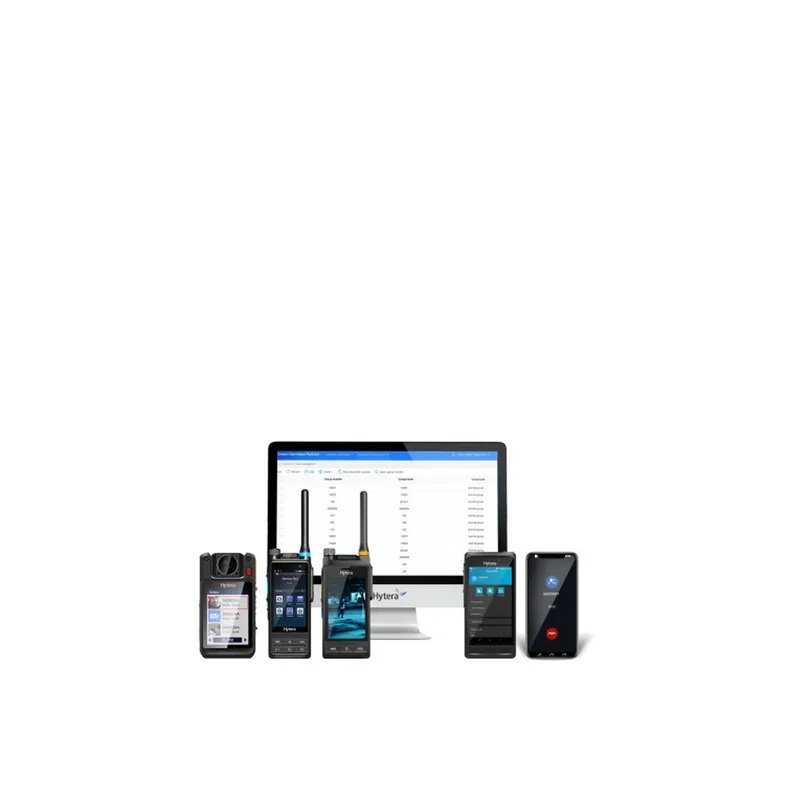
The larger gap is not on the device, it is behind it. PoC platforms come with a dispatch console, and a phone group has no equivalent.
From the console an operator sees every device on a map, calls an individual or a group, creates a temporary group for an incident and dissolves it afterwards, sends a message to everyone in an area, records calls for later review, and monitors which devices are online. Group membership is a configuration item that a supervisor changes centrally, not a chat someone has to be added to.
This is the difference between a communication tool and a managed system. It is also why PoC appears in logistics and field service operations that had perfectly functional phone groups and replaced them anyway.
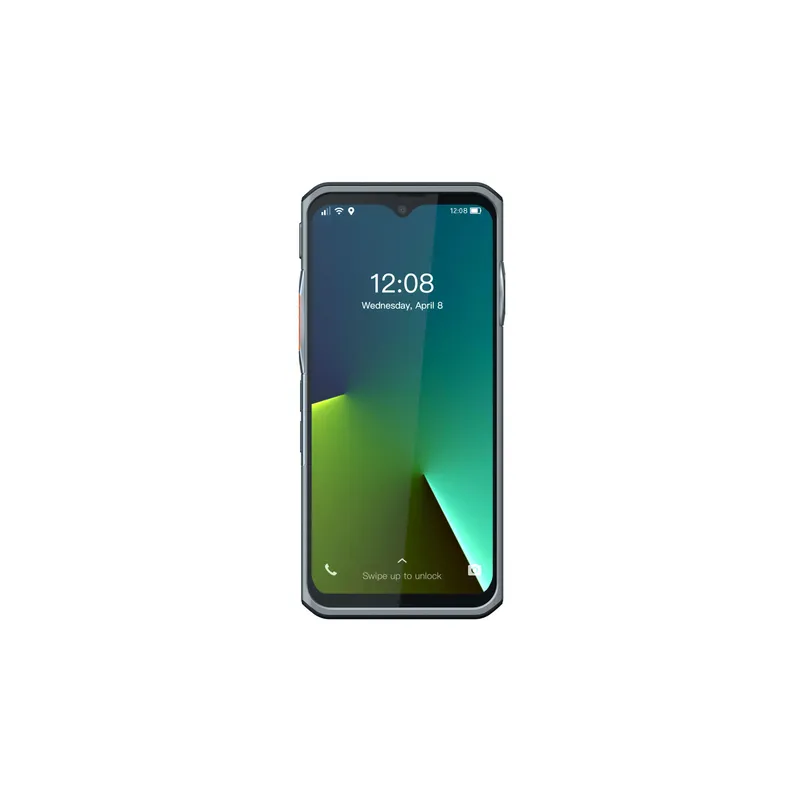
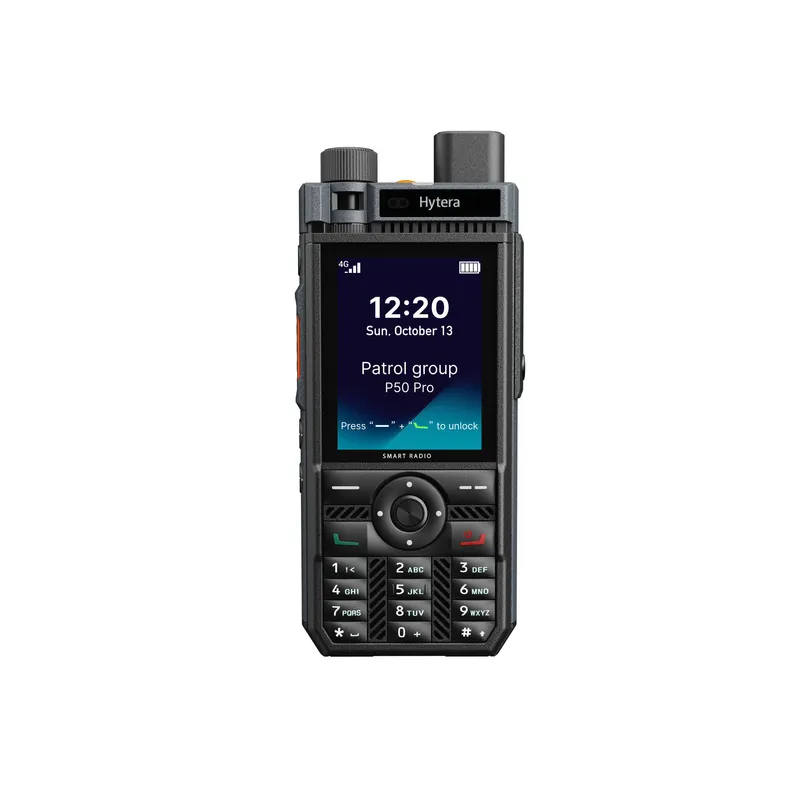
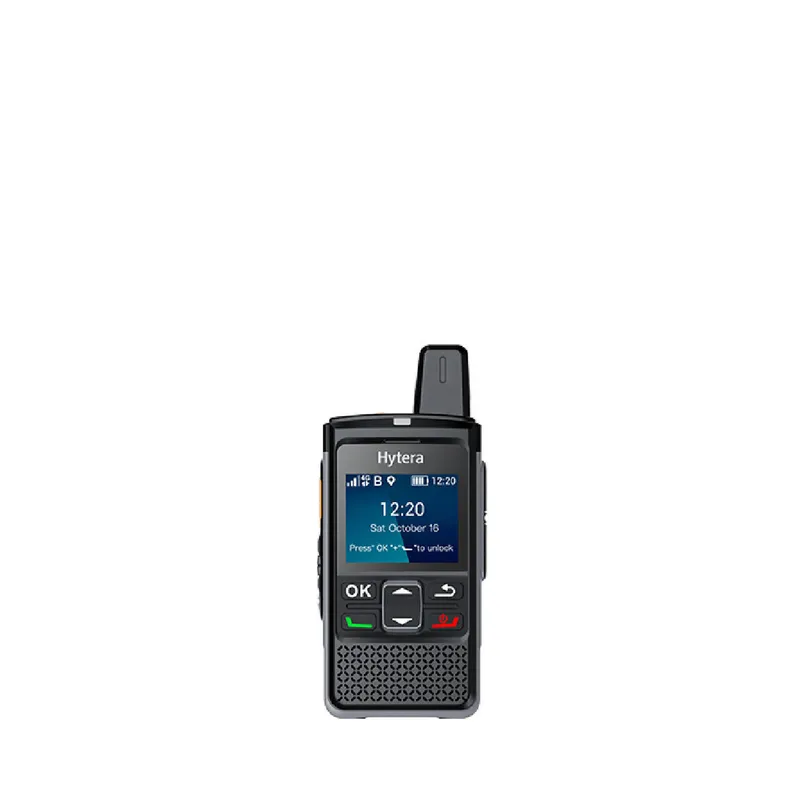
PoC devices are built for the environment a phone is not built for. IP67 sealing against dust and water, drop resistance, gloved operation, a physical PTT button that can be found without looking, shift-length batteries, a loudspeaker sized to compete with a plant floor, and connectors for a remote speaker microphone or headset.
A phone in a rugged case still has to be unlocked, still has a screen that fails in rain, still runs a battery down on everything else it does, and still costs its owner a personal device when it is dropped from a forklift.
Here PoC and phone groups are identical, and both are worse than licensed radio.
Both depend on the mobile operator. Both stop in a basement, in a lift, inside a steel-framed shed, in a valley and during a network outage. Neither has a fallback mode: two PoC devices standing next to each other with no cellular signal cannot talk to one another, whereas two DMR handsets can.
If that risk is unacceptable — a refinery, a hospital, a metro, an emergency service — PoC is not the answer on its own. It is either the wrong technology or the wide-area half of a hybrid system whose local half is DMR or TETRA.
Operationally, the quiet advantage of PoC is administrative.
Devices belong to the organisation, so accounts are created and disabled centrally, groups are defined by role rather than by who remembers to add whom, calls can be recorded where policy or regulation requires it, and a lost device is locked or wiped from the console. Emergency alarm and lone-worker functions — man-down, no-movement, an emergency button that opens a priority call and reports position — are built in.
On a phone group, none of these exist. Membership is informal, history lives on personal devices, a departing employee removes themselves or does not, and there is no alarm function at all.
A phone group is free if everyone already has a phone, and that is a genuine argument for very small teams.
PoC costs a device plus a monthly service fee per user. Against a licensed DMR system it looks cheap at the start and expensive over ten years — a forty-user fleet typically passes the DMR crossover in year three or four. Against a phone group it looks expensive in cash and cheap in everything else: seconds saved per exchange, incidents handled faster, devices that survive the year, and no personal phones carrying company traffic.
The comparison that decides is not the invoice. It is whether the operation depends on people hearing each other immediately.
Phone group — a small team, mostly indoors, mostly non-urgent, coordination that tolerates delay.
PoC — teams spread across a city or a country, vehicle-based work, field service, distributed retail and logistics, where mobile coverage is good and an outage is disruptive rather than dangerous.
Licensed radio (DMR or TETRA) — anywhere an outage is an incident, anywhere underground, anywhere the site is dense enough to defeat cellular, anywhere response time is a safety parameter.
Both — increasingly the answer for operations that have a plant and a fleet, joined by a gateway so a talkgroup spans the two.
Because the interaction model is wrong for field work. A voice note has to be recorded, sent, received, opened and played — several seconds and several taps, with a phone in hand. PoC is one button, sub-second, hands-free with a speaker microphone, and heard by the whole group without anyone opening anything.
No, and that is the defining limitation. PoC depends entirely on the operator's coverage. Underground, inside heavy structure, on remote terrain or during a network outage, a PoC device has no fallback. Sites that cannot accept that run DMR or TETRA, sometimes with PoC alongside for wide-area reach.
Yes. PoC devices report GPS position to the dispatch console, so a control room sees the fleet on a map, plays back routes and calls an individual or a group directly. That is a standard part of a PoC platform rather than an add-on, and it is one of the clearest differences from a phone group.
On a PoC platform the account is disabled centrally and the device is remotely wiped or locked; group membership disappears with it. On a phone group, a former employee stays in the group until someone remembers to remove them, and everything they saved remains on a personal handset.
The Hytera product range, TechnoRF engineering, installation, maintenance, technical service and business continuity planning — brought together into a system designed for how your operation actually works.
We deliver not only what you need, but more than you expect .