Disaster and Emergency



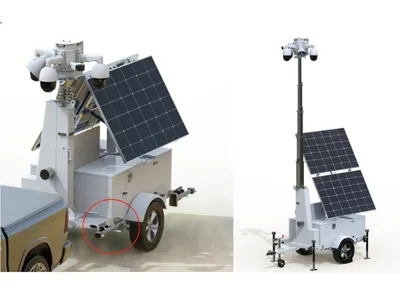
AFAD, Turkey's Disaster and Emergency Management Authority, added TechnoRF's Joint Disaster Mobile Repeater to its inventory to keep field teams in contact during earthquakes, floods and multi-hazard events. The unit mounts on a pick-up bed and combines a generator, a LiFePO4 battery bank, a telescopic mast and a multi-band antenna module, so a working repeater site can be created wherever a vehicle can reach. TechnoRF delivered the system with hands-on field training for AFAD personnel in five provinces, so that setting up and commissioning the unit does not depend on the supplier being present. Field testing produced continuous VHF-UHF coverage over a wide radius, linking the coordination centre, vehicle-borne units and dispersed field points. An IP-based remote monitoring function allows repeater parameters to be checked and adjusted centrally.
In a major event the infrastructure that carries everyday communication is often the first thing to fail. Base stations lose mains power and then their backup batteries; fibre routes are cut by ground movement; the cellular network that survives is saturated within minutes by the public. A radio network that depends on fixed repeater sites inherits every one of those failures. A mobile repeater removes that dependency: it is a coverage source that arrives with the response, is powered by its own generator and battery bank, and is positioned according to where the incident actually is rather than where the mast was built.
The design brief was a repeater that a two-person crew can deploy without special equipment. The compact enclosure mounts on a standard pick-up bed. Power comes from a generator for extended operation, with a LiFePO4 bank carrying the load during refuelling and through the night — LiFePO4 was chosen over lead-acid for cycle life and for its tolerance of partial-state-of-charge operation, which is what field use actually looks like. A telescopic mast puts the multi-band antenna high enough to matter; in VHF and UHF, height at the repeater end buys more usable range than transmit power does.
Equipment capability is not the constraint in disaster communication — deployment speed is. A repeater that takes two hours to raise because nobody on site has done it before is not a rapid-deployment asset. TechnoRF ran practical training for AFAD personnel in five provinces covering mast erection, antenna positioning, power management, basic fault isolation and commissioning. The objective was that the unit can be brought into service by the team that owns it, on the day it is needed, without waiting for external support.
Once deployed, a repeater in the field is invisible to the coordination centre unless something is built to make it visible. The IP monitoring interface reports repeater status and allows parameters to be adjusted centrally. In practice this changes how faults are handled: a coverage complaint from the field can be checked against actual repeater state before anyone drives out to look at it, and a degrading unit can be identified before it fails completely.
We deliver not only what you need, but more than you expect .