DMR Radio Systems


OKTH — Ortak Kullanımlı Telsiz Hizmeti — is a shared radio service in which an organisation uses a provider's licensed infrastructure instead of building its own. It removes frequency and site management; it does not remove device selection, programming, coverage design or service.
Not every organisation that needs radio wants to own a radio network. OKTH — Ortak Kullanımlı Telsiz Hizmeti, shared-use radio service — exists for exactly that position: professional radio coverage as a service, on a licensed operator's infrastructure, without holding your own frequency assignment.
For a foreign company operating in Türkiye, or any organisation that would rather not run RF infrastructure, it is worth understanding what the model actually transfers.
The provider holds the frequencies and operates the sites. That removes three things that are otherwise the slow, technical part of a radio project.
The licence. No assignment to apply for, no coordination delay, no repeater pair to wait on. Since licensing is usually the long pole in a radio deployment, this alone can move a go-live date by months.
The infrastructure. No repeater to buy, no rooftop or mast to rent, no duplexer to tune, no lightning protection to specify, no power backup to design, no site visit when something stops working.
Wide-area coverage from day one. A provider's network typically covers a city or region already. An organisation with teams spread across a metropolitan area gets that immediately, where building it privately would mean several sites and links between them.
This is where deployments disappoint, and the pattern is consistent: the service is treated as the whole system.
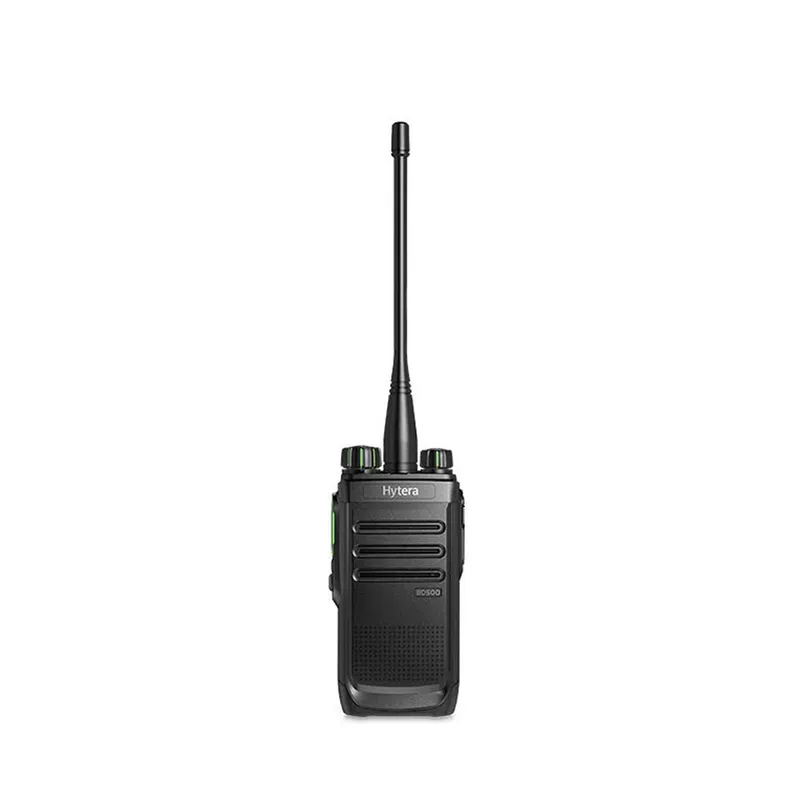
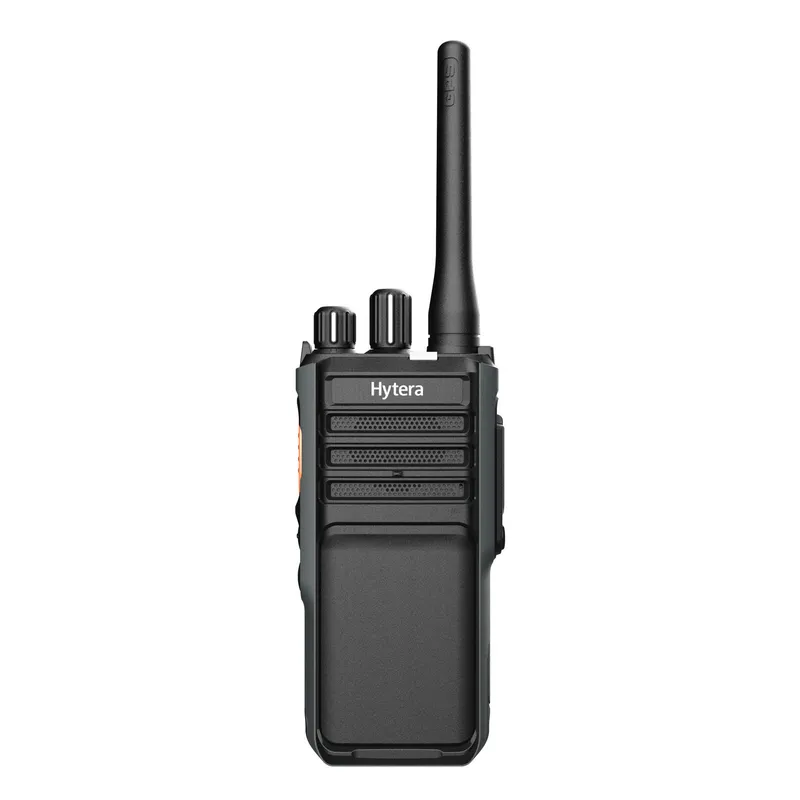
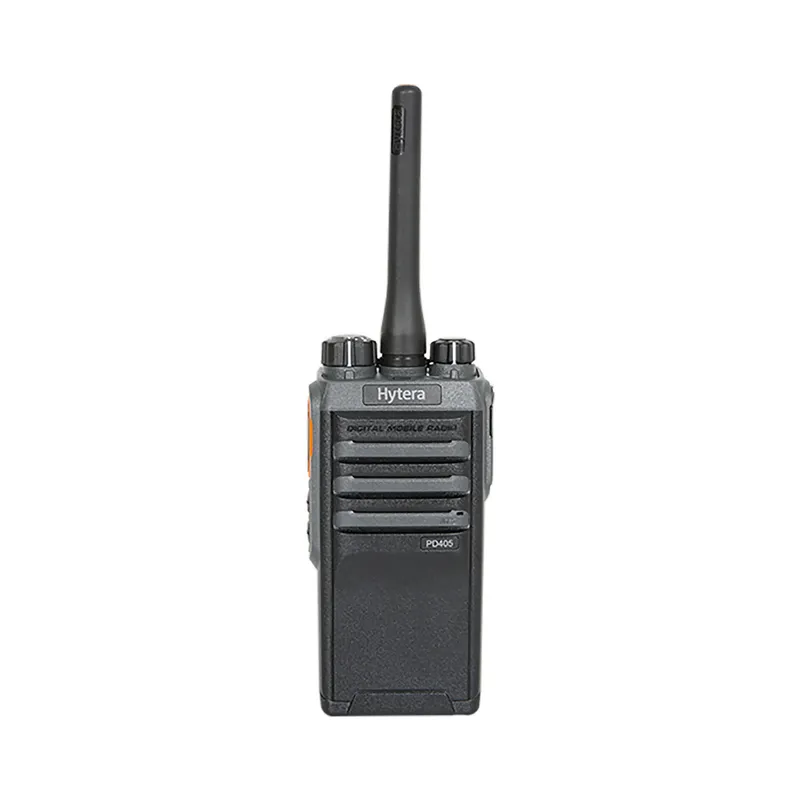
Device selection still decides the experience. A handset with weak audio in a plant, a battery that does not survive a twelve-hour shift, an IP rating below what the environment demands, or the wrong accessory for people wearing hearing protection — none of these are improved by the network behind them.
The channel plan is still yours to design. A shared service gives you talkgroups; deciding that security, cleaning, technical and reception are four groups rather than one is your work. Putting everyone on a single talkgroup is the fastest way to make any radio system unusable, and it happens on shared services as often as on private ones. See how to build a channel plan.
Indoor coverage is still a site problem. Provider coverage is designed for outdoor and general urban use. Basements, car parks, lift lobbies, plant rooms and deep interiors are attenuated environments that no external network reaches reliably. If those areas matter, they need a distribution system regardless of who owns the network.
Training, spares and service remain operational. Radios are dropped, antennas break, batteries age, accessory sockets wear, and the talkgroup structure changes when the organisation does.
OKTH tends to fit operations with these characteristics:
It fits less well where the operation is one large site — a factory, a hospital campus, a hotel, a logistics centre. There, a single repeater covers the whole requirement, gives complete control over the channel plan, keeps traffic private, and typically costs less over five years than the equivalent subscription. That comparison deserves numbers rather than intuition: see total cost of ownership.
Three models compete for the same requirement, and they fail differently.
Own licensed system. Highest control, highest up-front cost, licensing lead time, and you own the outage. Best where the operation is concentrated and privacy matters.
OKTH shared service. Fast, low entry cost, no infrastructure burden, recurring fee, and coverage and availability are a supplier's responsibility rather than yours — which is either a relief or a risk depending on how critical the traffic is.
PoC over cellular. Even faster, national coverage, richest feature set including video and dispatch mapping, and complete dependence on mobile network availability. Attractive for dispersed fleets, unsuitable underground or where an outage is an incident.
The choice is not really technological. It is about who carries the risk of the system being unavailable, and how much that unavailability costs you.
Providers quote against a described operation, and a vague description produces a quotation that cannot be compared with anyone else's. Prepare:
The last two are the ones most often omitted and most often regretted, because they are the difference between a service contract and a working system.
A shared service transfers the parts of a radio project that are regulatory and infrastructural. It transfers none of the parts that are operational. Organisations that understand that split get a system running in weeks with very little internal burden; organisations that assume the service is the system get coverage they did not specify and a channel plan nobody designed.
Ortak Kullanımlı Telsiz Hizmeti — shared-use radio service. It describes a model in which a licensed operator provides radio service to subscribing organisations, so each one gets talkgroups and coverage without holding its own frequency assignment or running its own repeater sites.
Cheaper to start, not necessarily cheaper to own. There is no infrastructure to buy, no site to rent and no licence to coordinate, so the deployment is fast. But the service fee recurs indefinitely, and over several years a single-site operation often finds its own repeater would have paid for itself.
No, and assuming it does is the usual mistake. The service supplies coverage and channels; it does not supply battery life, audio in a noisy plant, IP rating, accessory fit or a channel plan that matches how your teams work. A poor handset on a good service is still a poor system.
Talkgroups are separated logically, so routine traffic does not cross between subscribers. That is not the same as confidentiality: the infrastructure belongs to someone else, and if conversations must stay inside the organisation, encryption and a private system are the honest answer rather than a shared service.
The Hytera product range, TechnoRF engineering, installation, maintenance, technical service and business continuity planning — brought together into a system designed for how your operation actually works.
We deliver not only what you need, but more than you expect .