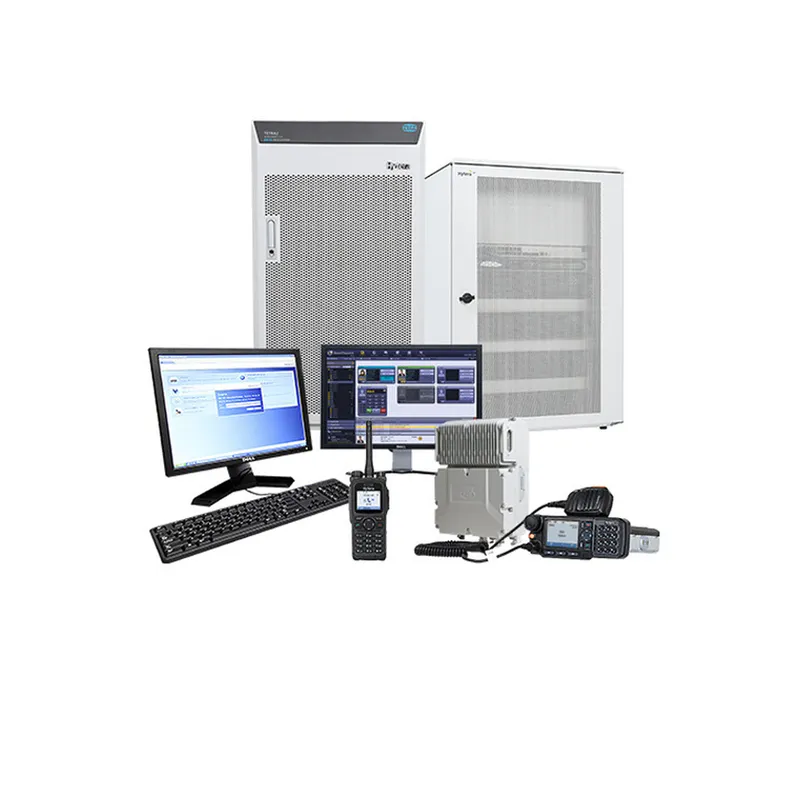
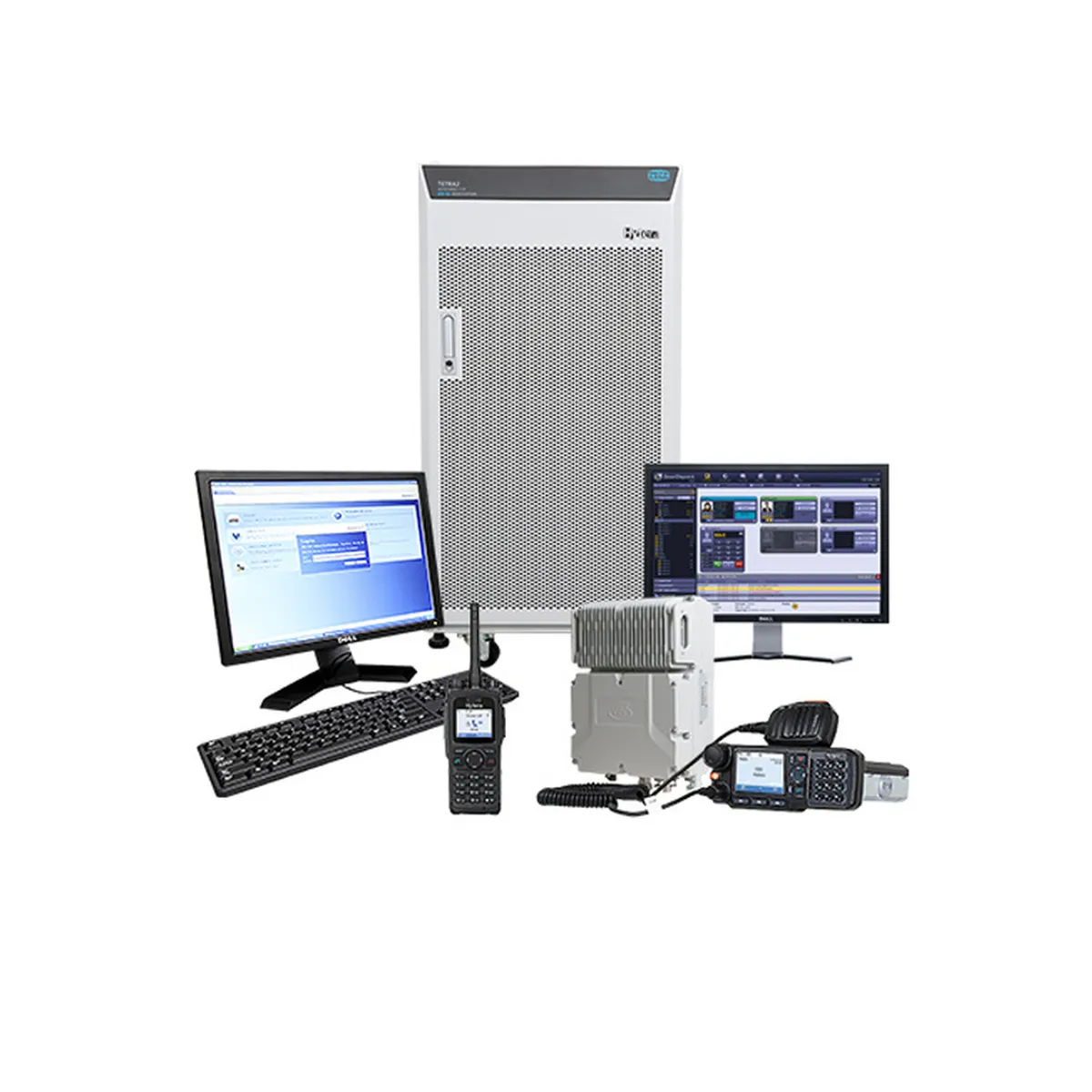
Hytera TETRA Centralised Architecture Solution


Only the technical values that differ between models are listed; identical rows are omitted. Values are taken from the manufacturer’s published data sheets.
| Property | Hytera TETRA Distributed Architecture Solution | Hytera TETRA Centralised Architecture Solution |
|---|---|---|
| Architecture | Distributed network topology | Centralised network topology |
| Reliability | No single point of failure | High availability for critical communication |
| Network Integration | PABX / PSTN gateway support with flexible mapping across all base stations | PABX / PSTN gateway supported |
| Applications | Airports, factories, ports and regional networks | Public safety, metro, rail, energy and airports |
| Scalability | Applicable from small to medium networks | Flexible in medium and large networks |
The distributed architecture answers one question: what happens when the controller is lost. The answer here is nothing, because there is no single controller to lose.
Switching is spread across the base stations rather than concentrated in a central node. There is no controller whose failure takes the network with it — the single points of failure that a centralised topology mitigates with redundancy are removed instead.
Full TETRA functionality remains available despite the distribution, which is the point worth confirming: this is not a reduced version of the standard.
Small-scale and regional networks — airports, factories, ports, industrial complexes and campuses. These share a profile: one operator, a defined area, and a requirement that the system keeps working rather than that it scales nationally.
For networks serving a city or a national agency, where consistent central administration across many sites matters more, the centralised architecture is the better fit.
PABX and PSTN connections can be mapped flexibly across all base stations rather than terminating at one node. That flexibility is a consequence of the distributed design and it matters operationally: telephone interconnection does not become the single point that the architecture was built to eliminate.
See TETRA systems.
We deliver not only what you need, but more than you expect .