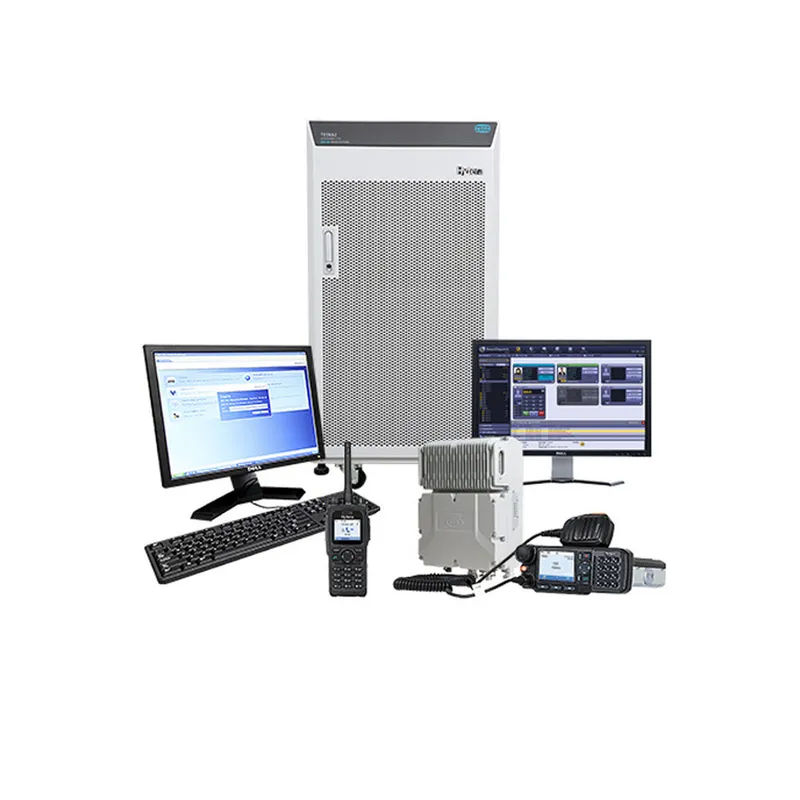
Hytera TETRA Distributed Architecture Solution


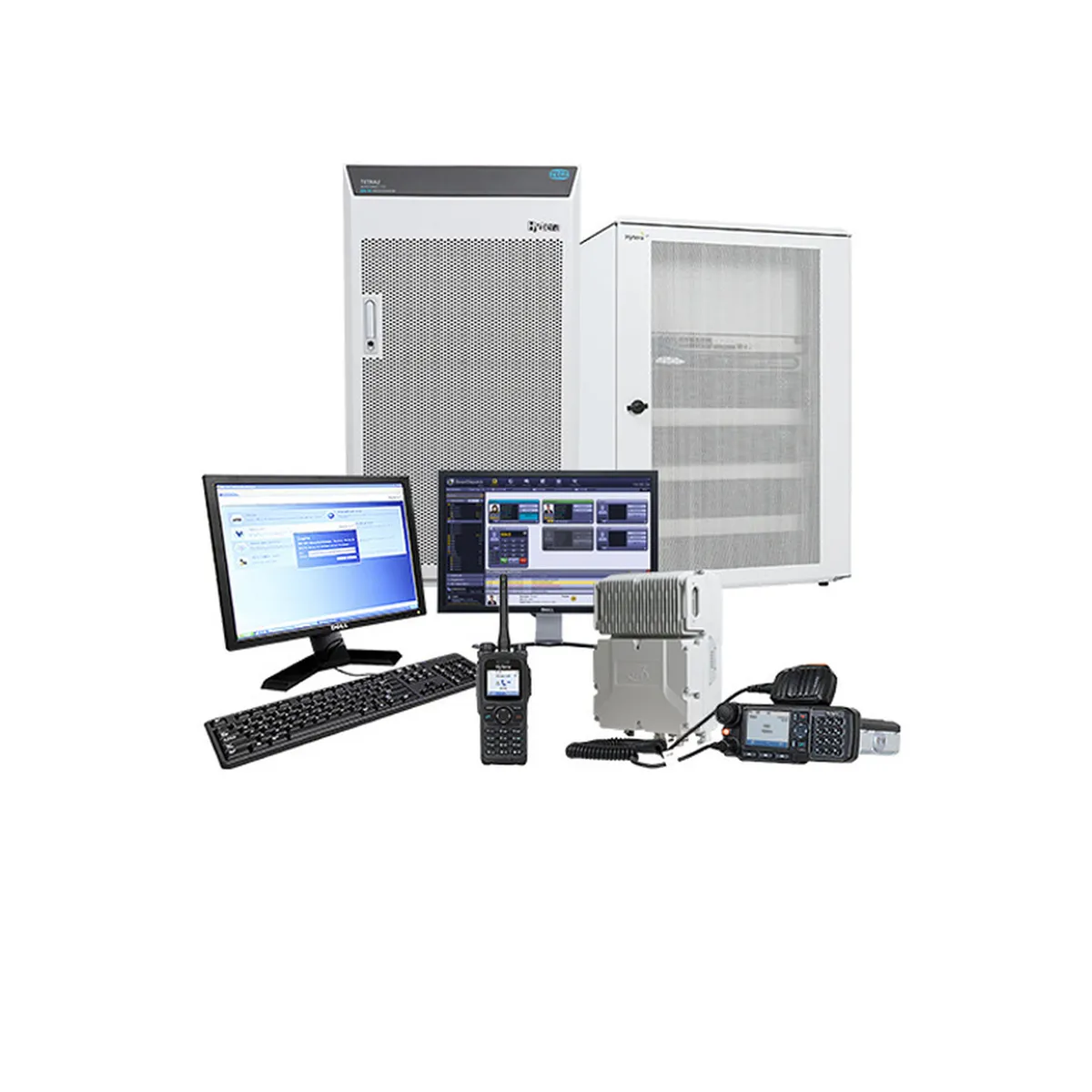
Only the technical values that differ between models are listed; identical rows are omitted. Values are taken from the manufacturer’s published data sheets.
| Property | Hytera TETRA Centralised Architecture Solution | Hytera TETRA Distributed Architecture Solution |
|---|---|---|
| Architecture | Centralised network topology | Distributed network topology |
| Network Integration | PABX / PSTN gateway supported | PABX / PSTN gateway support with flexible mapping across all base stations |
| Applications | Public safety, metro, rail, energy and airports | Airports, factories, ports and regional networks |
| Reliability | High availability for critical communication | No single point of failure |
| Scalability | Flexible in medium and large networks | Applicable from small to medium networks |
This is TETRA in its standard form: a central switching core with base stations around it, sized for networks that serve a city, a metro system or a national agency.
Call control and mobility management happen in one place. A radio registering, roaming between sites or being granted priority is handled by the core rather than negotiated between base stations. That gives consistent behaviour across a large network and one place to administer it.
The cost is that the core must not fail — which is why redundancy options are part of the architecture rather than an upgrade.
Public safety, metro and rail systems, energy and utility operators, and airports. These share the same profile: large user populations, wide area, and an operation where communication failure has consequences beyond productivity.
Gateways to PABX and PSTN networks let radio users reach telephones and vice versa. In a control room that connection is what allows an incident call arriving by telephone to reach the field team without the dispatcher relaying it by hand.
Centralised suits medium and large networks where consistency and central administration matter. For a single site or a regional network where the priority is eliminating any single point of failure, the distributed architecture is the better answer.
We deliver not only what you need, but more than you expect .