Disaster and Emergency



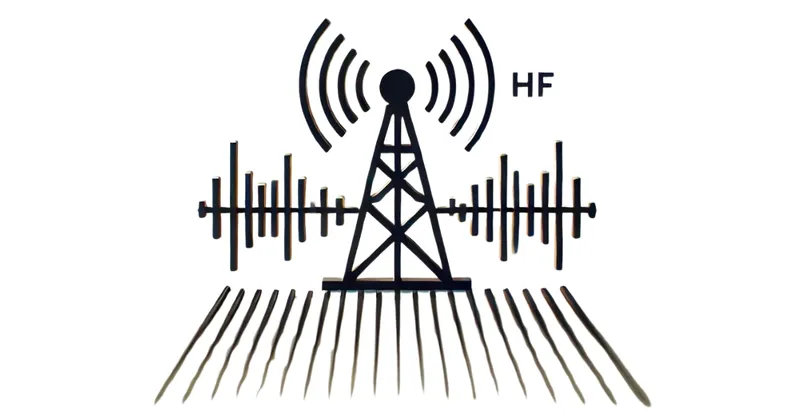
TRAC Headquarters, the national body of the Turkish Radio Amateurs Association, worked with TechnoRF to modernise its country-wide repeater estate so that operators who volunteer for disaster communication have infrastructure they can rely on. Analogue HF/VHF repeaters were made digitally compatible rather than replaced: existing repeater cassettes were upgraded with modular cards carrying low-latency voice codecs, and an integrated UPS and remote monitoring interface were added. A multi-band collinear antenna on the tower was fed through quarter-wave chokes to reduce QRM. On completion, TRAC operators can monitor repeater parameters over an IP tunnel, assign frequencies and manage system state without a site visit.
A volunteer network cannot fund a wholesale equipment replacement, and it usually does not need one. The RF stages of a well-built analogue repeater have a long service life; what dates is the control and audio path, and the absence of any way to see the site remotely. Upgrading the cassette with modular cards carrying modern codecs keeps the installed base and the tower work intact while changing the part that actually limits performance. The economics of this approach are what make estate-wide modernisation possible for an organisation of this kind.
Interference from man-made sources — QRM — degrades intelligibility long before it breaks a link outright, and on a shared amateur repeater the effect is felt by everyone on the machine. Part of the noise a receiver hears does not arrive through the antenna at all; it arrives on the outside of the coaxial feeder, which acts as an antenna in its own right when nothing prevents it. Quarter-wave chokes at the feed point break that current path. Combined with correct collinear placement on the tower, this produced a measurably cleaner channel for the community using it.
Repeater sites in this estate are largely unattended, and a mains interruption that lasts longer than the equipment can ride through means an outage that nobody discovers until someone tries to use the machine. The integrated UPS covers short interruptions outright and gives an orderly shutdown for longer ones. More usefully, the monitoring interface reports the event — so a site that is running on battery is known to be running on battery, which is the difference between a scheduled visit and an emergency one.
For a network spread across a country, the cost of maintenance is dominated by travel. IP tunnelling to each repeater lets operators read parameters, confirm state and assign frequencies remotely. The operational value is not only in avoiding trips: continuous visibility means gradual degradation is noticed as a trend rather than reported as a failure, and planned maintenance can be scheduled around what the data shows rather than around a calendar.
We deliver not only what you need, but more than you expect .