HF-SSB Long Range Radio



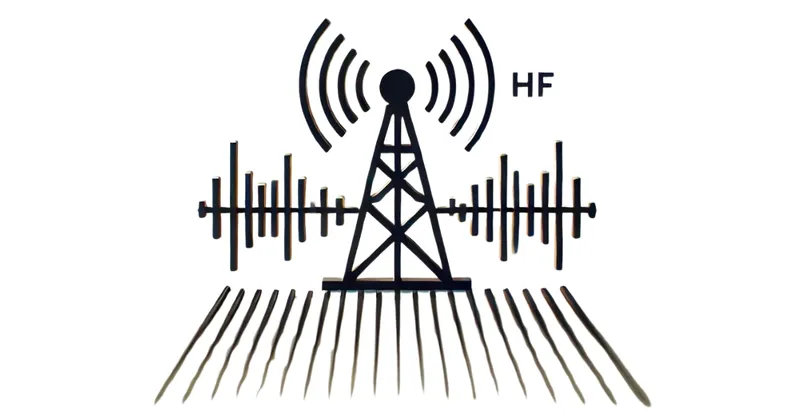
The HF/VHF repeater modernisation carried out for Sincan Training and Research Hospital shows what communication continuity means for a critical health facility that also carries a disaster role. The objective was to make analogue HF/VHF repeaters digitally compatible, remotely visible and sustainable to maintain. Existing repeater cassettes were upgraded with modular cards carrying low-latency voice codecs, supported by integrated UPS and a remote monitoring interface. A multi-band collinear antenna was installed and fed through quarter-wave chokes to reduce QRM and clean up the RF channel. IP tunnelling allows repeater parameters to be monitored remotely and frequency assignments to be managed without a site visit.
The in-building system covers the hospital. HF covers the case where the hospital is cut off. In a major seismic event the terrestrial links, the structured cabling and the mobile network are all exposed to the same failure, and a health facility designated for disaster response has to be able to reach the provincial and national coordination layer without any of them. These are two distinct systems with two distinct purposes, and the second one is only ever tested by an event or by a deliberate exercise.
The RF stages of a well-built analogue repeater outlive several generations of control electronics. What dates is the audio path, the absence of digital compatibility and the lack of any remote visibility. Replacing the cassette with modular cards carrying modern low-latency codecs keeps the installed base, the feeder and the tower work, and changes the part that actually limits performance. For a public institution this is the difference between a maintenance budget and a capital project.
Man-made interference degrades intelligibility long before it breaks a link. A significant part of what a receiver hears does not arrive through the antenna at all — it arrives as common-mode current on the outside of the coaxial feeder, which radiates and receives like any other conductor unless something stops it. Quarter-wave chokes at the feed point break that path. In a hospital, with lifts, imaging equipment, generators and switch-mode supplies all nearby, this is not a marginal improvement.
An unattended repeater is invisible until someone tries to use it. The integrated UPS covers short mains interruptions and gives an orderly shutdown for long ones; the monitoring interface reports that it happened. IP tunnelling extends this to parameters and frequency assignment, so degradation is seen as a trend rather than reported as a failure. For a system whose whole purpose is to work on the worst day, continuous visibility is what converts an assumption into a fact.
We deliver not only what you need, but more than you expect .