Logistics and Warehousing



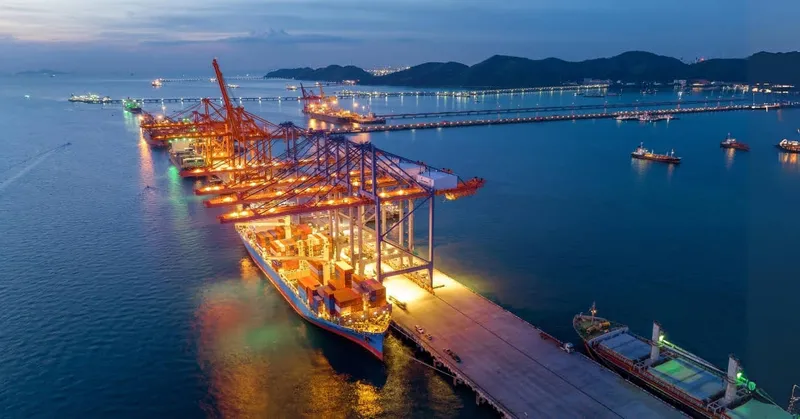
Marine Elektronik worked with TechnoRF to build mobile communication infrastructure for marina and shipyard sites that salt, spray and humidity do not degrade. An IP67-rated marine fibreglass antenna was commissioned together with a stainless steel bracket, an aluminium earthing kit and a high-gain repeater. Because standard antennas, cables and connectors corrode quickly in a marine environment, the system was engineered from material selection through to mounting position. TechnoRF engineers applied 3-D ray-tracing modelling to calculate RF shadow areas along the shoreline and place the antennas accordingly. After optimisation, signal strength rose significantly at the quay and crane area and call latency between ship technical teams and the control tower fell. Salt-resistant cable and passive components reduced the maintenance interval to once a year.
Salt aerosol is relentless and works on every interface at once. Connector contacts oxidise and add loss; dissimilar metals in a bracket assembly corrode galvanically at the joint; cable jackets that are fine inland crack under combined UV and salt; earthing straps lose conductivity precisely where the connection matters. None of it produces a clean failure. It produces a system whose range shortens over two seasons while everybody assumes the radios are getting old. Material selection is therefore the primary engineering decision, not a procurement detail.
IP67 covers temporary immersion, which is the correct rating for equipment that will be hit by spray and washed down. A stainless bracket and an aluminium earthing kit are chosen for the metallurgy as much as the strength: the objective is to avoid a galvanic couple between the mount, the mast and the antenna base that will corrode the joint from the inside. These choices cost more at installation and are the reason the maintenance interval is a year rather than a season.
A shipyard is a difficult RF geometry made of large moving metal objects. Hulls, cranes, gantries and stacked containers create shadows that change as the yard works, and a coverage prediction based on terrain alone is worthless there. Three-dimensional ray-tracing models reflection and obstruction from the structures themselves, which is what allows antenna positions to be chosen so that the quay and crane areas are covered from more than one direction rather than relying on a single path that a moving hull can block.
The measure that mattered operationally was not signal strength but call latency — how long between pressing to talk and being heard by the tower. In a yard, that delay determines whether a crane movement can be stopped on a verbal instruction. Improving coverage at the quay and crane area reduced the retries and repeats that make up most real-world call delay, which is the change the teams noticed.
Specifying salt-resistant cable and passive components was a decision about the maintenance schedule rather than about performance on day one. Reducing the required intervention to an annual visit changes what the installation costs to own over its life, and — more importantly at a working yard — reduces the number of times equipment has to be accessed at height in an operating area. TechnoRF provides marine RF coverage design, durable antenna systems, installation and service for port and shipyard operators in Turkey.
We deliver not only what you need, but more than you expect .