HF-SSB Long Range Radio



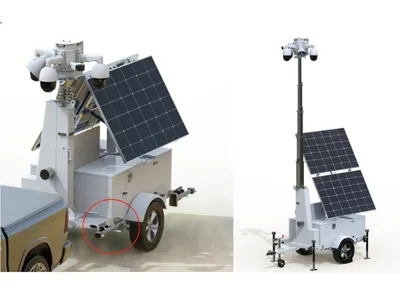
The Kocaeli Provincial Health Directorate purchased TechnoRF-designed portable HF radio kits so that field hospitals and mobile medical units can hold a link to the coordination centre in an earthquake scenario. The requirement was a long-range, independent and rapidly deployable communication capability that does not assume conventional infrastructure has survived. Each kit places a 100 W HF transceiver, an auto-tuner antenna and a lithium power station inside an IP67-rated waterproof case, in a modular arrangement that can be set up in 15 minutes. TechnoRF carried out the field cabling and range calculations to a NATO functional test protocol and verified links over hundreds of kilometres. The kits were used in a pilot deployment in field tents, with no interruption to voice or data during testing.
A field hospital exists because the fixed one is unusable or unreachable. Its communication requirement follows from that: no mains supply, no structured cabling, no assumption that a nearby mast survived, and a location that was not known in advance. HF answers this in a way nothing else does — it needs one operator, one antenna and a power source, and it reaches the coordination centre without anything in between. The trade-off is deployment discipline, which is why the kit is packaged rather than assembled from parts.
The deployment time is a packaging outcome, not an equipment one. Everything needed is in one case with nothing to source on site; the antenna raises without rigging; the auto-tuner removes the manual matching step that otherwise dominates setup time; the power station comes up in a fixed sequence. The point of the number is not speed for its own sake but that a clinical team can bring the link up themselves, without a radio technician present, in the first hour of a deployment when nobody is available to help.
A range figure that comes from a calculation is a claim. Field cabling and range verification were carried out to a NATO functional test protocol, which fixes what is measured and under what conditions, so the result is comparable and repeatable rather than a single favourable observation. For an asset that will sit in storage until an emergency, a documented acceptance test is the only evidence that will still be meaningful years later.
Patient transfer coordination is not only voice. Case details, capacity figures and transfer lists move more reliably and more accurately as data, and an HF data modem carries them over the same path. What matters in practice is packet loss rather than raw throughput: a link that carries voice adequately can still fail a data transfer if the signal-to-noise ratio sits close to the threshold. Testing across the pilot deployment showed no interruption to either.
We deliver not only what you need, but more than you expect .