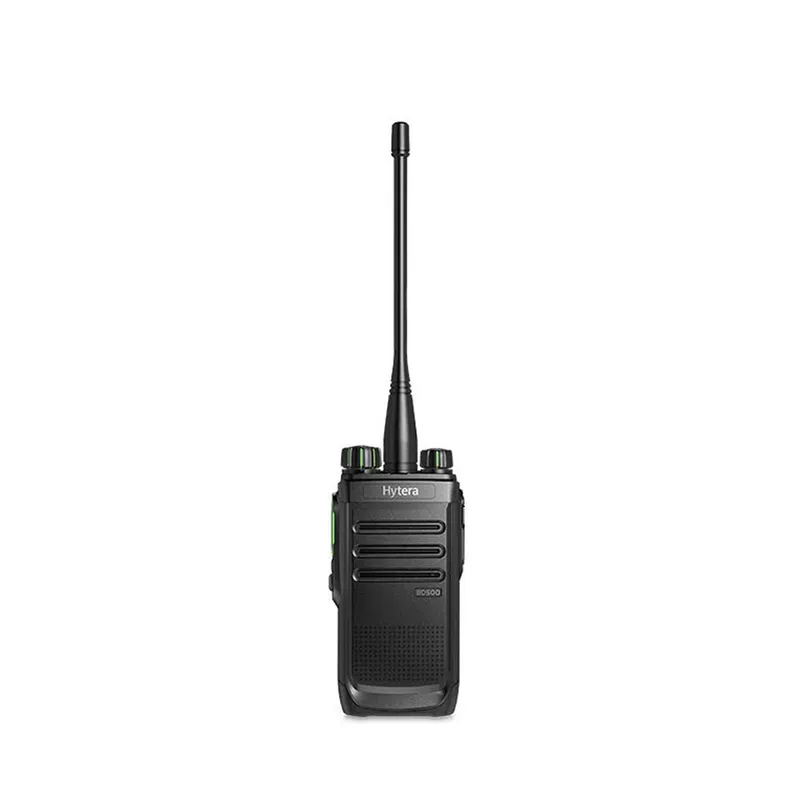
Hytera BD505 Professional DMR Handportable Radio



TechnoRF delivered a project for the Karaman Special Provincial Administration that combined modernisation with a deliberate saving of public funds. An Aselsan 4841 VHF analogue repeater, in the institution's inventory since 1986 and long out of use, was returned to working order, and 14 Hytera BD505 handsets were delivered to meet the current field requirement. The repeater received a full technical overhaul: the power supply was renewed, receiver sensitivity adjustments were made, and system performance was optimised through tone control and duplexer calibration. Siting the repeater in the Karaman Karadağ area produced wide-area coverage. The BD505 handsets were programmed and tested against the institution's own operating scenarios.
The instinct with equipment of this age is to scrap it. That instinct is often wrong. A VHF analogue repeater of solid original construction has an RF section with a very long service life; what fails is the power supply, the electrolytics, the alignment and the connectors. Those are all repairable. The question is not whether the equipment is old but whether the failure is in a part that can be restored to specification and measured afterwards — and in this case it was.
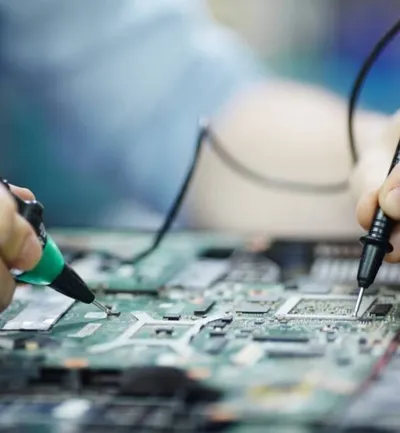
Power supply renewal first, because an unstable supply produces symptoms everywhere else and makes every other measurement unreliable. Then receiver alignment, which is where a repeater of this age has usually drifted furthest and where the loss is invisible from the site. Then tone control, so that the repeater responds to the intended users and not to everything on frequency. Finally duplexer calibration with instruments, since a duplexer that has been left for decades will not be where it was set. Each step was measured rather than adjusted by ear.
Repeater performance is decided more by site than by equipment. A restored repeater on a poor site covers less than a mediocre repeater on a good one. Placing the unit on high ground at Karaman Karadağ gave line of sight across the province's working area, which is what converted a functioning repeater into useful coverage for the institution's field teams. This is the part of the project that no equipment specification would have captured.
The combination is the point. The repeater provides coverage, which is the expensive part to build and the part that had already been paid for decades earlier. The handsets provide usability, battery life and audio quality, which is where the improvement the field teams actually notice comes from. Spending the budget on the second while restoring the first produced a working system for a fraction of what a complete replacement would have cost.
Restoration is worth assessing wherever an institution holds older repeater infrastructure with sound RF construction and a site that is still available to it. What determines feasibility is the availability of the site, whether the frequency allocation is still held, whether the mechanical installation is intact, and whether the fault is in a restorable subsystem. TechnoRF provides maintenance, repair, repeater restoration, programming and modernisation for public institutions in Turkey.
We deliver not only what you need, but more than you expect .