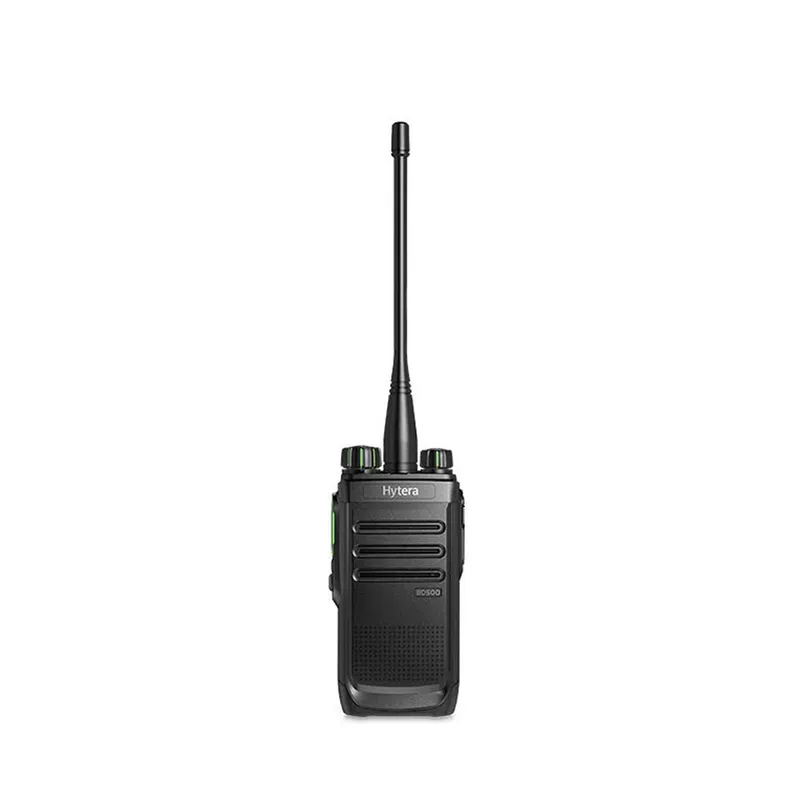
Hytera BD505 Professional DMR Handportable Radio



FYT Engineering moved to Hytera BD505 digital handsets, supplied and supported by TechnoRF, to improve team coordination on construction and project sites, make office-to-site communication more responsive and keep contact through long working days. Terrain conditions vary across the company's projects, and TechnoRF analysed each one, prepared frequency plans specific to the user and managed the licensing process. The BD505's noise suppression and VOX features hold audio clarity in the noise generated by site plant. A light but durable build with IP54 protection against dust and impact, and more than 12 hours of operation, suit the working pattern. PC-based radio tracking software was commissioned for office-to-site integration, letting engineers see field teams live and manage operational flow with measurable information.
A contractor does not have one site; it has a rolling set of them in different places, each with its own terrain, its own neighbours and its own duration. A single frequency plan applied across all of them will interfere with somebody somewhere and will be wrong for the geography of at least half. Planning per project — and licensing accordingly — is more administrative work, and it is the difference between a system that works on the current site and one that worked on the last one.
Professional radio in Turkey requires a frequency allocation from the regulator, and the obligation sits with the user. In practice contractors either skip it, and operate illegally with no protection from interference and no recourse if someone else causes it, or they lose weeks to a process they do not run often enough to be efficient at. Handling the licensing as part of the supply removes both outcomes and means the frequencies in the handsets are the frequencies the company is entitled to use.
Construction plant produces broadband acoustic noise at levels that make ordinary radio audio unintelligible. Noise suppression works on the transmit side — it improves what the other party hears, which is the half that actually breaks down. VOX matters for a different reason: an operator with both hands occupied cannot press a key, and a radio that cannot be answered hands-free stops being used in exactly the situations where the call is urgent.
IP54 covers dust ingress and splashing water, which is the correct rating for site work — the failure mode on a construction site is fine dust in the microphone and speaker grilles and in the accessory connector, not immersion. Twelve hours of operation is specified against the working day rather than against a laboratory duty cycle; a radio that lasts eight hours on a ten-hour day generates a charging problem that gets solved by leaving the radio behind.
Live visibility of field teams changes how an engineering office allocates work. Instead of calling to establish where a crew is before assigning a task, the position is already known — which removes a call, and more usefully removes the delay between deciding and instructing. It also produces a record that supports progress reporting and, in an incident, establishes where people were. TechnoRF provides radio supply, frequency planning, licensing, programming and service for engineering and construction firms in Turkey.
We deliver not only what you need, but more than you expect .