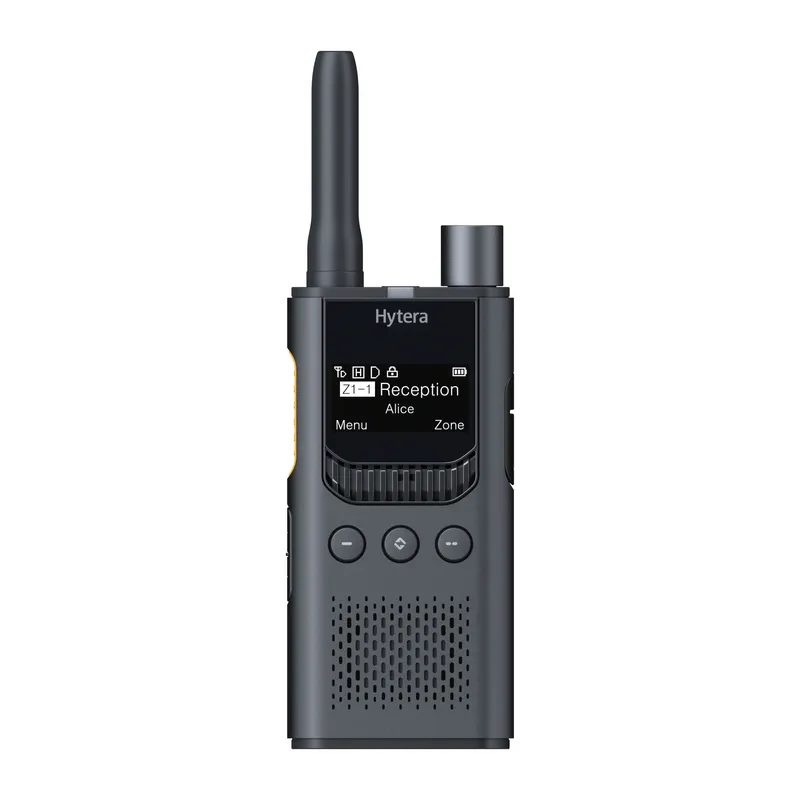
Hytera S1 Pro Professional DMR Handportable Radio



Flora Dental Clinics needed faster coordination between teams across its multi-storey clinics without disturbing the patient experience, and chose the Hytera S-Series ultra-light digital radios specified by TechnoRF. Sterile-environment requirements, silent operation, a compact device and fast in-clinic call handling were considered together. Antimicrobial cases suit the devices to a clinical setting, while vibrate alerting lets dentists and assistants communicate at the chair without announcements the patient can hear. Accounting for electronic noise from dental chairs and clinical equipment, TechnoRF planned a narrowband channel set that preserved signal integrity and audio quality. Sterilisation-compatible charging stations were housed inside a UV-lit cabinet to match the clinic's hygiene expectations.
In most workplaces a radio that is heard is doing its job. In a dental clinic the opposite is true. A patient in the chair is already in a state of heightened attention, and an overheard operational exchange — about scheduling, about another patient, about anything at all — degrades the experience the clinic is selling. The system therefore has to deliver the call without producing sound in the treatment room, which makes vibrate alerting and discreet accessories load-bearing features rather than conveniences.
Clinical staff will not carry a radio that interferes with how they work. Weight, bulk and where the device can be clipped decide whether it is worn through a shift or left at reception, and a radio left in a charger provides no coverage at all. The S-Series was selected on exactly these grounds. The antimicrobial case addresses the other half of the problem: any object carried between treatment areas has to be compatible with the clinic's infection-control routine, or it becomes an exception that staff work around.
Dental chairs, motors, curing lamps and imaging equipment all radiate. That noise is broadband, close to the user, and worst in exactly the rooms where communication matters. Planning a narrow channel set placed away from the strongest local noise, rather than accepting default channels, is what preserves intelligibility. This is measurable work done on site: the noise environment of one clinic is not transferable to another, even in the same building.
The charging arrangement is usually treated as an afterthought and is usually where compliance breaks down. Housing sterilisation-compatible charging stations inside a UV cabinet keeps the devices inside the clinic's hygiene process instead of alongside it, and gives staff a single defined place to return a radio at the end of a session. That single decision is what keeps the fleet charged and accounted for — and a fleet that is charged is the precondition for everything else the system does.
We deliver not only what you need, but more than you expect .